
Close Menu
    Facebook X (Twitter) Instagram
    SciTechDaily
    • Biology
    • Chemistry
    • Earth
    • Health
    • Physics
    • Science
    • Space
    • Technology
    Facebook X (Twitter) Pinterest YouTube RSS
    SciTechDaily
    Home»Technology»Archaeologists Use AI for Modern Analysis of Rock Art
    Technology

    Archaeologists Use AI for Modern Analysis of Rock Art

    By Flinders UniversityApril 3, 2021No Comments5 Mins Read
    Facebook Twitter Pinterest Telegram LinkedIn WhatsApp Email Reddit
    Share
    Facebook Twitter LinkedIn Pinterest Telegram Email Reddit
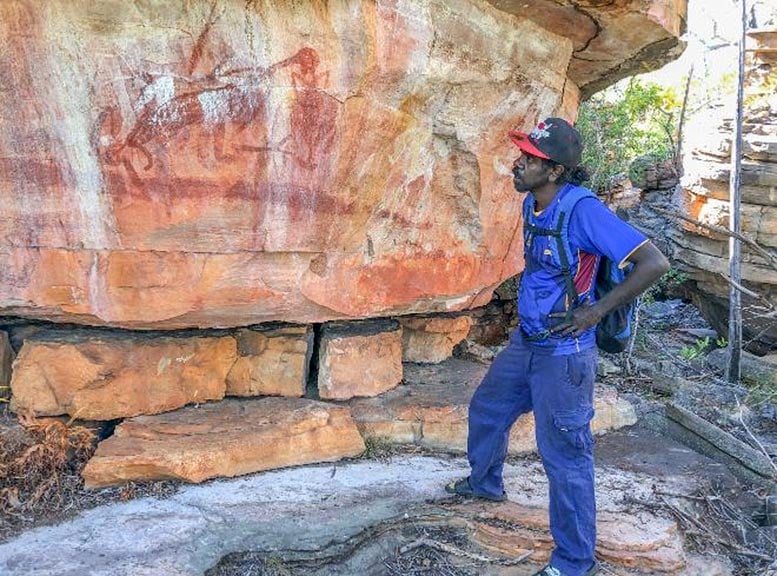
    Young Dakal Clan Landowner Desmond Lindsay
    Young Dakal clan landowner Desmond Lindsay visits this site on his country for the first time. Most sites are remote and often impossible to even approach closely by vehicle. Credit: Mimal Land Management Aboriginal Corporation (MLMAC)

    Machine Learning Opens New Doors in Archaeology

    Rock art of human figures created over thousands of years in Arnhem Land has been put through a transformative machine learning study to analyze style changes over the years.

    The study – just published in Australian Archaeology – has tested different styles labeled ‘Northern Running figures’, ‘Dynamic figures’, ‘Post Dynamic figures’ and ‘Simple figures with Boomerangs’ to understand how these styles relate to one another.

    Working with the Mimal and Marrku Traditional Owners of the Wilton River area in Australia’s Top End, South Australian researchers led by Flinders University archaeologist Dr Daryl Wesley have taken a closer look at the art of this region.

    Flinders researcher Jarrad Kowlessar and the team used machine learning to analyze images of rock art collected during surveys in Marrku country in 2018 and 2019.
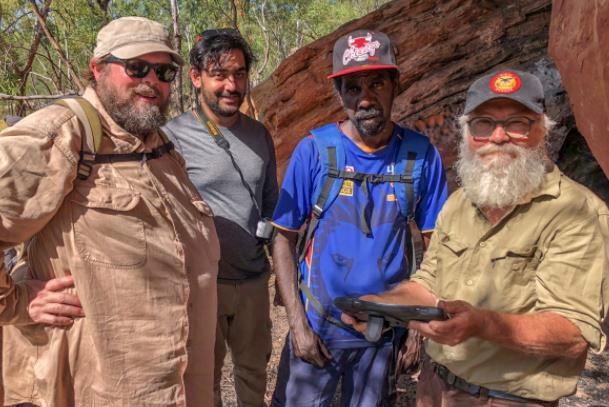
    Rsearchers on Wilton River
    Dr. Daryl Wesley, Jarrad Kowlessar, from Flinders Archaeology, with NT collaborators Desmond Lindsay and Peter Cooke on the Wilton River. Credit: Mimal Land Management Aboriginal Corporation (MLMAC)

    Co-authors include Dudley Lawrence and Abraham Weson and others from the Mimal Land Management Aboriginal Corporation, Alfred Nayinggul from the Njanjma Aboriginal Corporation, Dr. Ian Moffat from Flinders, and University of Adelaide researcher James Keal.

    The reconstructed rock art chronology, just published in Australian Archaeology, uses existing data sets of more than 14 million different photos of a wide range of things from animals such as dogs, cats, lizards, and insects to objects like chairs, tables, and cups.

    Modeling Visual Similarity in Rock Art

    “In total the computer saw more than 1000 different types of objects and learned to tell the difference between them just by looking at photos of them,” Dr Wesley explains.

    “The important skill this computer developed was a mathematical model that has the ability to tell how similar two different images are to one another.”

    Then the mathematical modeling was applied to the images collected in northern Australia.
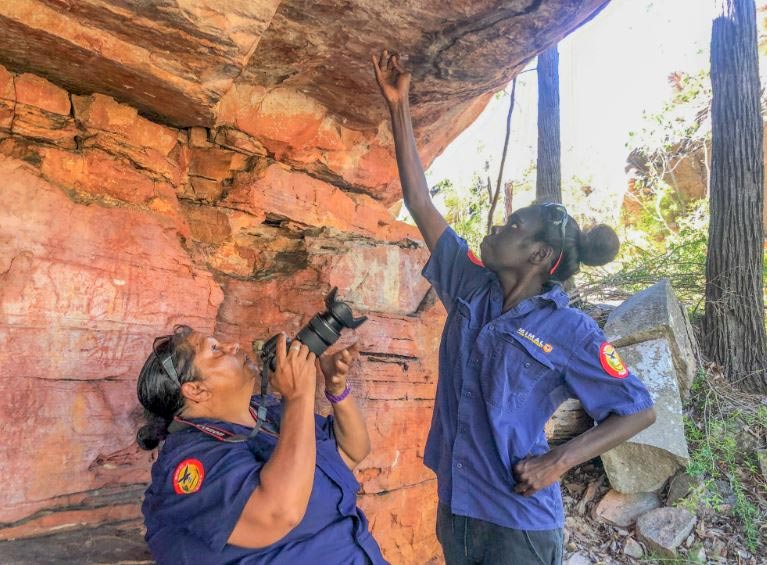
    Joyce Boheme and Talisha Redford
    Joyce Boheme and Talisha Redford from the Mimal community recording rock art. Credit: Emma Masters (MLMAC)

    “This approach allows us to use the computer program to show how unique the rock art is in the Wilton River and how it relates to the rock art in other parts of Arnhem Land,” Dr. Wesley says.

    “We can use this to help to show how rock art styles are shared by Traditional Owners in Arnhem Land and which are unique to each group through the past.”

    Machine learning allows a computer to ‘learn’ different things about information that may take a human many years to look through and learn from, explains a Flinders University PhD candidate in archaeology Jarrad Kowlessar, who has pioneered the machine learning approach for rock art analysis.

    Confirming Chronology with AI Precision

    “One amazing outcome is that the machine learning approach ordered the styles in the same chronology that archaeologists have ordered them in by inspecting which appear on top of which. This shows that similarity and time are closely linked in the Arnhem Land rock art and that human figures drawn closer in time were more similar to one another then those drawn a long time apart,” he says.
    Elders Rock Art Survey
    During the rock art surveys, Elders traveled with the ranger survey party to share knowledge of rock art and the history associated with east Wilton River sites. As a result, Abraham Wesan, Dudley Lawrence, Robert Redford and Jack Docherty became coauthors on the new research paper. This site was a stopover and camping site still used by the commmunity up until the late 1970s. Credit: Mimal Land Management Aboriginal Corporation (MLMAC)

    “For example, the machine learning algorithm has plotted Northern Running figures and Dynamic figures very close to one another on the graph it produces. This shows that these styles which we know are closer to each other in age are also closer to each other in appearance, which might be a very hard thing to notice without an approach like this”.

    Reducing Human Bias

    The article points out the new methodology removed a large degree of individual human interpretation and possible bias by using a machine learning approach called ‘transfer learning’.

    This allowed the computer to understand how each style related to one another directly – independently of the researchers involved.

    Researchers are enthusiastic about this methodology breaking new ground for a large amount of archaeological research to understand all sorts of different human material culture in a different way.
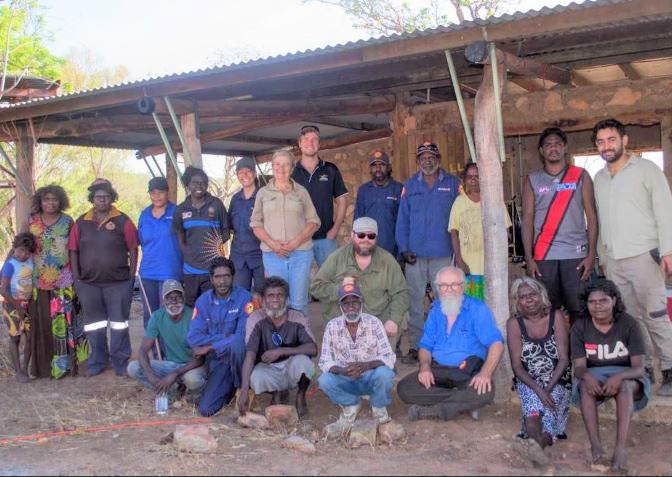
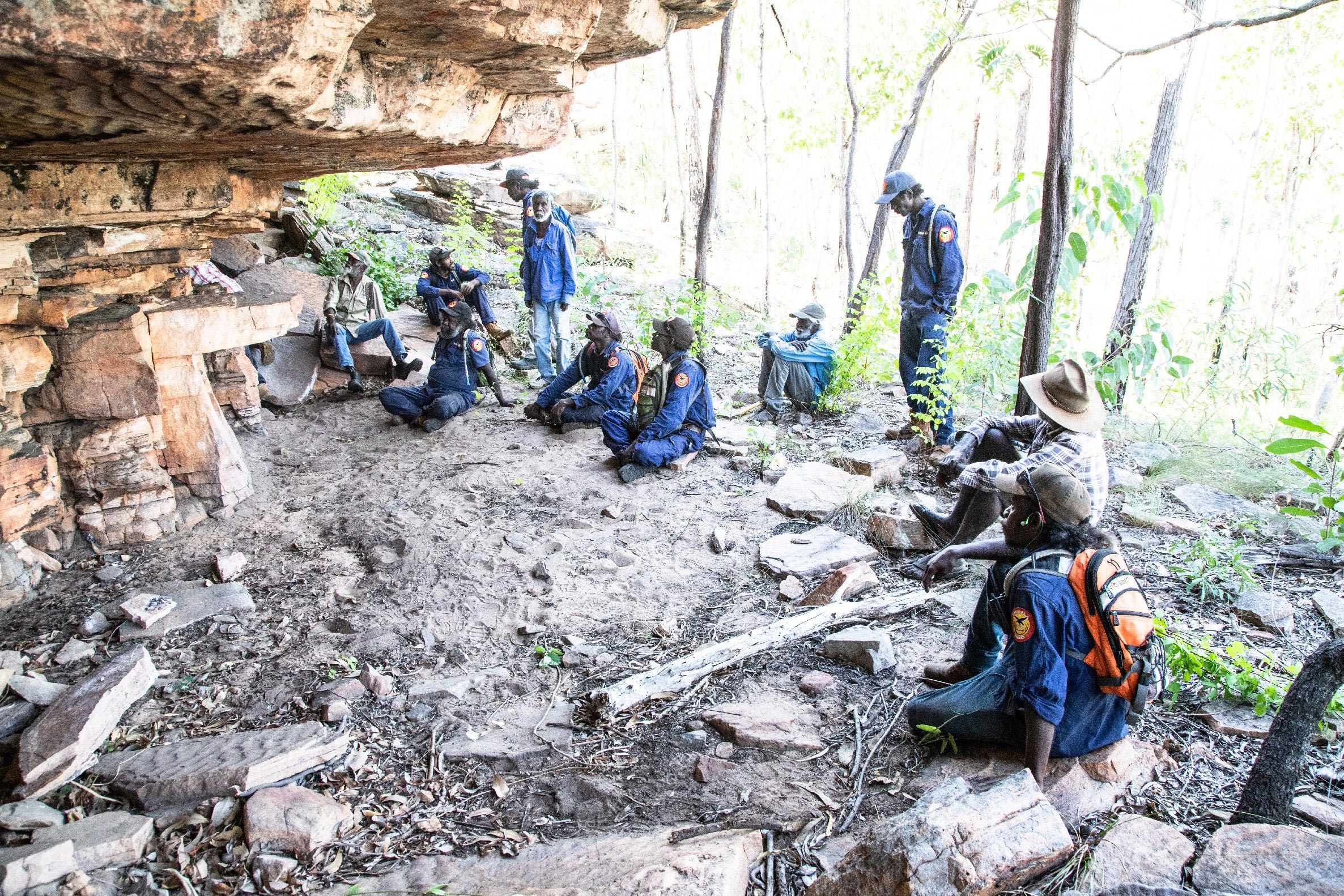
    Wilton River Rock Art Survey Team at Korbbolyu Outstation
    The Mimal and Flinders University Wilton River rock art survey team at Korbbolyu outstation, the base camp for the 2018 and 2019 surveys. Senior landowner Dudley Lawrence is seated in the front row (checked shirt). Credit: MLMAC

    Reference: “Reconstructing rock art chronology with transfer learning: A case study from Arnhem Land, Australia” by Jarrad Kowlessar, James Keal, Daryl Wesley, Ian Moffat, Dudley Lawrence, Abraham Weson, Alfred Nayinggul and the Mimal Land Management Aboriginal Corporation, 30 March 2021, Australian Archaeology.
    DOI 10.1080/03122417.2021.1895481

    Acknowledgements: This research was supported by Australian Research Council DECRA grants to Dr. Wesley (DE170101447) and Dr. Moffat (DE160100703), and a Flinders Early Career Researcher Impact Seed Grant and Research Investment Fund Grant to Dr. Moffat.

    Never miss a breakthrough: Join the SciTechDaily newsletter.
    Follow us on Google and Google News.

    Anthropology Archaeology Culture Flinders University History Machine Learning
    Share. Facebook Twitter Pinterest LinkedIn Email Reddit

    Related Articles

    Medieval Injuries: Inequality in Cambridge Was “Recorded on the Bones” of Its Residents

    When Good Governments Go Bad: History Shows That Societies Collapse When Leaders Undermine Social Contracts

    Defining Moment in Human Evolution: Turbulent Era Sparked Leap in Human Behavior, Technology 320,000 Years Ago

    Vast Stone Monuments Discovered in Saudi Arabia Were Constructed in 7,000 Years Ago

    Grape Seeds Reveal Collapse of Ancient Economy in the Grip of Plague and Climate Change

    29,000 Years of Aboriginal History: Uncovering New Layers of River Murray Occupation

    Hidden Murray River Rockshelter Reveals Aboriginal Art, Frontier Conflict and a Swastika

    Migrations Reconstructed Through Ancient DNA: Each Mediterranean Island Has Its Own Genetic Pattern

    How Ancient Poop Debunked Myth of Native American Lost Civilization

    Leave A Reply Cancel Reply

    • Facebook
    • Twitter
    • Pinterest
    • YouTube

    Don't Miss a Discovery

    Subscribe for the Latest in Science & Tech!

    Trending News

    What Causes Chronic Pain? Scientists Identify Key Culprit in the Brain

    Semaglutide Shows Surprising Mental Health Benefits in Massive 100,000-Person Study

    This Liquid Snapped Instead of Flowing and Scientists Were Shocked

    Breakthrough Alzheimer’s Drug Rewires the Brain Instead of Just Clearing Plaques

    Scientists Discover Hidden “Footprint of Death” That Could Transform How We Fight Disease

    A Simple Nose Swab Could Detect Alzheimer’s Years Before Symptoms Appear

    Scientists Just Rewrote the Timeline of Complex Life on Earth

    Teenager’s Fossil Find Leads to Discovery of Shark Teeth in 5 Million-Year-Old Whale Skull

    Follow SciTechDaily
    • Facebook
    • Twitter
    • YouTube
    • Pinterest
    • Newsletter
    • RSS
    SciTech News
    • Biology News
    • Chemistry News
    • Earth News
    • Health News
    • Physics News
    • Science News
    • Space News
    • Technology News
    Recent Posts
    • Even “Failed” Diets May Deliver Long-Term Health Gains, Study Finds
    • Childhood Junk Food May Rewire the Brain for Life
    • NIH Scientists Discover Powerful New Opioid That Relieves Pain Without Dangerous Side Effects
    • Breakthrough Study Reveals Why Damaged Nerves Struggle To Heal
    • 20-Year Study Reveals Cholera’s Surprising Weakness
    Copyright © 1998 - 2026 SciTechDaily. All Rights Reserved.
    • Science News
    • About
    • Contact
    • Editorial Board
    • Privacy Policy
    • Terms of Use

    Type above and press Enter to search. Press Esc to cancel.