
Close Menu
    Facebook X (Twitter) Instagram
    SciTechDaily
    • Biology
    • Chemistry
    • Earth
    • Health
    • Physics
    • Science
    • Space
    • Technology
    Facebook X (Twitter) Pinterest YouTube RSS
    SciTechDaily
    Home»Space»First James Webb Space Telescope General Observer Scientific Programs Selected
    Space

    First James Webb Space Telescope General Observer Scientific Programs Selected

    By European Space Agency (ESA)April 4, 2021No Comments4 Mins Read
    Facebook Twitter Pinterest Telegram LinkedIn WhatsApp Email Reddit
    Share
    Facebook Twitter LinkedIn Pinterest Telegram Email Reddit
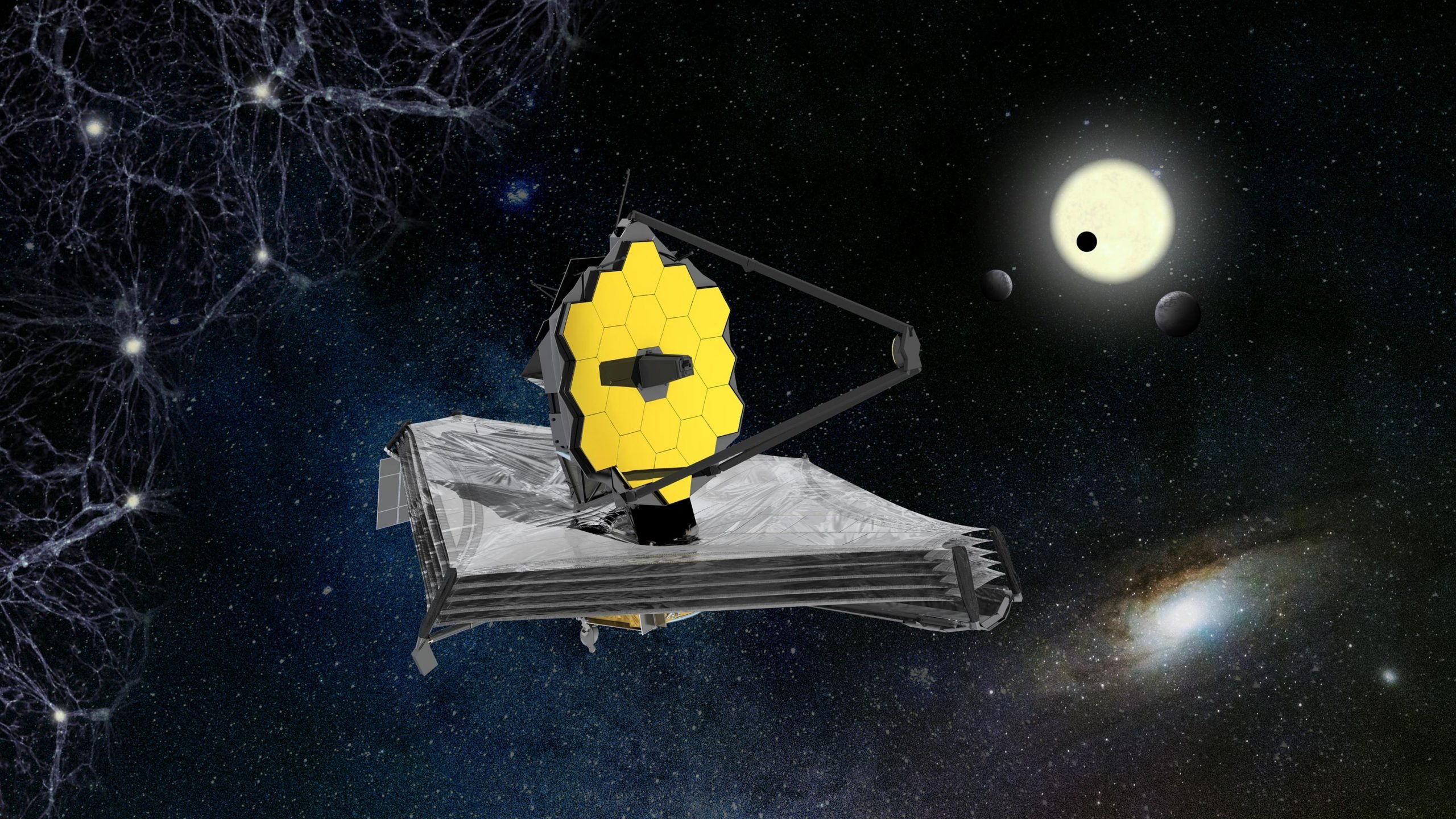
    James Webb Space Telescope Artist's Impression
    The James Webb Space Telescope is a space observatory to see further into the Universe than ever before. It is designed to answer outstanding questions about the Universe and to make breakthrough discoveries in all fields of astronomy. Webb will observe the Universe’s first galaxies, reveal the birth of stars and planets, and look for exoplanets with the potential for life. Closer to home, Webb will also look at our own Solar System in new light. Credit: ESA/ATG medialab

    The General Observer scientific observations for the NASA/ESA/CSA James Webb Space Telescope’s first year of operation have been selected. Proposals from ESA member states comprise 33% of the total number of selected proposals and correspond to 30% of the available telescope time on Webb.

    The NASA/ESA/CSA James Webb Space Telescope will be the world’s premier space science observatory when it launches later this year. Webb will solve mysteries about our Solar System, look at distant worlds around other stars, and probe the mysterious structures and origins of our Universe. Webb is an international program led by NASA with its partners, the European Space Agency (ESA) and the Canadian Space Agency (CSA).

    Mission officials for Webb have announced the selection of the General Observer programs for the telescope’s first year, known as Cycle 1. These specific programs will provide the astronomical community worldwide with their first extensive opportunity to investigate scientific targets with Webb. The selected proposals address a wide variety of science areas and will help fulfill ESA’s overarching mission to further our understanding of the Universe and our place in it.

    General Observer time with Webb is extremely competitive. As a result, the proposal selection process is rigorous. Members of the astronomical community were assigned to different panels covering broad scientific topics. Of these, 52 were from ESA member states. The panels met virtually, owing to the COVID-19 pandemic, over the course of three weeks and members spent additional countless hours reading and assessing the proposals.

    A total of 1172 proposals were received before the deadline. Scientists from 44 countries applied for a portion of the 6000 observing hours made available. This represents about two-thirds of all Cycle 1 observing time, the rest of which is allocated to Early Release Science and Guaranteed Time (GTO) programs. Of the 266 selected observing proposals, 33% are from ESA member states, corresponding to 30% of the available telescope time on Webb during the first cycle. Furthermore, of the selected proposals, 41% will primarily use Webb’s NIRSpec instrument and 28% will primarily make use of the MIRI instrument.

    “We celebrate the very successful partnership between the European Space Agency and our colleagues at NASA and CSA. We look forward to the beautiful images and spectra and the amazing discoveries that Webb will make in this first year of observations,” said Günther Hasinger, ESA Director of Science.

    “At ESA, we are thrilled to see the great engagement and fantastic success of the European astronomical community in obtaining precious observation time on this extraordinary mission, the James Webb Space Telescope,” said Antonella Nota, Head of the ESA Office at the Space Telescope Science Institute (STScI) in Baltimore, USA.

    ESA provided two instruments to the James Webb Space Telescope mission. This includes the entirety of the NIRSpec instrument, a near-infrared spectrograph that will enable large spectroscopic surveys of astronomical objects such as stars or distant galaxies. ESA also has a 50% share of the MIRI instrument, the only instrument on the telescope that is capable of operating at mid-infrared wavelengths. The telescope will launch on an Ariane 5 rocket from Europe’s Spaceport in French Guiana.

    The full list of General Observer programs is available here.

    Never miss a breakthrough: Join the SciTechDaily newsletter.
    Follow us on Google and Google News.

    Astronomy Astrophysics European Space Agency James Webb Space Telescope NASA Popular
    Share. Facebook Twitter Pinterest LinkedIn Email Reddit

    Related Articles

    Webb Peers Into Frozen Heart of Molecular Cloud – Unveils Dark Side of Pre-Stellar Ice Chemistry

    Major Milestone: NASA’s Webb Space Telescope Discovers Earliest Galaxies in the Universe

    Galactic Collision: Webb Space Telescope Explores Frenzied Star Formation in Merging Galaxies

    Webb Space Telescope To Provide Details of Two Intriguing “Super-Earths” in the Milky Way

    Webb Space Telescope: Uncovering Hidden Parts of Our Solar System

    Back to the Spectacular Firestorm of Star Birth at the Beginning of the Universe: Probing the First Galaxies With Webb

    Hubble Captures Unprecedented Fading of Stingray Nebula – “This Is Very, Very Dramatic, and Very Weird”

    Time Traveling to Deliver the Unseen: Mapping the Early Universe With NASA’s Webb Space Telescope

    Stars Gone Haywire Revealed in Stunning New Hubble Space Telescope Images

    Leave A Reply Cancel Reply

    • Facebook
    • Twitter
    • Pinterest
    • YouTube

    Don't Miss a Discovery

    Subscribe for the Latest in Science & Tech!

    Trending News

    Mezcal “Worm” in a Bottle Mystery: DNA Testing Reveals a Surprise

    New Research Reveals That Your Morning Coffee Activates an Ancient Longevity Switch

    This Is What Makes You Irresistible to Mosquitoes

    Shockingly Powerful Giant Octopuses Ruled the Seas 100 Million Years Ago

    Scientists Stunned by New Organic Molecules Found on Mars

    Rewriting Dinosaur Evolution: Scientists Unearth Remarkable 150-Million-Year-Old Stegosaur Skull

    Omega-3 Supplements Linked to Cognitive Decline in Surprising New Study

    First-of-Its-Kind Discovery: Homer’s Iliad Found Embedded in a 1,600-Year-Old Egyptian Mummy

    Follow SciTechDaily
    • Facebook
    • Twitter
    • YouTube
    • Pinterest
    • Newsletter
    • RSS
    SciTech News
    • Biology News
    • Chemistry News
    • Earth News
    • Health News
    • Physics News
    • Science News
    • Space News
    • Technology News
    Recent Posts
    • Male Birth Control Breakthrough: Scientists Find Way To Turn Sperm Production Off and Back On
    • A Common Vitamin Could Hold the Key to Treating Fatty Liver Disease
    • New Research Shows Vitamin B12 May Hold the Key to Healthy Aging
    • Scientists Map Thousands of Brain Connections With RNA Barcodes
    • This Gene Tweak Turns Strawberries Into Healthier, Tastier Superfruit
    Copyright © 1998 - 2026 SciTechDaily. All Rights Reserved.
    • Science News
    • About
    • Contact
    • Editorial Board
    • Privacy Policy
    • Terms of Use

    Type above and press Enter to search. Press Esc to cancel.