

A groundbreaking study reveals evidence that, in Iron Age Britain, land inheritance followed the female line, with husbands relocating to live within their wives’ communities. This marks the first documented instance of such a system in European prehistory.
An international team of geneticists, led by researchers from Trinity College Dublin, collaborated with archaeologists from Bournemouth University to uncover insights into the structure of British Iron Age society. Their findings provide evidence of significant female political and social influence.
The researchers capitalized on a unique opportunity to sequence DNA from numerous individuals within a single community. They analyzed over 50 ancient genomes obtained from burial sites in Dorset, southern England, dating to periods both before and after the Roman Conquest of AD 43. The analysis revealed that this community was organized around matrilineal bonds—connections through female-line descent.
Dr. Lara Cassidy, Assistant Professor in Trinity’s Department of Genetics, led the study that has been published in leading international journal Nature. She said: “This was the cemetery of a large kin group. We reconstructed a family tree with many different branches and found most members traced their maternal lineage back to a single woman, who would have lived centuries before. In contrast, relationships through the father’s line were almost absent.
“This tells us that husbands moved to join their wives’ communities upon marriage, with land potentially passed down through the female line. This is the first time this type of system has been documented in European prehistory and it predicts female social and political empowerment.
“It’s relatively rare in modern societies, but this might not always have been the case.”
Evidence of Widespread Matrilocality
Incredibly, the team found that this type of social organization, termed “matrilocality,” was not just restricted to Dorset. They sifted through data from prior genetic surveys of Iron Age Britain and, although sample numbers from other cemeteries were smaller, they saw the same pattern emerge again and again.
Dan Bradley, Professor of Population Genetics in Trinity’s Department of Genetics, and a co-author of the study, added: “Across Britain, we saw cemeteries where most individuals were maternally descended from a small set of female ancestors. In Yorkshire, for example, one dominant matriline had been established before 400 BC. To our surprise, this was a widespread phenomenon with deep roots on the island.”
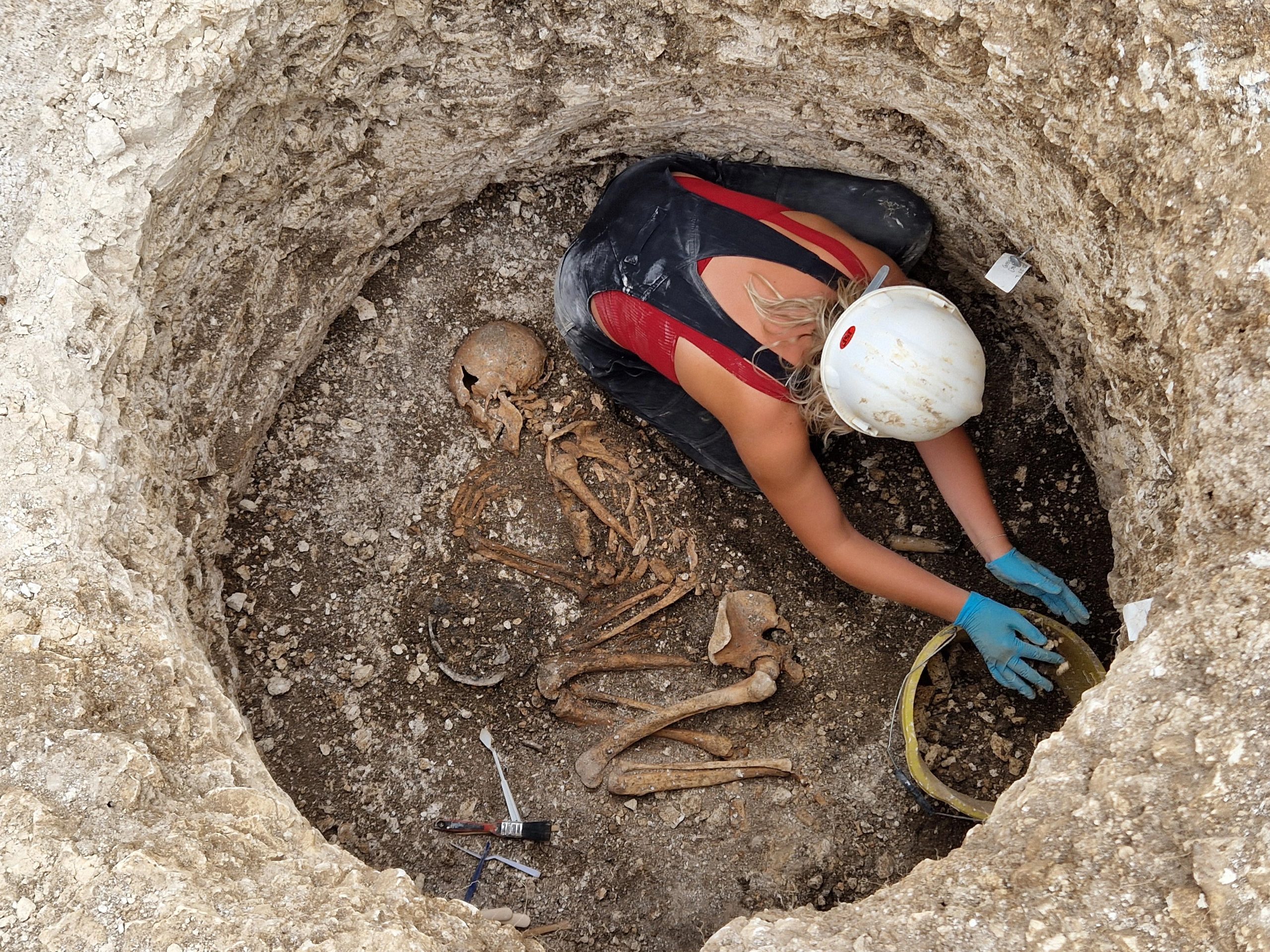
Iron Age cemeteries with well-preserved burials are rare in Britain. Dorset is an exception, due to the unique burial customs of the people who lived there, named as the “Durotriges” by the Romans. The researchers sampled DNA from a site near the village of Winterborne Kingston, nicknamed “Duropolis”, which archaeologists from Bournemouth University have been excavating since 2009. Previously, the team had observed the more richly furnished Durotrigan burials to be those of women.
Family Dynamics and Ancestral Knowledge
Dr. Miles Russell, the excavation’s director and co-author on the study, commented: “Beyond archaeology, knowledge of Iron Age Britain has come primarily from the Greek and Roman writers, but they are not always considered the most trustworthy. That said, their commentary on British women is remarkable in light of these findings. When the Romans arrived, they were astonished to find women occupying positions of power. Two of the earliest recorded rulers were queens – Boudica and Cartimandua – who commanded armies.
“It’s been suggested that the Romans exaggerated the liberties of British women to paint a picture of an untamed society. But archaeology, and now genetics, implies women were influential in many spheres of Iron Age life. Indeed, it is possible that maternal ancestry was the primary shaper of group identities.”
Anthropologist Dr. Martin Smith, one of the project’s bone specialists, added: “These results give us a whole new way of looking at the burials we are uncovering with our students. Rather than simply seeing a set of skeletons, hidden aspects of these people’s lives and identities come into view as mothers, husbands, daughters, and so on. We also see these folk had a deep knowledge of their own ancestry – multiple marriages between distant branches of this family occurred and were possibly favored, but close inbreeding was avoided.”
Echoing the writings of Julius Caesar, the researchers further uncovered a footprint of Iron Age migration into coastal southern England, which had gone undetected in prior genetic studies. This will add more fuel to debates surrounding the arrival of Celtic language in Britain.
Dr. Cassidy explained: “Migration into Britain during the later Bronze Age has previously been detected, leading some to hypothesize that the Celtic language arrived during this period. But our results point towards substantial cross-channel mobility during the Iron Age as well. Narrowing down the arrival time of Celtic will be difficult. Indeed, it is quite possible that Celtic languages were introduced to Britain on more than one occasion.”
Reference: “Continental influx and pervasive matrilocality in Iron Age Britain” by Lara M. Cassidy, Miles Russell, Martin Smith, Gabrielle Delbarre, Paul Cheetham, Harry Manley, Valeria Mattiangeli, Emily M. Breslin, Iseult Jackson, Maeve McCann, Harry Little, Ciarán G. O’Connor, Beth Heaslip, Daniel Lawson, Phillip Endicott and Daniel G. Bradley, 15 January 2025, Nature.
DOI: 10.1038/s41586-024-08409-6
Funding: Taighde Eireann — Research Ireland, Health Research Board, Wellcome Trust
Never miss a breakthrough: Join the SciTechDaily newsletter.
Follow us on Google and Google News.
1 Comment
No way, women were in charge? I’ve been told my whole life that men have always been in charge in every country everywhere and held woman back and down always, glad to hear that’s not as true.