
Close Menu
    Facebook X (Twitter) Instagram
    SciTechDaily
    • Biology
    • Chemistry
    • Earth
    • Health
    • Physics
    • Science
    • Space
    • Technology
    Facebook X (Twitter) Pinterest YouTube RSS
    SciTechDaily
    Home»Science»The Origin of Feces: Using AI & DNA to Reliably Predict Sources of Ancient Poop
    Science

    The Origin of Feces: Using AI & DNA to Reliably Predict Sources of Ancient Poop

    By Max Planck Institute for the Science of Human HistoryApril 17, 2020No Comments4 Mins Read
    Facebook Twitter Pinterest Telegram LinkedIn WhatsApp Email Reddit
    Share
    Facebook Twitter LinkedIn Pinterest Telegram Email Reddit
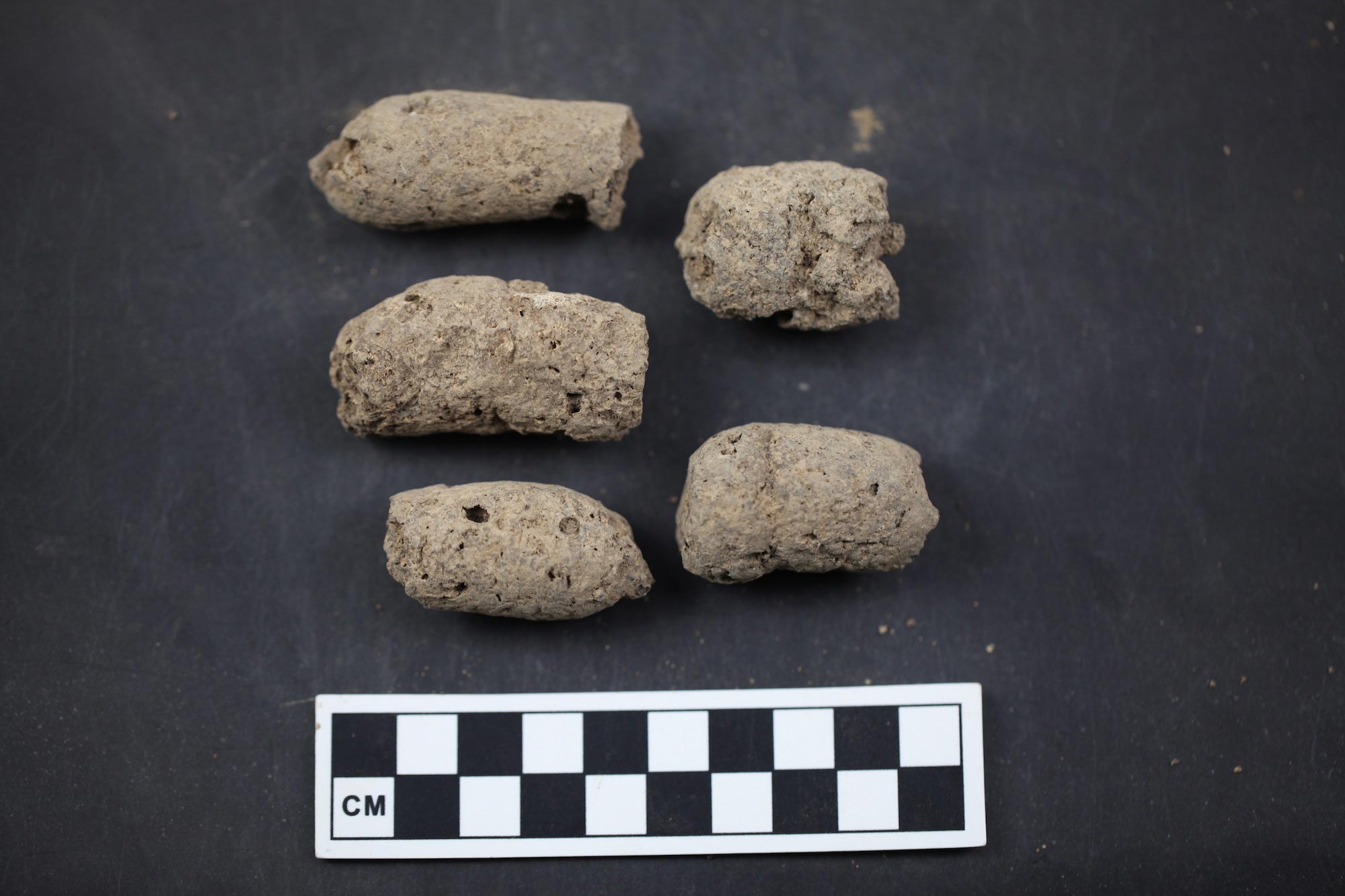
    Coprolites
    H35 (Ash pit number 35) coprolites from Xiaosungang archaeological site, Anhui Province, China. Credit: Jada Ko, courtesy of the Anhui Provincial Institute of Cultural Relics and Archaeology

    New method of discerning sources of ancient feces makes this archaeological find far more informative.

    The archaeological record is littered with feces, a potential goldmine for insights into ancient health and diet, parasite evolution, and the ecology and evolution of the microbiome. The main problem for researchers is determining whose feces is under examination. A recent study published in the journal PeerJ, led by Maxime Borry and Christina Warinner of Max Planck Institute for the Science of Human History (MPI-SHH), presents “CoproID: a reliable method of inferring sources of paleofeces.”

    Machine learning enables reliable classification

    After thousands of years, the source of a particular piece of feces can be difficult to determine. Distinguishing human and dog feces is particularly difficult: they are similar in size and shape, occur at the same archaeological sites, and have similar compositions. In addition, dogs were on the menu for many ancient societies, and our canine friends have a tendency to scavenge on human feces, thus making simple genetic tests problematic, as such analyses can return DNA from both species.

    Amaranth Pollen
    Scanning Electron Microscopy (SEM) picture of an Amaranth pollen grain in coprolite from the Cueva de los Muertos Chiquitos archaeological site, Rio Zape Valley, Durango, Mexico. Credit: Karl Reinhard

    In order to access the insights contained within paleofeces, the researchers developed coproID (coprolite identification). The method combines analysis of ancient host DNA with a machine learning software trained on the microbiomes within modern feces. Applying coproID to both newly sequenced and previously published datasets, the team of researchers from the MPI-SHH, Harvard University, and the University of Oklahoma were able to reliably predict the sources of ancient feces, showing that a combination of host DNA and the distinct colonies of microbes living inside humans and dogs allow their feces to be accurately distinguished.

    Classification capability provides insights into digestive health

    “One unexpected finding of our study is the realization that the archaeological record is full of dog poop,” says Professor Christina Warinner, senior author of the study. But Warinner also expects coproID to have broader applications, especially in the fields of forensics, ecology, and microbiome sciences.
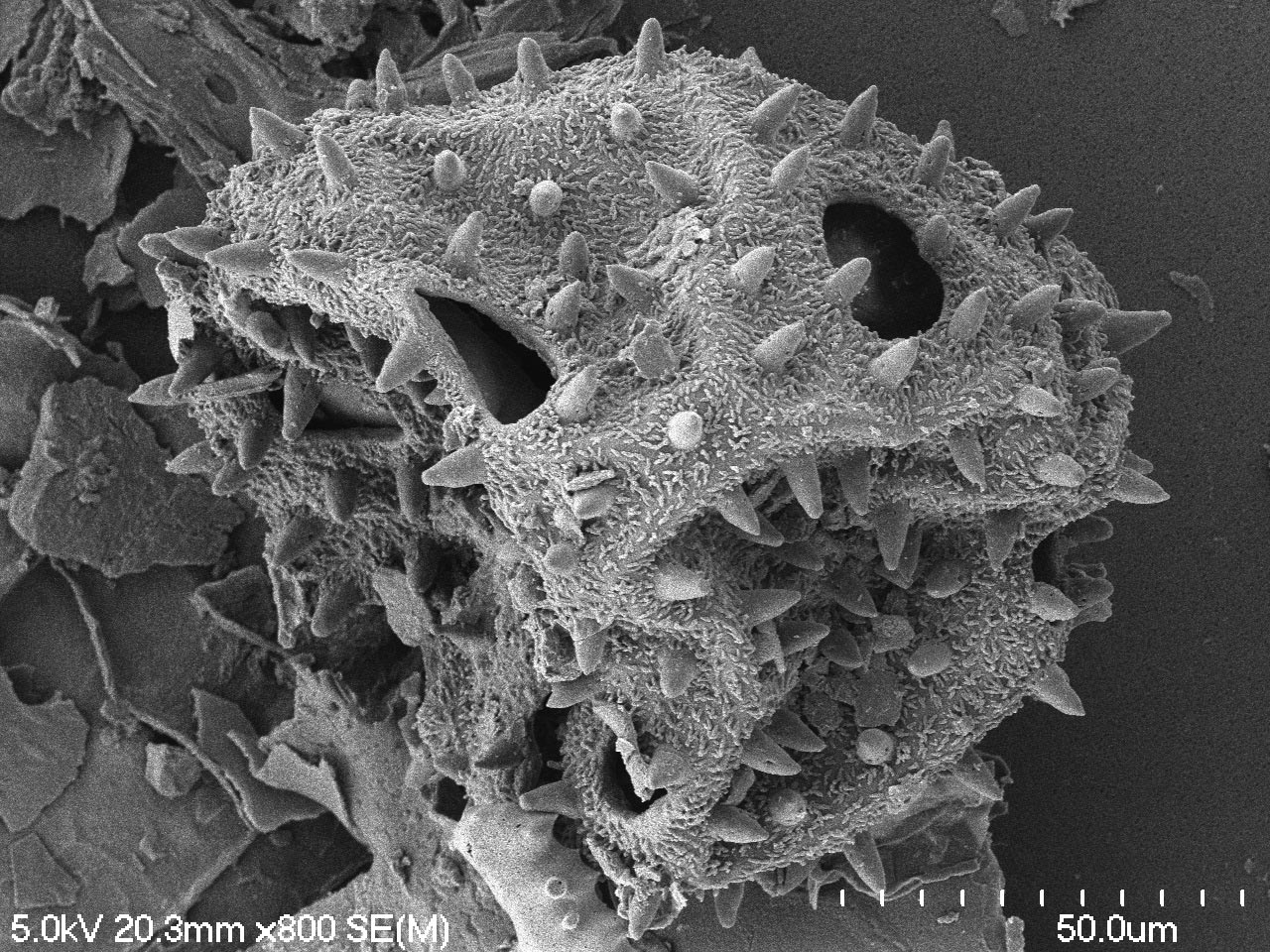
    Squash Pollen
    Scanning Electron Microscopy (SEM) picture of a squash pollen grain in coprolite from the Cueva de los Muertos Chiquitos archaeological site, Rio Zape Valley, Durango, Mexico. Credit: Karl Reinhard

    The ability to accurately identify the source of archaeological feces enables the direct investigation of changes in the structure and function of the human gut microbiome throughout time, which researchers hope will provide insights into food intolerances and a host of other issues in human health. “Identifying human coprolites should be the first step for ancient human microbiome analysis,” says the study’s first author, Maxime Borry.

    “With additional data about the gut metagenomes of non-Westernized rural dogs, we’ll be better able to classify even more ancient dog feces as in fact being canine, as opposed to ‘uncertain,'” Borry adds. As the catalog of human and dog microbiome data grows, coproID will continue to improve its classifications and better aid researchers that encounter paleofeces in a range of geographic and historical contexts.

    Reference: “CoproID predicts the source of coprolites and paleofeces using microbiome composition and host DNA content” by Maxime Borry​, Bryan Cordova, Angela Perri, Marsha Wibowo, Tanvi Prasad Honap, Jada Ko, Jie Yu, Kate Britton, Linus Girdland-Flink, Robert C. Power, Ingelise Stuijts, Domingo C. Salazar-García, Courtney Hofman, Richard Hagan, Thérèse Samdapawindé Kagoné, Nicolas Meda, Helene Carabin, David Jacobson, Karl Reinhard, Cecil Lewis, Aleksandar Kostic, Choongwon Jeong, Alexander Herbig, Alexander Hübner and  Christina Warinner, 17 April 2020, PeerJ.
    DOI: 10.7717/peerj.9001

    Never miss a breakthrough: Join the SciTechDaily newsletter.
    Follow us on Google and Google News.

    Archaeology DNA Food Science Genetics Machine Learning Max Planck Institute
    Share. Facebook Twitter Pinterest LinkedIn Email Reddit

    Related Articles

    Ancient 10,000-Year-Old DNA Unlocks Secrets of Human Evolution

    How Ancient Human and Animal DNA Is Preserved in Archaeological Sediments for Thousands of Years

    Reconstructing Genetics To Shed Light on Past Human Histories

    Ancient DNA Continues to Rewrite the 9,000-Year Society-Shaping History of Corn

    First Large-Scale Genetic Analysis of Ancient Andean Civilizations

    Analyzing the Current Ethical Landscape of Ancient DNA Research

    Ancient DNA Study Reveals the Genomic History of Southeastern Europe

    Scientists Reveal the Complex Story Behind the Beaker Phenomenon

    Genome Data Shows Ancient Egyptian Mummies Closely Related to Ancient Populations from the Near East

    Leave A Reply Cancel Reply

    • Facebook
    • Twitter
    • Pinterest
    • YouTube

    Don't Miss a Discovery

    Subscribe for the Latest in Science & Tech!

    Trending News

    Mezcal “Worm” in a Bottle Mystery: DNA Testing Reveals a Surprise

    New Research Reveals That Your Morning Coffee Activates an Ancient Longevity Switch

    This Is What Makes You Irresistible to Mosquitoes

    Shockingly Powerful Giant Octopuses Ruled the Seas 100 Million Years Ago

    Scientists Stunned by New Organic Molecules Found on Mars

    Rewriting Dinosaur Evolution: Scientists Unearth Remarkable 150-Million-Year-Old Stegosaur Skull

    Omega-3 Supplements Linked to Cognitive Decline in Surprising New Study

    First-of-Its-Kind Discovery: Homer’s Iliad Found Embedded in a 1,600-Year-Old Egyptian Mummy

    Follow SciTechDaily
    • Facebook
    • Twitter
    • YouTube
    • Pinterest
    • Newsletter
    • RSS
    SciTech News
    • Biology News
    • Chemistry News
    • Earth News
    • Health News
    • Physics News
    • Science News
    • Space News
    • Technology News
    Recent Posts
    • This New Chip Could Make GPUs Far More Efficient
    • This Tiny World in the Outer Solar System Should Be Airless, but It Has an Atmosphere
    • NASA’s Webb Space Telescope Reveals a Dark Airless Super-Earth That Looks Like Mercury
    • These Simple Daily Habits Can Quickly Improve Blood Pressure and Heart Risk Factors
    • A Common Nutrient May Play a Surprising Role in Anxiety
    Copyright © 1998 - 2026 SciTechDaily. All Rights Reserved.
    • Science News
    • About
    • Contact
    • Editorial Board
    • Privacy Policy
    • Terms of Use

    Type above and press Enter to search. Press Esc to cancel.