
Close Menu
    Facebook X (Twitter) Instagram
    SciTechDaily
    • Biology
    • Chemistry
    • Earth
    • Health
    • Physics
    • Science
    • Space
    • Technology
    Facebook X (Twitter) Pinterest YouTube RSS
    SciTechDaily
    Home»Science»DNA Sequencing Solves 4,000-Year-Old Egyptian Mummy Mystery
    Science

    DNA Sequencing Solves 4,000-Year-Old Egyptian Mummy Mystery

    By Konstantina Drosou, University of ManchesterJanuary 17, 20182 Comments3 Mins Read
    Facebook Twitter Pinterest Telegram LinkedIn WhatsApp Email Reddit
    Share
    Facebook Twitter LinkedIn Pinterest Telegram Email Reddit
    Ancient DNA Solves 4,000 Year Old Egyptian Mummy Mystery
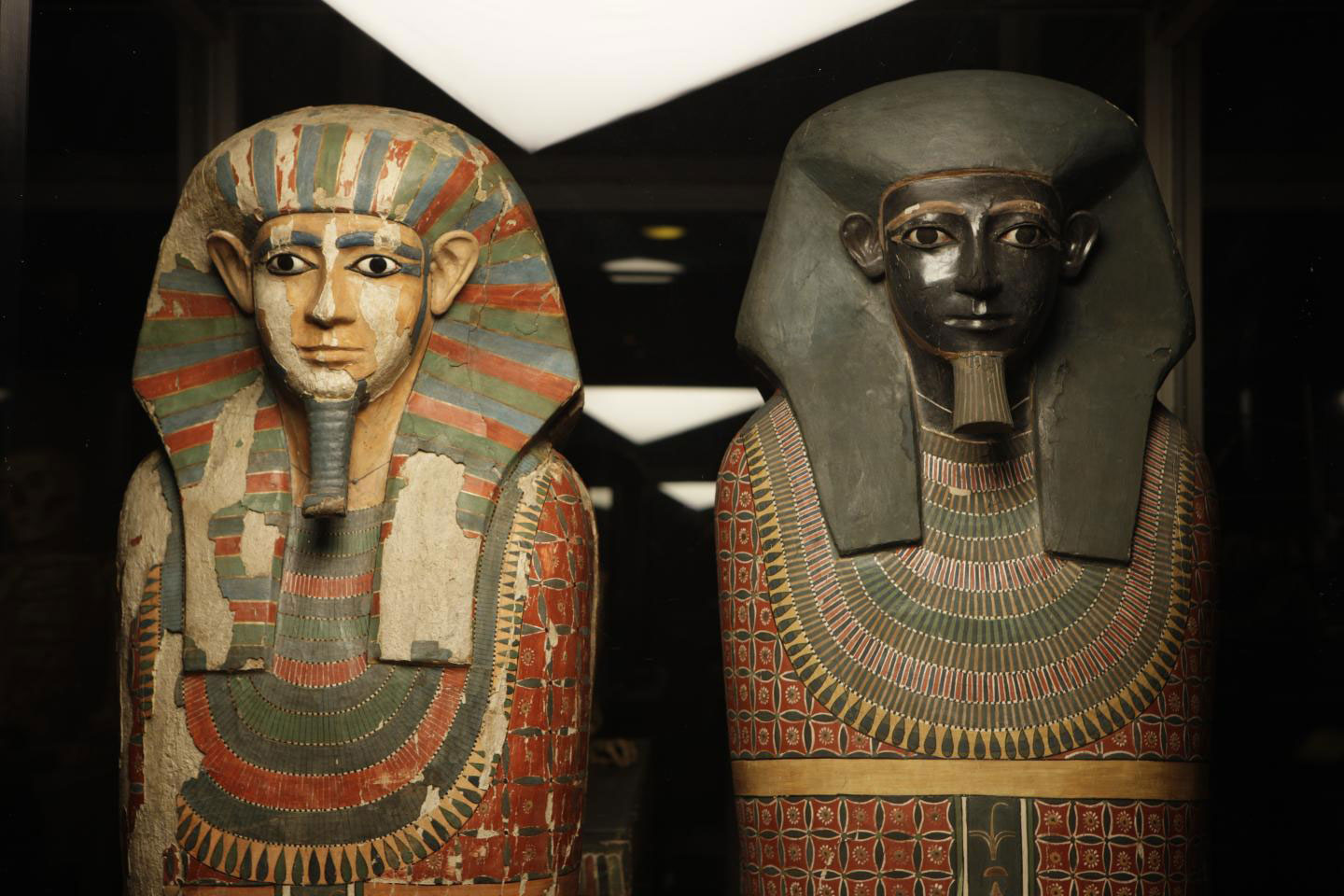
    The Two Brothers are the Museum’s oldest mummies and amongst the best-known human remains in its Egyptology collection. They are the mummies of two elite men — Khnum-nakht and Nakht-ankh — dating to around 1800 BC. Manchester Museum, The University of Manchester

    Using ‘next generation’ DNA sequencing scientists have found that the famous ‘Two Brothers’ mummies of the Manchester Museum have different fathers so are, in fact, half-brothers.

    The Two Brothers are the Museum’s oldest mummies and amongst the best-known human remains in its Egyptology collection. They are the mummies of two elite men – Khnum-nakht and Nakht-ankh – dating to around 1800 BC.

    However, ever since their discovery in 1907, there has been some debate amongst Egyptologists whether the two were actually related at all. So, in 2015, ‘ancient DNA’ was extracted from their teeth to solve the mystery.

    But how did the mystery start? The pair’s joint burial site, later dubbed The Tomb of The Two Brothers, was discovered at Deir Rifeh, a village 250 miles south of Cairo.

    They were found by Egyptian workmen directed by early 20th-century Egyptologists, Flinders Petrie and Ernest Mackay. Hieroglyphic inscriptions on the coffins indicated that both men were the sons of an unnamed local governor and had mothers with the same name, Khnum-aa. It was then the men became known as the Two Brothers.

    When the complete contents of the tomb were shipped to Manchester in 1908 and the mummies of both men were unwrapped by the UK’s first professional female Egyptologist, Dr. Margaret Murray. Her team concluded that the skeletal morphologies were quite different, suggesting an absence of family relationship. Based on contemporary inscriptional evidence, it was proposed that one of the Brothers was adopted.


    Using ‘next generation’ DNA sequencing scientists have found that the famous ‘Two Brothers’ mummies of the Manchester Museum have different fathers so are, in fact, half-brothers.

    Therefore, in 2015, the DNA was extracted from the teeth and, following hybridization capture of the mitochondrial and Y chromosome fractions, sequenced by a next-generation method. Analysis showed that both Nakht-Ankh and Khnum-Nakht belonged to mitochondrial haplotype M1a1, suggesting a maternal relationship. The Y chromosome sequences were less complete but showed variations between the two mummies, indicating that Nakht-Ankh and Khnum-Nakht had different fathers, and were thus very likely to have been half-brothers.

    Dr. Konstantina Drosou, of the School of Earth and Environmental Sciences at the University of Manchester who conducted the DNA sequencing, said: “It was a long and exhausting journey to the results but we are finally here. I am very grateful we were able to add a small but very important piece to the big history puzzle and I am sure the brothers would be very proud of us. These moments are what make us believe in ancient DNA. ”

    The study, which is being published in the Journal of Archaeological Science, is the first to successfully use the typing of both mitochondrial and Y chromosomal DNA in Egyptian mummies.

    Dr. Campbell Price, Curator of Egypt and Sudan at Manchester Museum, said: “The University of Manchester, and Manchester Museum in particular, has a long history of research on ancient Egyptian human remains. Our reconstructions will always be speculative to some extent but to be able to link these two men in this way is an exciting first.”

    Reference: “The kinship of two 12th Dynasty mummies revealed by ancient DNA sequencing” by Konstantina Drosou, Campbell Price and Terence A. Brown, 28 December 2017, Journal of Archaeological Science: Reports.
    DOI: 10.1016/j.jasrep.2017.12.025

    Never miss a breakthrough: Join the SciTechDaily newsletter.
    Follow us on Google and Google News.

    Archaeology DNA Egyptology Mummy University of Manchester
    Share. Facebook Twitter Pinterest LinkedIn Email Reddit

    Related Articles

    What Do Mummies Smell Like? Researchers Finally Have the Answer

    What Does a Mummy Smell Like? Scientists Uncover Surprising Truth

    “Golden Boy” – Researchers Digitally Unwrap 2,300-Year-Old Undisturbed Mummy

    Mummy of Pharaoh Amenhotep I “Unwrapped” for the First Time in 3,000 Years – Here’s What Scientists Found

    Unique Snapshot of Ancient Animal Mummification Through Advanced X-ray Imaging

    Scientists Use X-Rays and Infrared Light to Explore Egyptian Mummy Bones [Video]

    Newly Discovered Prehistoric Bird Fossil Sheds Light on Avian Evolution

    Scientists Reveal the Complex Story Behind the Beaker Phenomenon

    Genome Data Shows Ancient Egyptian Mummies Closely Related to Ancient Populations from the Near East

    2 Comments

    1. Laura Salovitch on December 16, 2020 5:19 am

      Fascinating.

      Reply
    2. Daddy on November 22, 2025 6:14 pm

      You should really not. Stay out. The fact I would owe you telling is in the names. Patience is a virtue,and curses are real. Stay out. -X

      Reply
    Leave A Reply Cancel Reply

    • Facebook
    • Twitter
    • Pinterest
    • YouTube

    Don't Miss a Discovery

    Subscribe for the Latest in Science & Tech!

    Trending News

    One of the Universe’s Largest Stars May Be Getting Ready To Explode

    Scientists Discover Enzyme That Could Supercharge Ozempic-Like Weight Loss Drugs

    Popular Sweetener Linked to DNA Damage – “It’s Something You Should Not Be Eating”

    Ancient “Rock” Microbes May Reveal How Complex Life Began

    Researchers Capture Quantum Interference in One of Nature’s Rarest Atoms

    “A Plague Is Upon Us”: The Mass Death That Changed an Ancient City Forever

    Scientists Discover Game-Changing New Way To Treat High Cholesterol

    This Small Change to Your Exercise Routine Could Be the Secret to Living Longer

    Follow SciTechDaily
    • Facebook
    • Twitter
    • YouTube
    • Pinterest
    • Newsletter
    • RSS
    SciTech News
    • Biology News
    • Chemistry News
    • Earth News
    • Health News
    • Physics News
    • Science News
    • Space News
    • Technology News
    Recent Posts
    • Scientists Rethink Extreme Warming After Surprising Ocean Discovery
    • The Surprising Role of Asteroids in the Origin of Life
    • Scientists Raise Concerns Over Newly Recognized Pollutant Found Everywhere in the Air
    • New Study Challenges 40-Year Puzzle About Childhood Body Fat
    • 20-Year Study Finds Daily Multivitamins Don’t Extend Lifespan
    Copyright © 1998 - 2026 SciTechDaily. All Rights Reserved.
    • Science News
    • About
    • Contact
    • Editorial Board
    • Privacy Policy
    • Terms of Use

    Type above and press Enter to search. Press Esc to cancel.