
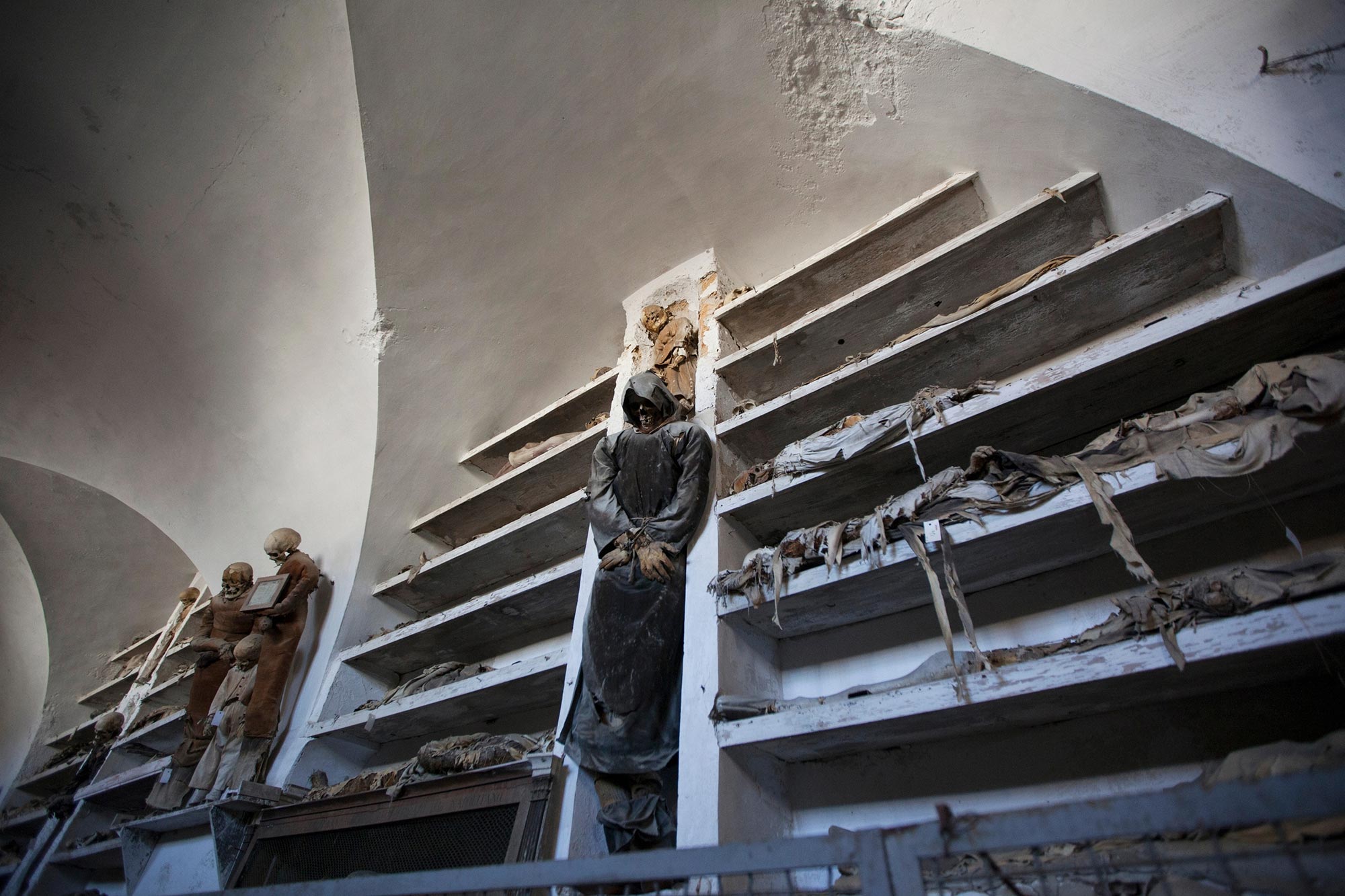
The first ever comprehensive study of mummified children in Sicily’s famous Capuchin Catacombs is being led by Staffordshire University.
Dr. Kirsty Squires, Associate Professor of Bioarchaeology, and her team have been given exclusive access to a previously unstudied collection of children’s mummies housed in the underground cemetery of the Capuchin Convent in Palermo.
The Catacombs contain the largest collection of mummies in Europe, with over 1,284 mummified and skeletonized bodies dating from the late sixteenth to early twentieth century. Children were accepted in the Catacombs from 1787 but while extensive research has been conducted on the mummified adults, the juvenile mummies have largely been overlooked.
“The Capuchin Catacombs comprise one of the most important collections of mummies in the world. However, there is very little documentary evidence about the children who were granted mummification and the death records from the period contain limited information. Our study will rectify this knowledge gap.” Dr. Kirsty Squires, Associate Professor of Bioarchaeology
Filling Historical Gaps in Juvenile Mummification
Dr. Squires explained: “The Capuchin Catacombs comprise one of the most important collections of mummies in the world. However, there is very little documentary evidence about the children who were granted mummification and the death records from the period contain limited information. Our study will rectify this knowledge gap.
“Given that this funerary rite was mainly reserved for adults, we want to understand why the children were mummified. We have a fairly good idea that they were from the upper ranks of society but we don’t know much more about juvenile health, development, or identity during this period. This project will provide essential data to determine which children were afforded mummification and to put this into a broader context.”
The Arts and Humanities Research Council has awarded more than £70k funding for the two-year project which begins in December 2021 and will see Dr. Squires work alongside Scientific Curator of the Capuchin Catacombs Dr. Dario Piombino-Mascali, and experts in radiography Dr. Robert Loynes, Dr. Mark Viner, and Mr. Wayne Hoban. The project will be carried out under the supervision of the Superintendence for the Cultural and Environmental Heritage of Palermo.
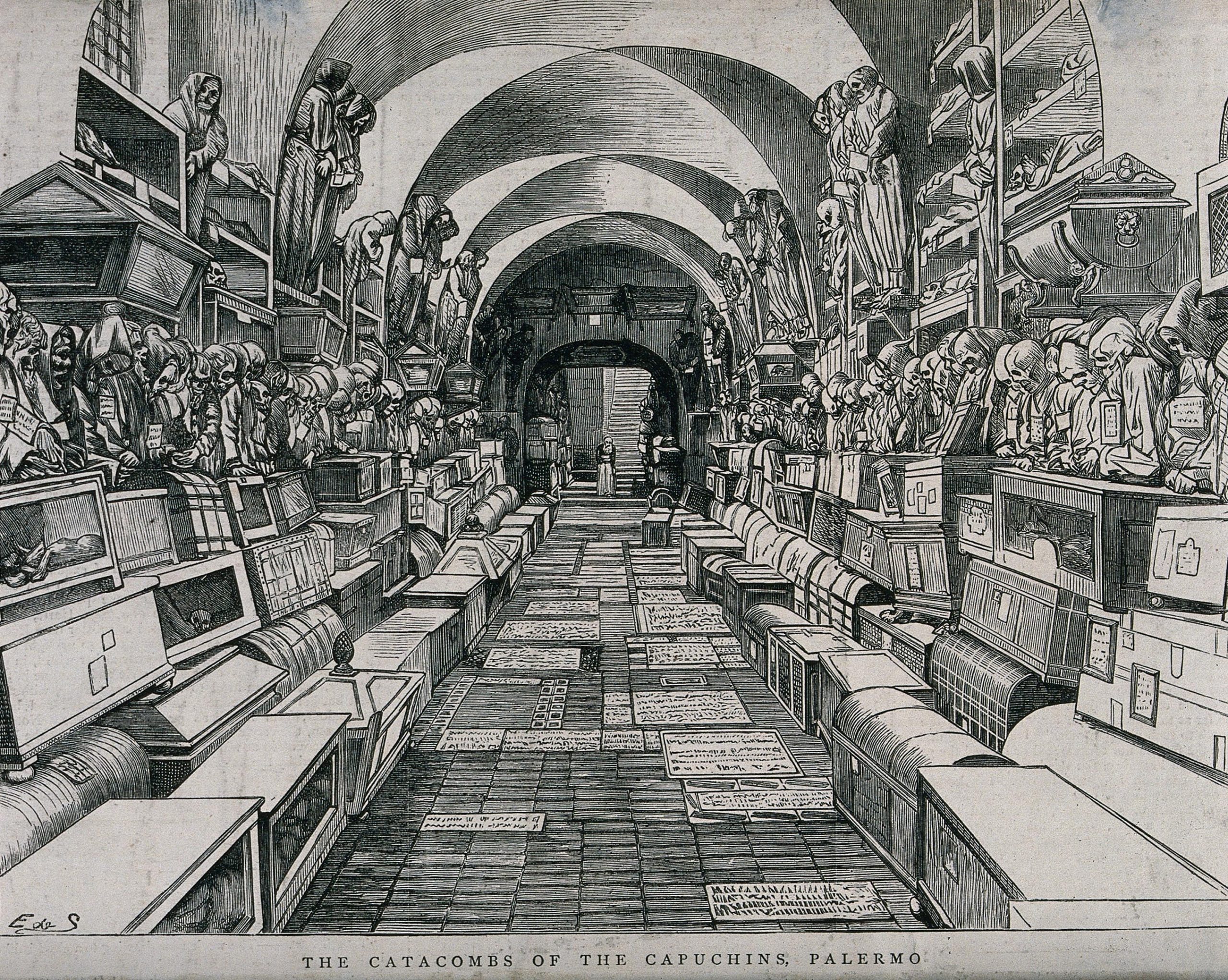
The vaults of the Capuchin tombs in Palermo. Credit: Wood engraving by E. de S.
The project will pioneer non-invasive methods – as opposed to destructive techniques such as autopsy – to analyze the remains of forty-one mummified children from the 19th century. This will involve using portable X-ray units to capture digital images of each child from head to toe. In total, 574 radiographs will be taken to help estimate their age and sex plus identify any pathological and traumatic lesions.
Dr. Squires said: “Determining whether children buried in the Catacombs suffered environmental stresses on their body can inform us of living conditions and the environments in which they lived; this will be compared with the biological attributes of children buried elsewhere in Palermo who were not afforded mummification.
Setting Global Standards for Ethical Study
“We hope that the creation of a standardized methodology will allow other researchers to apply this non-invasive method in the study of child mummies around the world – an important outcome given the ethical implications associated with invasive investigations.”
As photography is prohibited in the Catacombs and the subject matter is highly sensitive, artist Eduardo Hernandez will produce illustrations of the juvenile mummies to be shared alongside journal articles, lectures, a blog, and teaching packs translated into both Italian and English.
Dr. Squires added: “This is a really exciting opportunity to learn more about life in late modern Sicily. There is currently limited information about the mummification of children in the Catacombs meaning there is little context to the display of juvenile mummies. Our research will help tourists and the wider public learn more about the children housed in the Catacombs and the cultural significance of this mortuary rite.”
Never miss a breakthrough: Join the SciTechDaily newsletter.
Follow us on Google and Google News.