
Close Menu
    Facebook X (Twitter) Instagram
    SciTechDaily
    • Biology
    • Chemistry
    • Earth
    • Health
    • Physics
    • Science
    • Space
    • Technology
    Facebook X (Twitter) Pinterest YouTube RSS
    SciTechDaily
    Home»Space»Astronomers Discover Asteroid Captured from Another Star System
    Space

    Astronomers Discover Asteroid Captured from Another Star System

    By Morgan Hollis, Royal Astronomical SocietyMay 21, 2018No Comments3 Mins Read
    Facebook Twitter Pinterest Telegram LinkedIn WhatsApp Email Reddit
    Share
    Facebook Twitter LinkedIn Pinterest Telegram Email Reddit
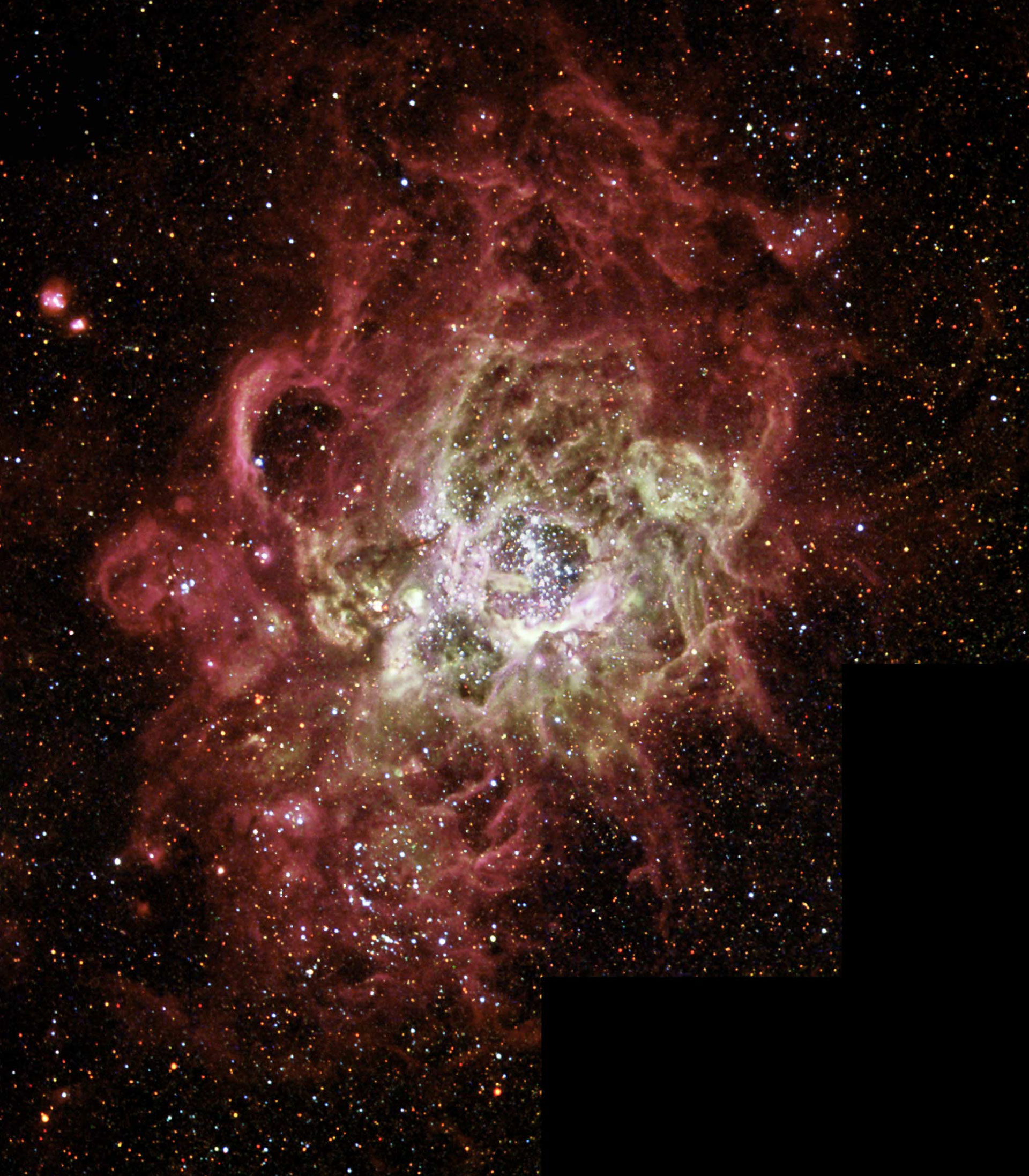
    Stellar Nursery NGC 604
    This is an image of stellar nursery NGC 604 (NASA/HST), where star systems are closely packed and asteroid exchange is thought to be possible. Asteroid (514107) 2015 BZ 509 emigrated from its parent star and settled around the Sun in a similar environment. NASA / Hubble Heritage Team (AURA/STScI)

    A new study has discovered the first known permanent immigrant to our Solar System. The asteroid, currently nestling in Jupiter’s orbit, is the first known asteroid to have been captured from another star system. The work is published in Monthly Notices of the Royal Astronomical Society: Letters.

    The object known as ‘Oumuamua was the last interstellar interloper to hit the headlines in 2017. However it was just a tourist passing through, whereas this former exo-asteroid – given the catchy name (514107) 2015 BZ509 – is a long-term resident.

    All of the planets in our Solar System, and the vast majority of other objects as well, travel around the Sun in the same direction. However 2015 BZ509 is different – it moves in the opposite direction in what is known as a ‘retrograde’ orbit.

    First Interstellar Immigrant Discovered in the Solar System
    These are images of 2015 BZ509 obtained at the Large Binocular Telescope Observatory (LBTO) that established its retrograde co-orbital nature. The bright stars and the asteroid (circled in yellow) appear black and the sky white in this negative image. C. Veillet / Large Binocular Telescope Observatory

    “How the asteroid came to move in this way while sharing Jupiter’s orbit has until now been a mystery,” explains Dr Fathi Namouni, lead author of the study. “If 2015 BZ509 were a native of our system, it should have had the same original direction as all of the other planets and asteroids, inherited from the cloud of gas and dust that formed them.”

    However the team ran simulations to trace the location of 2015 BZ509 right back to the birth of our Solar System, 4.5 billion years ago when the era of planet formation ended. These show that 2015 BZ509 has always moved in this way, and so could not have been there originally and must have been captured from another system.

    “Asteroid immigration from other star systems occurs because the Sun initially formed in a tightly-packed star cluster, where every star had its own system of planets and asteroids,” comments Dr Helena Morais, the other member of the team.

    “The close proximity of the stars, aided by the gravitational forces of the planets, help these systems attract, remove and capture asteroids from one another.”

    The discovery of the first permanent asteroid immigrant in the Solar System has important implications for the open problems of planet formation, solar system evolution, and possibly the origin of life itself.

    Understanding exactly when and how 2015 BZ509 settled in the Solar System provides clues about the Sun’s original star nursery, and about the potential enrichment of our early environment with components necessary for the appearance of life on Earth.

    Reference: “An interstellar origin for Jupiter’s retrograde co-orbital asteroid” by F Namouni and M H M Morais, 21 May 2018, MNRAS.
    DOI: 10.1093/mnrasl/sly057

    Never miss a breakthrough: Join the SciTechDaily newsletter.
    Follow us on Google and Google News.

    Asteroid Astronomy Cosmology Popular Royal Astronomical Society
    Share. Facebook Twitter Pinterest LinkedIn Email Reddit

    Related Articles

    Unusual Pair of Asteroids Reveal Evidence for Early Planetary Shake-Up

    Astronomers Discover Exiled Asteroid in Outer Reaches of Solar System

    Arecibo Radar Views Near-Earth Asteroid 3200 Phaethon

    A Small Object (A/2017 U1) from Deep Space Enters Our Solar System

    Astronomers Identify Massive 10 Billion Year Old Brown Dwarf

    Planet 2MASS J2126 is 1 Trillion Kilometers Away from Its Parent Star

    Two Massive Stars with Magnetic Fields Discovered in Binary System Epsilon Lupi

    New NASA Animation Follows Long, Strange Trip of Asteroid Bennu

    The Bolshoi Simulation: Boxing the Universe

    Leave A Reply Cancel Reply

    • Facebook
    • Twitter
    • Pinterest
    • YouTube

    Don't Miss a Discovery

    Subscribe for the Latest in Science & Tech!

    Trending News

    Scientists Recreate a Nuclear Fireball and Uncover Fallout’s Hidden Chemistry

    These Tiny Gut Particles Could Be Accelerating Aging Throughout the Body

    Doctors Changed One Thing and Weight Gain Stopped

    Magnetic Fields May Solve a Longstanding Binary Star Mystery

    The Probiotic Breakthrough for Natural Anxiety Relief and Better Mental Health

    Animal vs. Plant Protein: Scientists Found a Surprising Nutritional Difference

    According to Scientists, This Simple Dietary Change Is Linked to Lower Depression Scores

    Researchers Discover a Hidden Vitamin D Problem That Persists Year-Round

    Follow SciTechDaily
    • Facebook
    • Twitter
    • YouTube
    • Pinterest
    • Newsletter
    • RSS
    SciTech News
    • Biology News
    • Chemistry News
    • Earth News
    • Health News
    • Physics News
    • Science News
    • Space News
    • Technology News
    Recent Posts
    • Scientists Uncover Why Walking Gets Slower and More Exhausting As We Age
    • 24 Hours Without Sleep Changes Your Saliva in Measurable Ways
    • A Major Update Just Hit Cholesterol Guidelines – Here’s What Every Adult Needs To Know
    • Scientists Tracked 4,500 Animals During COVID – What They Discovered Was Surprising
    • Hidden Phase of Matter Finally Captured After Decades of Predictions
    Copyright © 1998 - 2026 SciTechDaily. All Rights Reserved.
    • Science News
    • About
    • Contact
    • Editorial Board
    • Privacy Policy
    • Terms of Use

    Type above and press Enter to search. Press Esc to cancel.