
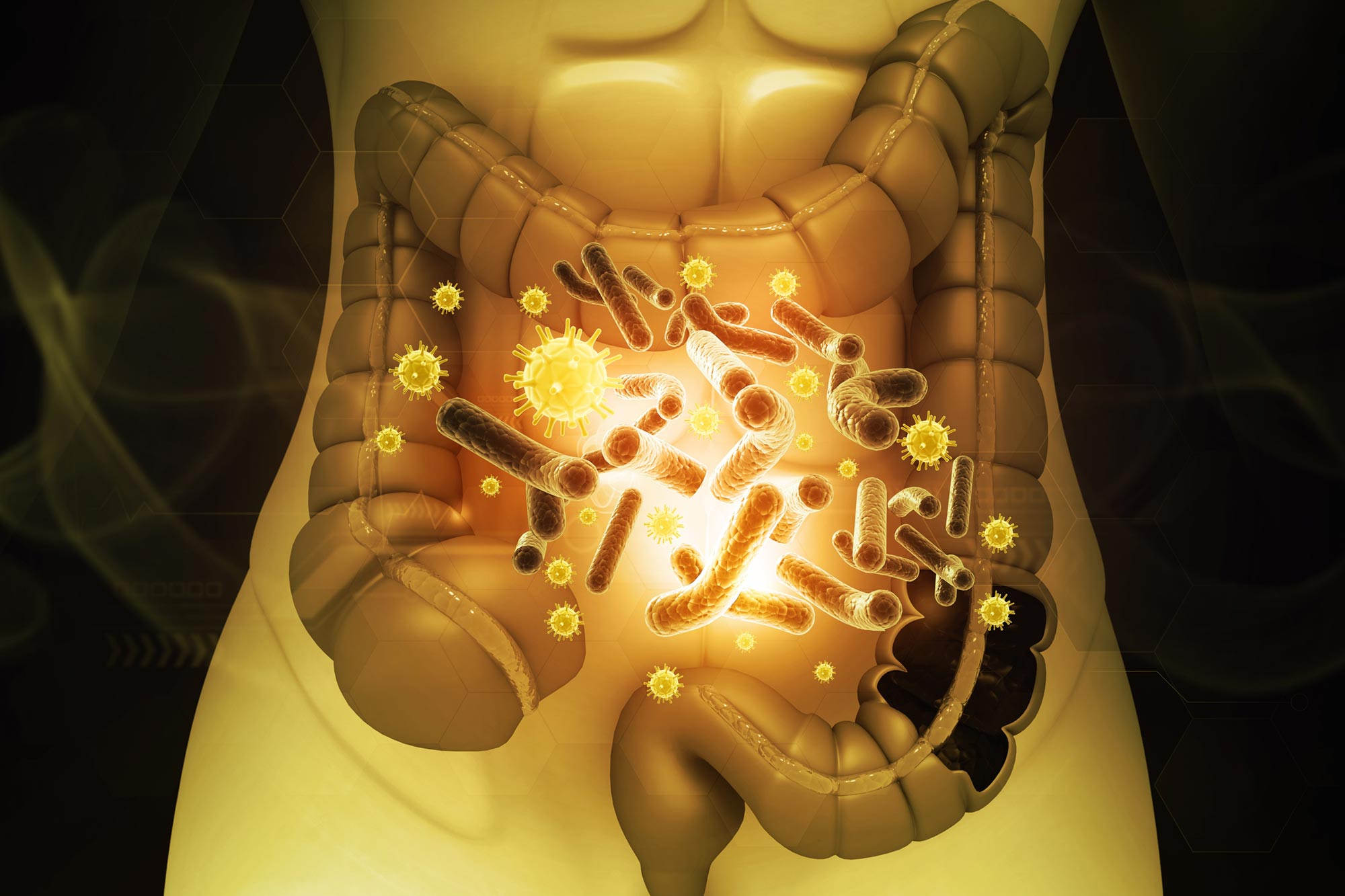
Scientists comparing the gut microbiomes of two geographically distant populations uncovered surprising similarities despite thousands of years of separation.
Hundreds of bacterial species missing from modern human guts may have accompanied our ancestors for tens of thousands of years. A Stanford University study published October 7 in Nature found that two populations separated by continents share remarkably similar gut microbes, many with genetic histories linked to ancient human migrations.
The researchers compared the Hadza hunter-gatherers of Tanzania with the Tsimane, Indigenous forager-horticulturalists in the Bolivian Amazon. Despite different diets and thousands of years of geographic separation, the populations share 1,231 bacterial species. About 60% are rare or absent in industrialized populations.
Ancient Microbes Shared Across Continents
The researchers identified approximately 1,400 bacterial species in the sampled Tsimane population, nearly 90% of which were also found among the Hadza. This extensive overlap was unexpected because the Hadza primarily hunt and gather wild foods, while the Tsimane cultivate crops and consume substantial amounts of dietary fiber.
“We were really surprised to see that the vast majority of the species in the Tsimane’s microbiome correspond with the Hadza’s,” said Justin Sonnenburg, PhD, Stanford professor of microbiology and immunology and senior author of the study.
“That made us wonder if there really is a core set of bacterial and other species that traveled with the ancestors of the Tsimane as they migrated around the globe,” said Benjamin Good, PhD, Stanford assistant professor of applied physics and senior co-author.
Tracing Bacteria Through Human History
“Could these bugs have been in continual interaction with us since long before the ancestors of today’s Hadza and Tsimane became geographically separated?” Sonnenburg asked. “To answer that, we turned to Ben’s team, and what they found blew our minds.”
Using deep metagenomic sequencing and population genetics methods, the researchers analyzed bacterial DNA to reconstruct evolutionary relationships. For many shared species, estimated divergence times matched major prehistoric human migrations, including movements out of Africa and into the Americas.
“We see evidence that these bacteria were present in the ancestors of both the Tsimane and the Hadza, and therefore presumably the ancestors of all of us,” Good said.
What Modern Lifestyles May Have Changed
“Our study establishes that the hundreds of bacterial species that are rare or missing in industrialized microbiomes were ancient companions of ours as we migrated around the globe, likely passed from generation to generation for millennia,” Sonnenburg said. “This long-term association has implications for how such recent biodiversity loss in our microbiome may impact our biology and thus our health.”
Industrialized populations have substantially less diverse gut microbiomes, potentially reflecting factors such as antibiotic use, processed diets, and highly sanitized environments. Changes in gut microbes have been associated with obesity, Type 2 diabetes, and autoimmune diseases, but whether losing these ancient species directly contributes to illness remains unknown.
“If these microbes hosted by the Hadza and Tsimane really are part of our evolutionary biology, then those of us in industrialized countries are missing a huge part of what our human genome has potentially adapted to over a vast time period,” Sonnenburg said. “We’re interested in more fully exploring these long-standing relationships between humans and our gut microbes.”
Reference: “Prehistoric global migration of vanishing gut microbes with humans” by Matthew M. Carter, Zhiru Liu, Matthew R. Olm, Melanie Martin, Daniel D. Sprockett, Parsa Ghadermazi, Benjamin C. Trumble, Hillard Kaplan, Jonathan Stieglitz, Daniel Eid Rodriguez, David A. Relman, Erica D. Sonnenburg, Michael Gurven, Benjamin H. Good and Justin L. Sonnenburg, 7 October 2026, Nature.
DOI: 10.1038/s41586-026-11106-1
This study was funded by Open Philanthropy, a Stanford Bio-X Bowes Fellowship, the National Institutes of Health/National Institute on Aging (grants R01-AG054442 and R35- GM146949), the National Science Foundation, the Wenner-Gren Foundation, the Thomas C. and Joan M. Merigan Endowment at Stanford University, and the French National Research Agency under the Investments for the Future (Investissements d’Avenir) program.
Never miss a breakthrough: Join the SciTechDaily newsletter.
Follow us on Google and Google News.