
A search for genes linked to lifespan uncovered an unexpected connection between RNA splicing, metabolism, and developmental disorders.
A mutation linked to a rare developmental disorder appears to interfere with more than the way cells process genetic instructions. Researchers discovered that it also disrupts vitamin B12-dependent metabolism in tiny roundworms. Supplying the vitamin restored key metabolic processes and corrected developmental abnormalities in the animals, raising questions about whether a similar approach could eventually help people.
The findings concern Verheij syndrome, a rare genetic disorder that causes developmental delays, growth problems, and short stature in children. The condition is associated with changes in a gene involved in RNA splicing, an essential process that prepares messenger RNA for protein production. During splicing, cells remove unnecessary sections of RNA and join the remaining pieces to form instructions that can be used to build proteins.
A Genetic Mutation Reveals a Metabolic Problem
The discovery emerged from experiments with the roundworm C. elegans, a widely used model organism in biological research. Scientists were initially searching for genes that influence lifespan when they identified a mutation in a splicing-related gene associated with Verheij syndrome in humans. Worms carrying the mutation grew more slowly and remained unusually small, resembling some of the developmental problems seen in affected children.
Further genetic screening and metabolic analysis showed that the mutation altered biochemical pathways that depend on vitamin B12. These pathways support normal growth and cellular function. When researchers administered vitamin B12 to the affected worms, the disrupted metabolic processes returned to normal, and the animals’ developmental defects were corrected.
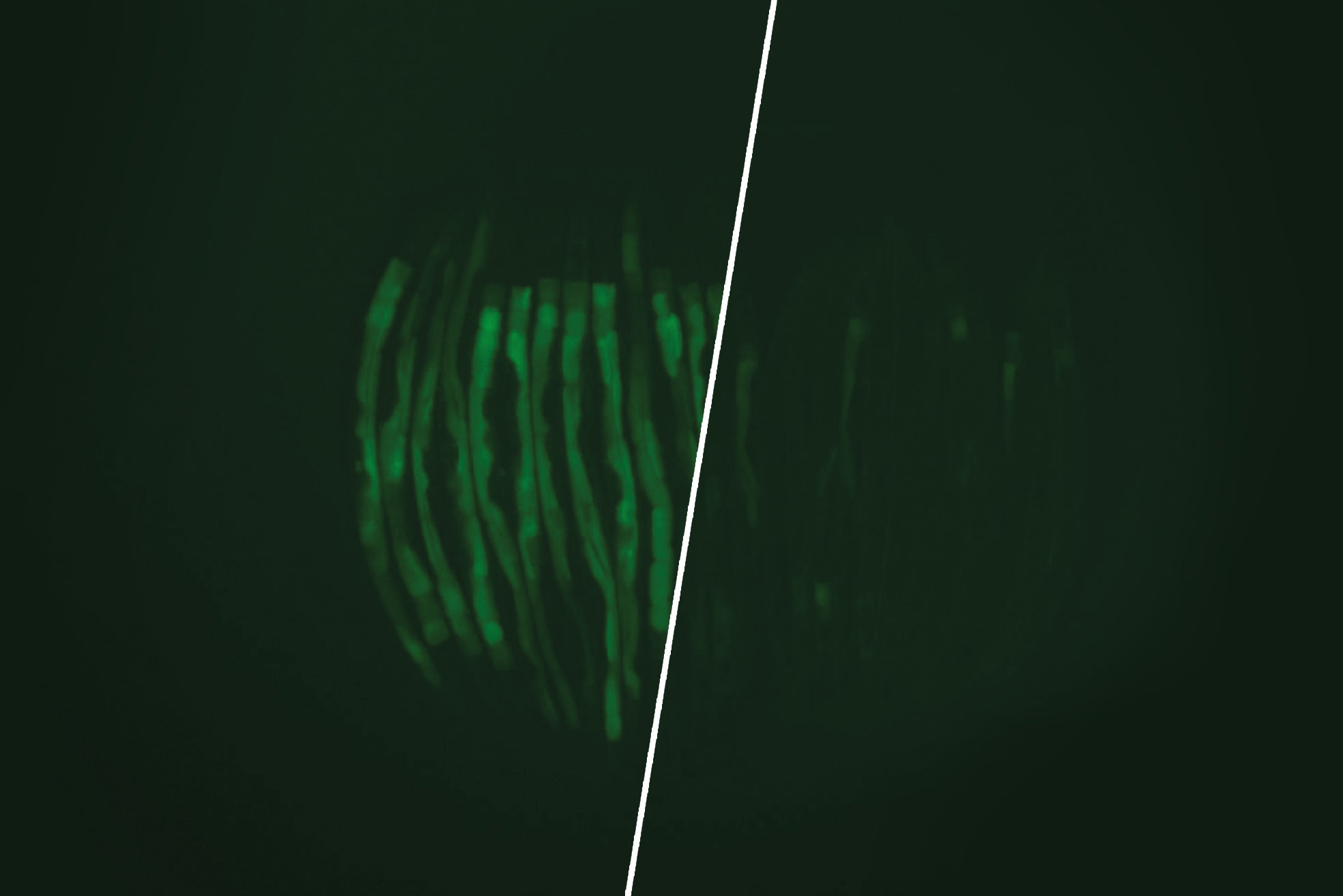
“We were surprised to find that a change in a fundamental process of RNA processing had such a targeted effect on vitamin B12-dependent metabolism,” says Jonathan Kölschbach, first author of the study. “Even more exciting was that we were able to largely correct the consequences of this change in the worm model using vitamin B12.”
Could the Findings Apply to Human Patients?
To investigate whether similar metabolic disruptions occur in humans, the researchers examined publicly available data from human cells. They also worked with Hormos Dafsari, a neuropediatrician at University Hospital Cologne, to obtain blood samples from patients with Verheij syndrome. The analyses provided evidence that metabolic pathways affected in the worms may also be altered in people with the condition.
However, the results do not establish that vitamin B12 supplementation can treat Verheij syndrome in humans. Additional research is needed to determine whether the metabolic changes contribute directly to patients’ symptoms and whether correcting them could provide clinical benefits. The findings also suggest that metabolic dysfunction may deserve greater attention in other genetic disorders involving defective RNA splicing.
“Our study is a good example of how basic research on model organisms can provide new insights into human diseases,” says Adam Antebi, Director at the Max Planck Institute for Biology of Ageing and lead author of the study. “A fundamental biological question can thus give rise to a new approach that could also become medically relevant in the long term.”
Reference: “Vitamin B12 alleviates spliceosomopathy via phospholipid remodeling” by Jonathan Kölschbach, Hormos S. Dafsari, Emily Baum, Anna Löhrke, Chun Kew, Ivan Dikic, Wenming Huang and Adam Antebi, 7 August 2026, Nature Communications.
DOI: 10.1038/s41467-026-76295-9
Never miss a breakthrough: Join the SciTechDaily newsletter.
Follow us on Google and Google News.