
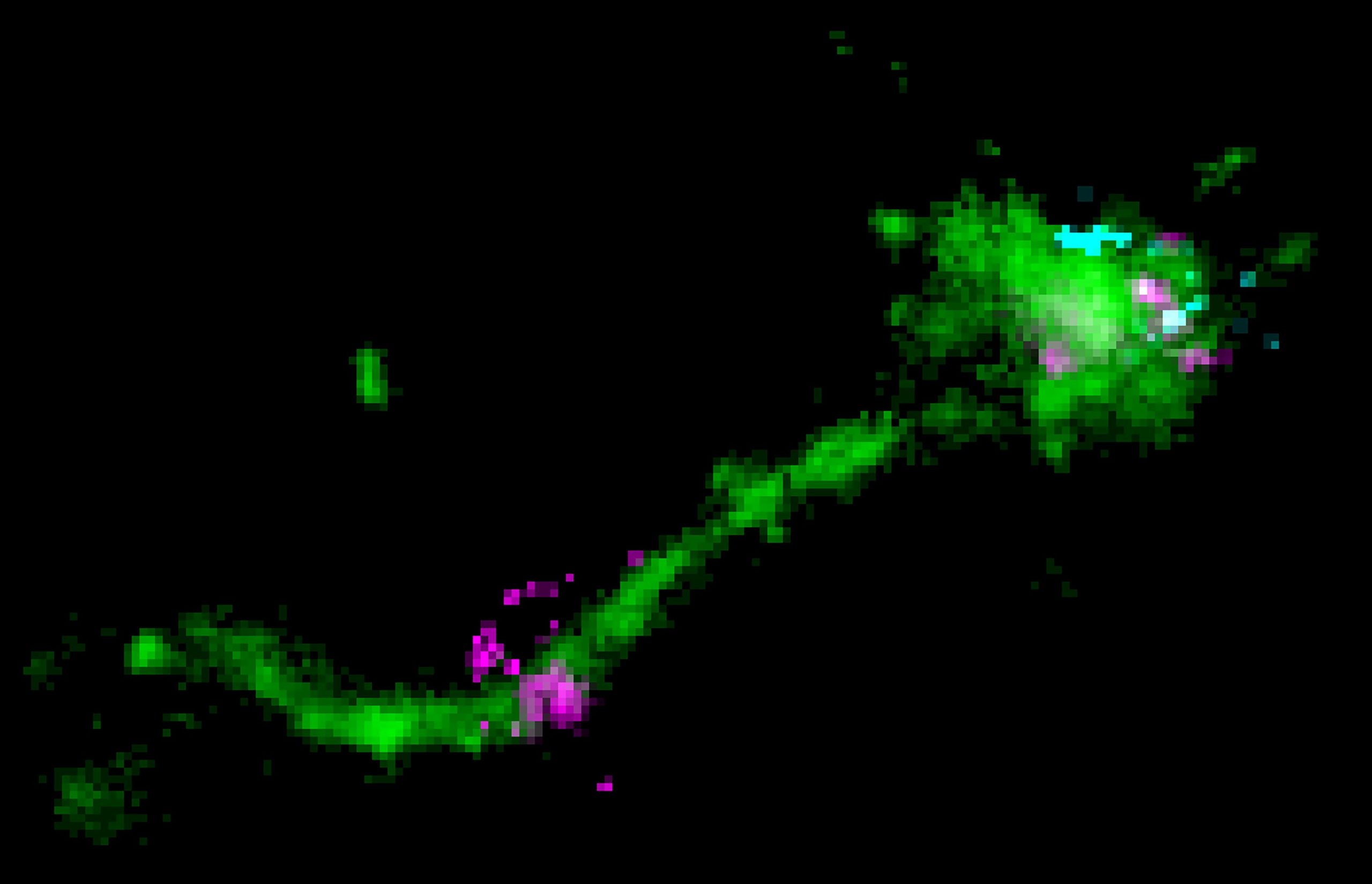
Researchers have found where and how mRNA arrives in a cell to modify or deliver genetic information, a crucial process for the development of novel therapies.
DNA (deoxyribonucleic acid) contains the genetic information required for the development and maintenance of life. This information is communicated by messenger ribonucleic acid (mRNA) to make proteins. mRNA-based therapeutics have the potential to address unmet needs for a wide variety of diseases, including cancer and cardiovascular disease. mRNA can be delivered to cells to trigger the production, degradation, or modification of a target protein, something impossible with other approaches.
A key challenge with this modality is being able to deliver the mRNA inside the cell so that it can be translated to make a protein. mRNA can be packed into lipid nanoparticles (LNPs) – small bubbles of fat – that protect the mRNA and shuttle it into cells. However, this process is not simple, because the mRNA has to pass the membrane before it can reach its site of action in the cell interior, the cytoplasm.
Researchers in the team of MPI-CBG director Marino Zerial are experts in visualizing the cellular entry routes of molecules in the cell, such as mRNA with high-resolution microscopes. They teamed up with scientists from AstraZeneca who provided the researchers with lipid nanoparticle prototypes that they had developed for therapeutic approaches to follow the mRNA inside the cell. The study is published in the Journal of Cell Biology.
“To be delivered, the mRNA must make a long journey. Enclosed in the fatty LNP bubble, it needs to get into the cell first,” explains Marino Zerial. “The LNPs arrive at the cell surface where they bind to receptors. They are then taken up into specialized membrane-enclosed compartments called endosomes. At this point, the mRNA is inside the cells but surrounded by two barriers, the fatty bubble and the endosome wall or more correctly, the membrane. The challenge for the mRNA is to escape both barriers to reach the cytoplasm where it serves as a template to make proteins. We know that only a tiny fraction of RNA molecules are able to escape into the cytoplasm.”
Endosomal Pathways and Escape Routes
Internalized cargo molecules, like the LNPs, are first transported to “early” endosomes. These are logistic centers that distribute cargo molecules to various destinations in the cell. They either recycle molecules to the cell surface or degrade them in late endosomes and lysosomes. So far, people thought that the mRNA escapes from late endosomes by exploiting their very acidic content.
“With single molecule microscopy techniques,” explains Prasath Paramasivam, the first author of the study, “we could visualize for the first time the mRNA in the LNP inside the endosomes of cells. We also captured the actual escape of the mRNA, which happened in the tubules of the recycling endosomes, which are only mildly acidic. Our results imply that sending the LNP-mRNA to late endosomes is counterproductive for delivery and only increases cell toxicity,” says Zerial. These findings help in understanding the mechanism of mRNA escape from endosomes in more detail.
Marino Zerial summarizes: “The LNP delivery system for mRNA necessitates high doses due to the low endosomal escape efficiency. Knowing where the mRNA goes and how it can escape the endosomes allows us to develop better vehicles for more efficient delivery, at lower dosage. We can improve the mRNA delivery system so it can be used for therapeutic applications, for example, cancer treatment.”
Reference: “Endosomal escape of delivered mRNA from endosomal recycling tubules visualized at the nanoscale” by Prasath Paramasivam, Christian Franke, Martin Stöter, Andreas Höijer, Stefano Bartesaghi, Alan Sabirsh, Lennart Lindfors, Marianna Yanez Arteta, Anders Dahlén, Annette Bak, Shalini Andersson, Yannis Kalaidzidis, Marc Bickle and Marino Zerial, 9 December 2021, Journal of Cell Biology.
DOI: 10.1083/jcb.202110137
Never miss a breakthrough: Join the SciTechDaily newsletter.
Follow us on Google and Google News.