
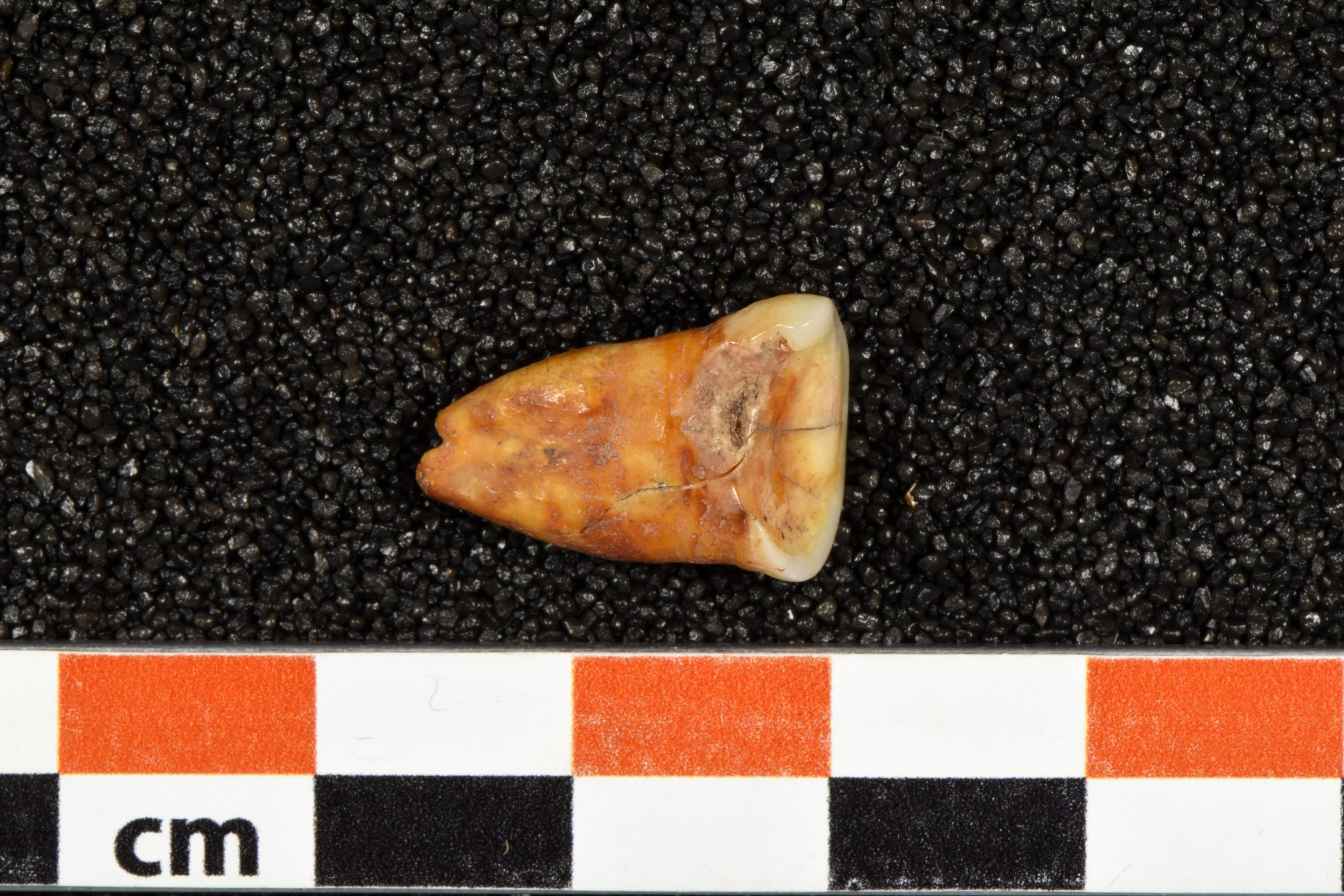
Isotopic evidence reveals surprising dietary practices of pre-agricultural human groups in Morocco.
A new study examines the diet of individuals associated with the Iberomaurusian culture discovered in the cave of Taforalt, Morocco. It was conducted by an international team of scientists from the Max Planck Institute for Evolutionary Anthropology (Leipzig, Germany), Géoscience et Environnement Toulouse (Toulouse, France), and the Institut National des Sciences de l’Archéologie et du Patrimoine (Rabat, Morocco).
Using a comprehensive multi-isotopic approach, including zinc and strontium isotope analysis in dental enamel, carbon, nitrogen, and sulfur analysis in collagen, as well as amino acid analysis of human and faunal remains, the researchers uncovered surprising insights into ancient dietary practices.
Key Findings on Pre-Agricultural Diets
The study’s major conclusions clearly show that the diet of these hunter-gatherers included a significant proportion of plants belonging to Mediterranean species, predating the advent of agriculture in the region by several millennia. Archaeobotanical remains found at the site, such as acorns, pine nuts, and wild pulses, further support this notion. Moreover, the study suggests that plant foods were also introduced into infant diets and may have served as weaning products for this human population.
This finding has significant implications, as it suggests the potential for earlier weaning practices in pre-agricultural communities compared to previously thought norms for hunter-gatherer societies.
Challenging Previous Dietary Assumptions
This challenges the prevailing notion of a diet heavily based on animal protein among pre-agricultural human groups and raises questions about the lack of agricultural development in North Africa at the beginning of the Holocene.
Zineb Moubtahij, first author of the study, explains: “Our findings not only provide insights into the dietary practices of pre-agricultural human groups but also highlight the complexity of human subsistence strategies in different regions. Understanding these patterns is crucial to unraveling the broader story of human evolution.”
Innovations in Dietary Analysis
Furthermore, this study is the first to use zinc isotopes preserved in enamel to determine the diet of ancient populations in Africa. North Africa is a key region for the study of human evolution and modern human dispersal. Having a tool that allows us to further explore the human diet deep in time in this region will provide valuable insights into human dietary patterns and adaptability in different environments.
Moving forward, the research team hopes to explore additional Paleolithic sites in North Africa and use innovative techniques to gain a deeper understanding of ancient dietary practices and their implications for human evolution.
Reference: “Isotopic evidence of high reliance on plant food among Later Stone Age hunter-gatherers at Taforalt, Morocco” by Zineb Moubtahij, Jeremy McCormack, Nicolas Bourgon, Manuel Trost, Virginie Sinet-Mathiot, Benjamin T. Fuller, Geoff M. Smith, Heiko Temming, Sven Steinbrenner, Jean-Jacques Hublin, Abdeljalil Bouzouggar, Elaine Turner and Klervia Jaouen, 29 April 2024, Nature Ecology & Evolution.
DOI: 10.1038/s41559-024-02382-z
Never miss a breakthrough: Join the SciTechDaily newsletter.
Follow us on Google and Google News.
2 Comments
Recent popularity of “Paleo Diets” and this new research may have an influence in expanding the range of human nutrition to include additional plant foods and that will be a good thing. Lower energy requirements for plant food and greater variety of microbiome species may provide great health benefits.
I suspected that there’d be a way to test the ashes left over from the Holocaust; just because of the continuing change on the narrative of that even, and the seemingly non-stop false flag events, since then; couldn’t we at least be able to determine if all the ashes were in fact human or an admixture of byproducts from the meat industry, etcetera?