
Stem cell secretions can reduce MRSA infections and boost skin immunity in a wound model. The treatment could reduce antibiotic use and improve outcomes for chronic wound sufferers in both humans and animals.
A study released in STEM CELLS Translational Medicine (SCTM), by researchers at the Baker Institute for Animal Health, part of Cornell University’s College of Veterinary Medicine, Ithaca, N.Y., details in a relevant ex vivo model how treating wounds with the secretion of a type of stem cell called mesenchymal stromal cell (MSC) effectively reduced methicillin-resistant Staphylococcus aureus – better known as MRSA viability and stimulated the surrounding skin cells to build up a defense against the bacterial invader.
More than 119,000 people in the United States during 2017 suffered from bloodstream infections caused by a bacteria called Staphylococcus aureus (S. aureus)— and nearly 20,000 died, according to the most recent statistics from the Centers for Disease Control and Prevention. S. aureus has become a major healthcare problem because these bacteria can become threatening under certain circumstances, like in immunocompromised patients or in infected wound environments, and because they have grown resistant to many antibiotics – the only medications available to treat bacterial infections at the moment.
This study, however, might help change that by pointing to a possible new approach for treating one of the most dangerous strains of the bacteria, MRSA. While many people carry MRSA without serious consequences, for those whose health is compromised this so-called “superbug” can be fatal.
MSCs are stem cells that can be isolated from bone marrow, adipose (fat), blood, and other tissue sources. “Initially, the use of MSCs for tissue regeneration was advocated based on their ability to differentiate into various tissue types. For this reason, it was anticipated that injected MSCs colonize the injury site, differentiate into the appropriate tissue type, and regenerate the damaged tissue,” said Gerlinde R. Van de Walle, DVM, Ph.D., associate professor of microbiology and immunology at Cornell and the study’s corresponding author. “However, studies are revealing that only a small portion of administered MSCs actually incorporate into injured tissue. For this reason, it is becoming generally accepted that the beneficial effects in tissue repair and regeneration are more likely indirect, depending on the paracrine effects of what these cells secrete.
A Safer, Cell-Free Treatment Option
“This intriguing finding opens up novel therapeutic perspectives based on the development of cell-free regenerative therapies using the secretome of MSC that includes both soluble factors and factors released in extracellular vesicles,” she continued. “Such cell-free therapies might prove safe and potentially more advantageous alternatives by overcoming the risks and obstacles associated with the allogeneic use of the cells themselves.”
Although MSCs have been shown to reduce inflammation in multiple studies, none had yet been conducted that investigated MSC secretome’s effects on the antimicrobial defense mechanisms of skin cells or tested its efficacy on biofilms in a physiologically relevant equine skin model. That was the aim of the Cornell study described in SCTM.
Equine Models Offer Relevant Insights for Human Wounds
Horses were used for the study because, Dr. Van de Walle explained, “In both horses and humans, particular types of chronic wounds are often therapy-resistant and cause various complications, leading to high morbidity and mortality with significant economic impact.”
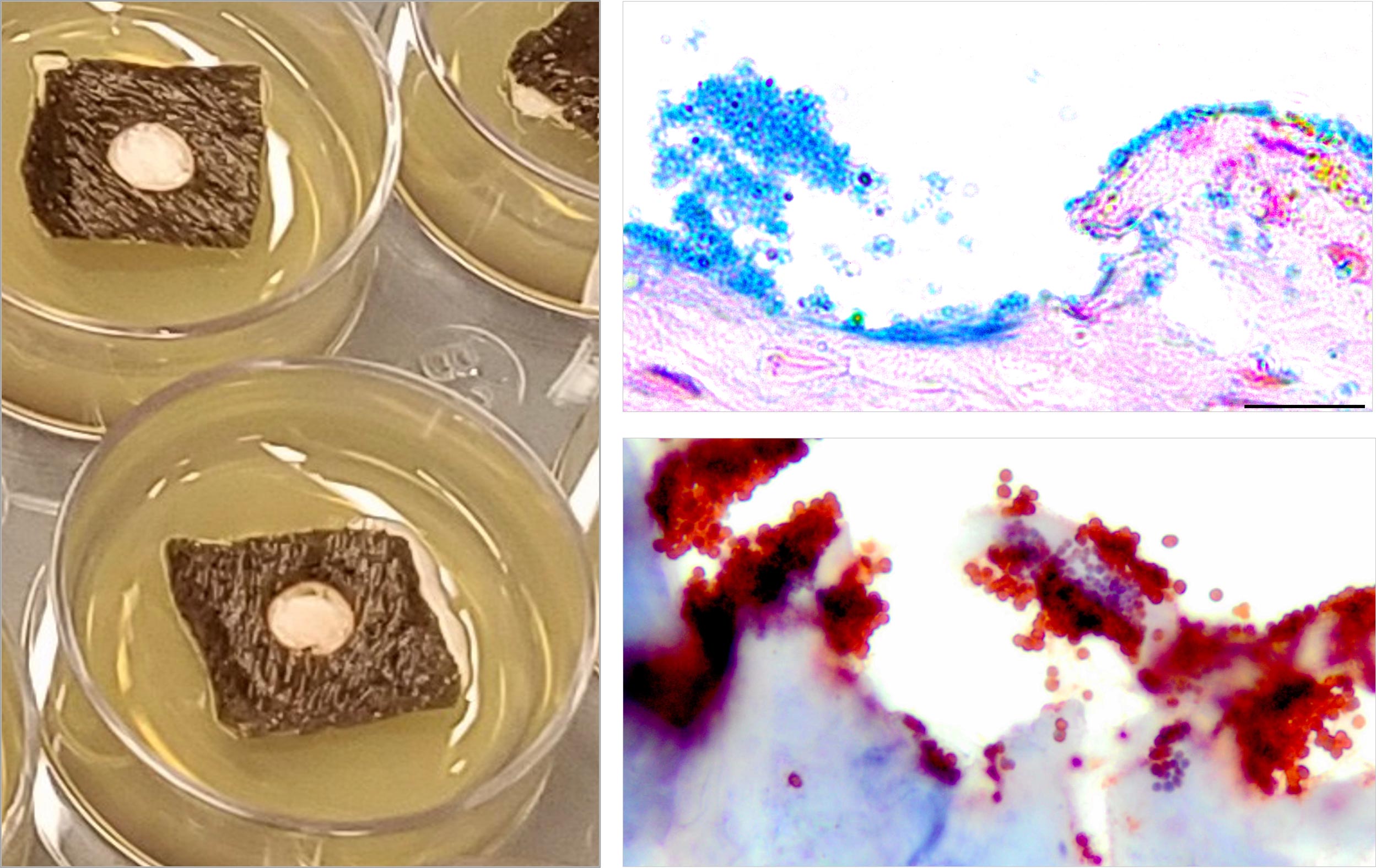
The team began by establishing an equine skin biofilm model. (Biofilms are “communities” of microorganisms that develop on surfaces. In this state, bacteria are well protected against antibiotics even if they are not resistant.) The skin samples were cultured over a period of three days from freshly harvested equine skin. (The skin used in the study was collected from animals that had to be euthanized for reasons unrelated to this study.) Neither a significant increase in cell death nor a decrease in epidermal thickness was observed during the culturing period.
Next, an infected wound model was created by making uniform wounds in the skin samples and inoculating them with either MRSA or its non-antibiotic-resistant counterpart, methicillin-sensitive S. aureus (MSSA). The wounds were then treated for 24 hours with either antibiotics, DMEM (negative control) or MSC secretome. At the end of the treatment period, bacterial load was measured by evaluating colony-forming units (CFU) per gram of tissue.
“The results showed that secreted factors from the MSCs significantly decreased the viability of MRSA in our novel skin model,” Charlotte Marx, DVM, Ph.D., and the study’s first author, reported. “Moreover, we demonstrated that equine MSC secretions increase the antimicrobial activity of the skin cells by stimulating immune responses of the surrounding resident skin cells.
Reducing Antibiotic Use Through Stem Cell-Derived Treatments
“Collectively,” she added, “these data contribute to our understanding of MSC secretome’s antimicrobial properties and further support the value of MSC secretome-based treatments for infected wounds. We propose that by identifying additional effective treatments, we can contribute to reducing the use of antibiotics in both veterinary and human medicine, which is important for the fight against antibiotic resistance.
“This study investigates the antimicrobial properties of proteins secreted from stem cells as a potential treatment to reduce infection in skin wounds,” said Anthony Atala, M.D., Editor-in-Chief of STEM CELLS Translational Medicine and director of the Wake Forest Institute for Regenerative Medicine. “The data supports the use of stem cell therapy for infected wounds and this work should be further reviewed.”
Reference: “Mesenchymal Stromal Cell Secreted CCL2 Promotes Antibacterial Defense Mechanisms Through Increased Antimicrobial Peptide Expression in Keratinocytes” 16 September 2021, by Charlotte Marx, Sophia Gardner, Rebecca M. Harman, Bettina Wagner and Gerlinde R. Van de Walle, Stem Cells Translational Medicine.
DOI: 10.1002/sctm.21-0058
Never miss a breakthrough: Join the SciTechDaily newsletter.
Follow us on Google and Google News.