
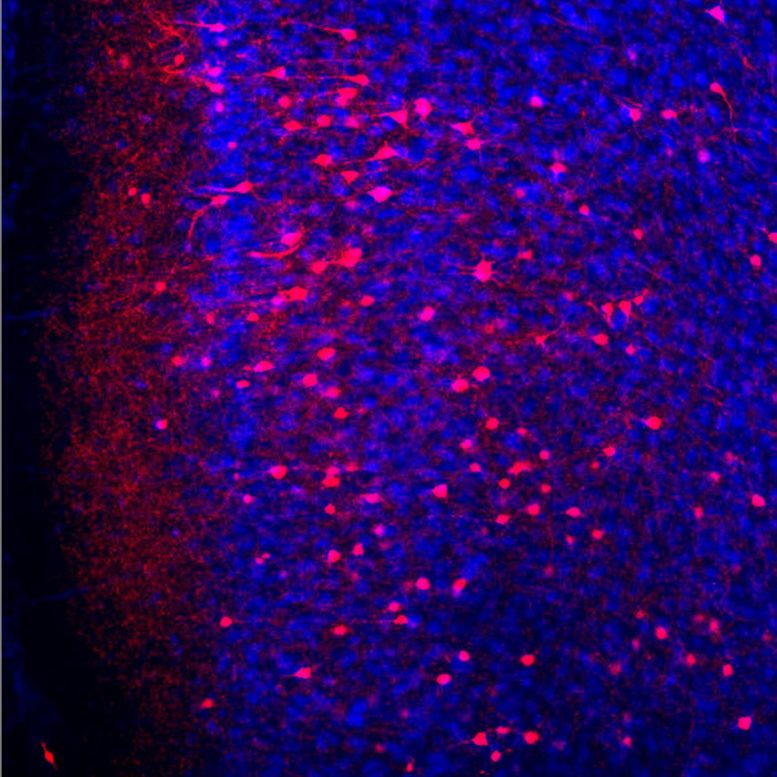
A study conducted by UC Riverside researchers on mice may pave the way for new innovative treatments for individuals with PTSD.
A mouse study from the University of California, Riverside, published in Nature Neuroscience, has uncovered the basic mechanisms that drive the brain to consolidate remote fear memories of traumatic events from the past, ranging from a few months to decades ago.
The study shows that remote fear memories from the distant past are permanently stored in the connections between memory neurons in the prefrontal cortex (PFC).
“It is the prefrontal memory circuits that are progressively strengthened after traumatic events and this strengthening plays a critical role in how fear memories mature to stabilized forms in the cerebral cortex for permanent storage,” said Jun-Hyeong Cho, an associate professor of molecular, cell and systems biology, who led the study. “Using a similar mechanism, other non-fear remote memories could also be permanently stored in the PFC.”
Transition from Hippocampus to Prefrontal Cortex
The brain uses distinct mechanisms to store recent versus remote fear memories. Previous studies have suggested that while the initial formation of fear memory involves the hippocampus, it progressively matures with time and becomes less dependent on the hippocampus. Much research now explains how recent fear memory is stored, but how the brain consolidates remote fear memories is not well understood.
The researchers focused on the PFC, a part of the cerebral cortex that has been implicated in remote memory consolidation in previous studies.
“We found a small group of nerve cells or neurons within the PFC, termed memory neurons, were active during the initial traumatic event and were reactivated during the recall of remote fear memory,” Cho said. “When we selectively inhibited these memory neurons in the PFC, it prevented the mice recalling remote but not recent fear memory, suggesting the critical role of PFC memory neurons in the recall of remote fear memories.”
In the experiments, the mice received an aversive stimulus in an environment called a context. They learned to associate the aversive stimulus with the context. When exposed to the same context a month later, the mice froze in response, indicating they could recall remote fear memories. The researchers showed that connections (synapses) between memory neurons in the PFC, termed prefrontal memory circuits, were gradually strengthened with time after fear learning, and such strengthening helped the PFC permanently store remote fear memories.
Extinction of Fear and Prefrontal Memory Circuits
Next, to extinguish the remote fear memory in the mice, the researchers repeatedly exposed the mice to the same fear-predictive context but without the aversive stimulus. The result was a reduced fear response to the context.
“Interestingly, the extinction of remote fear memory weakened the prefrontal memory circuits that were previously strengthened to store the remote fear memory,” Cho said. “Moreover, other manipulations that blocked the strengthening of the PFC memory circuits also prevented the recall of remote fear memory.”
Cho explained that a dysregulation of fear memory consolidation can lead to chronic maladaptive fear in PTSD, which affects about 6% of the population at some point in their lives.
“Considering that PTSD patients suffer from fear memories formed in the distant past, our study provides an important insight into developing therapeutic strategies to suppress chronic fear in PTSD patients,” he said.
Next, Cho’s team plans to selectively weaken the prefrontal memory circuits and examine whether this manipulation suppresses the recall of remote fear memories.
“We expect the results will contribute to developing a more effective intervention in PTSD and other fear-related disorders,” Cho said.
Reference: “Neocortical synaptic engrams for remote contextual memories” by Ji-Hye Lee, Woong Bin Kim, Eui Ho Park, and Jun-Hyeong Cho, 23 December 2022, Nature Neuroscience.
DOI: 10.1038/s41593-022-01223-1
The study was funded by the National Institutes of Mental Health.
Never miss a breakthrough: Join the SciTechDaily newsletter.
Follow us on Google and Google News.