
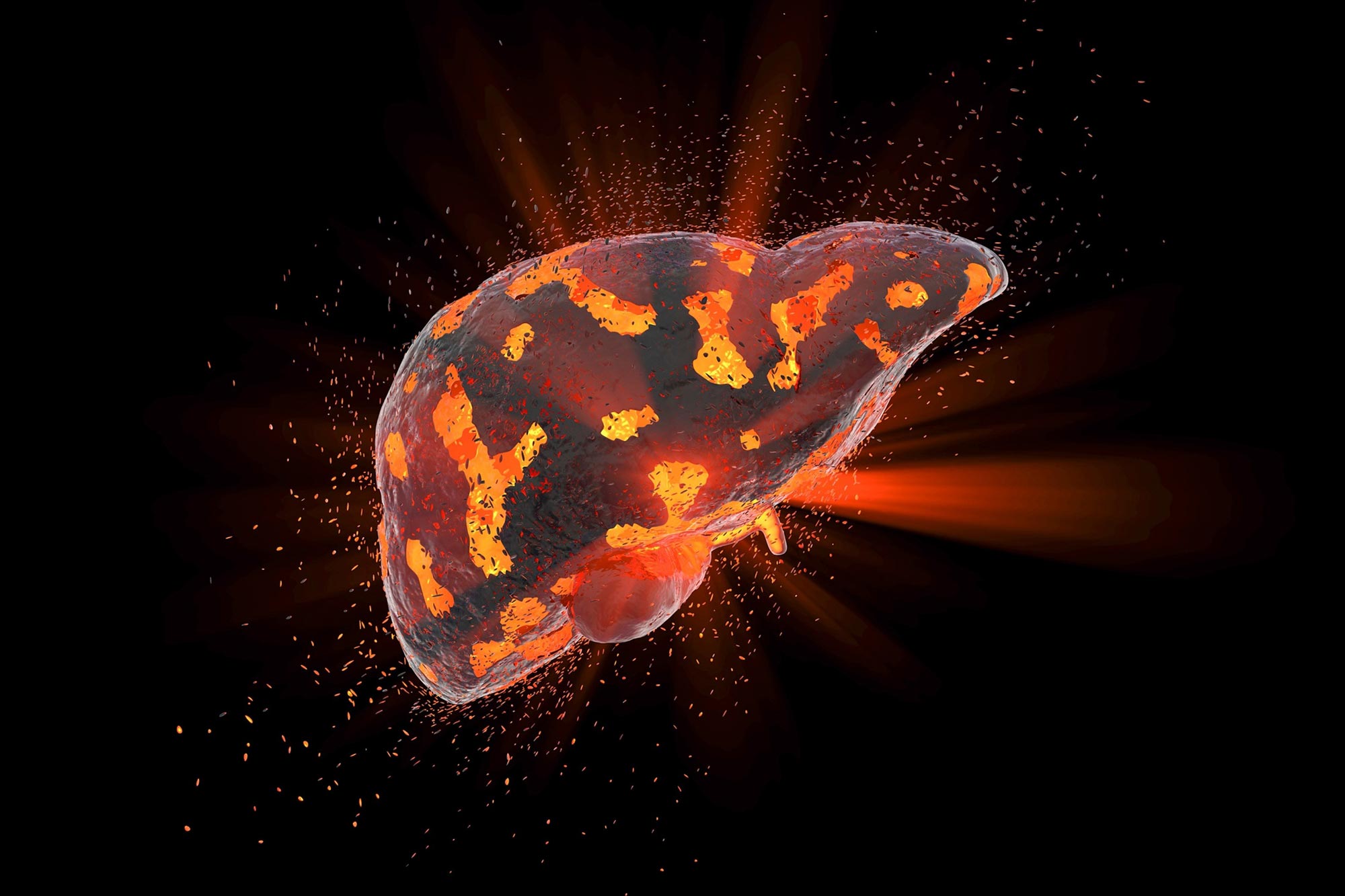
A recent study conducted by Oregon State University has unveiled new insights into how certain polyunsaturated fatty acids, specifically omega 3, combat a severe liver condition. This discovery paves the way for novel drug research for nonalcoholic steatohepatitis (NASH), a disease currently without any FDA-approved treatments.
Scientists led by Oregon State’s Natalia Shulzhenko, Andrey Morgun and Donald Jump used a technique known as multi-omic network analysis to identify the mechanism through which dietary omega 3 supplements alleviated nonalcoholic steatohepatitis, usually abbreviated to NASH.
The mechanism involves betacellulin, a protein growth factor that plays multiple positive roles in the body but also contributes to liver fibrosis, or scarring, and the progression to cirrhosis and liver cancer.
“We only succeeded in finding these surprising results because we implemented an entirely unbiased approach that incorporated a diverse type of big data analysis ranging from lipids and metabolites to whole tissue and single-cell RNA sequences,” said Morgun, a researcher in the OSU College of Pharmacy.
The findings were recently published in EMBO Molecular Medicine.
Understanding NASH and Metabolic Syndrome
NASH is associated with a disorder known as metabolic syndrome. It develops when fat in the liver becomes toxic, killing liver cells, inflaming the organ, and promoting fibrosis. The disease can lead to permanent scarring (cirrhosis), liver failure, and possibly death.
People are considered to have metabolic syndrome if they have at least two of the following conditions: abdominal obesity, high blood pressure, high blood sugar, low blood levels of “good” cholesterol, and high levels of bad cholesterol and triglycerides.
A diet high in saturated fat and refined sugars causes chronic low-grade inflammation that contributes to the development of metabolic syndrome. Metabolic syndrome is also associated with cognitive dysfunction and dementia as well as being a major risk factor for cardiovascular disease, Type 2 diabetes, and NASH.
An estimated 35% of U.S. adults have metabolic syndrome, the researchers note.
Omega 3’s Role in Combating NASH
In this study, scientists used both a mouse model and human liver transcriptome data – the total of all the messenger RNA molecules expressed from the genes – to uncover betacellulin as the target of omega-3 polyunsaturated fatty acids, often abbreviated as omega 3 PUFA.
“Via large meta-analysis, we found betacellulin is consistently up-regulated in livers of cancer patients – there’s more of it than there should be,” Morgun said. “And omega 3 PUFA lower, or down-regulate, betacellulin in both mice and humans with NASH. Targeting betacellulin expression is one of the mechanisms for omega 3 PUFA reduction of western-diet-induced NASH.”
Beyond greatly advancing the understanding of how NASH starts and progresses, the findings open a new door for pharmaceutical research, he added.
“We found a novel drug target, and our results may aid in the quest for a precision-medicine approach to NASH treatment and liver cancer prevention by using specific omega 3 PUFA,” Morgun said. “One thought is that patients’ betacellulin could be monitored during treatment to determine optimal dosages for each patient.”
Sources of Omega 3 PUFA
In addition to dietary supplements, omega 3 PUFA, such as docosahexaenoic acid, are found in cold-water fatty fish such as salmon and mackerel and in some nuts, seeds, and plant oils.
Omega 3 PUFAs are not manufactured by the body but are essential fatty acids that must be acquired from the diet. These fatty acids are involved in a wide range of bodily processes including cognitive function, vision, cell growth, regulation of multiple metabolic processes and cardiovascular function.
Reference: “Multi-omic network analysis identified betacellulin as a novel target of omega-3 fatty acid attenuation of western diet-induced nonalcoholic steatohepatitis” by Jyothi Padiadpu, Manuel Garcia-Jaramillo, Nolan K Newman, Jacob W Pederson, Richard Rodrigues, Zhipeng Li, Sehajvir Singh, Philip Monnier, Giorgio Trinchieri, Kevin Brown, Amiran K Dzutsev, Natalia Shulzhenko, Donald B Jump and Andrey Morgun, 20 October 2023, EMBO Molecular Medicine.
DOI: 10.15252/emmm.202318367
Jyothi Padiadpu, a postdoctoral researcher in the OSU College of Pharmacy, was the lead first author on the study. Other Oregon State researchers contributing to the paper were Nolan Newman, Richard Rodrigues, Sehhajvir Singh, Manuel Garcia-Jaramillo, Jacob Pederson, Zhipeng Li, Philip Monnier and Kevin Brown.
The collaboration included scientists from the National Institutes of Health’s National Cancer Institute.
The research was supported by grants from the National Institute of Diabetes and Digestive Kidney Diseases, part of the National Institutes of Health.
Never miss a breakthrough: Join the SciTechDaily newsletter.
Follow us on Google and Google News.