
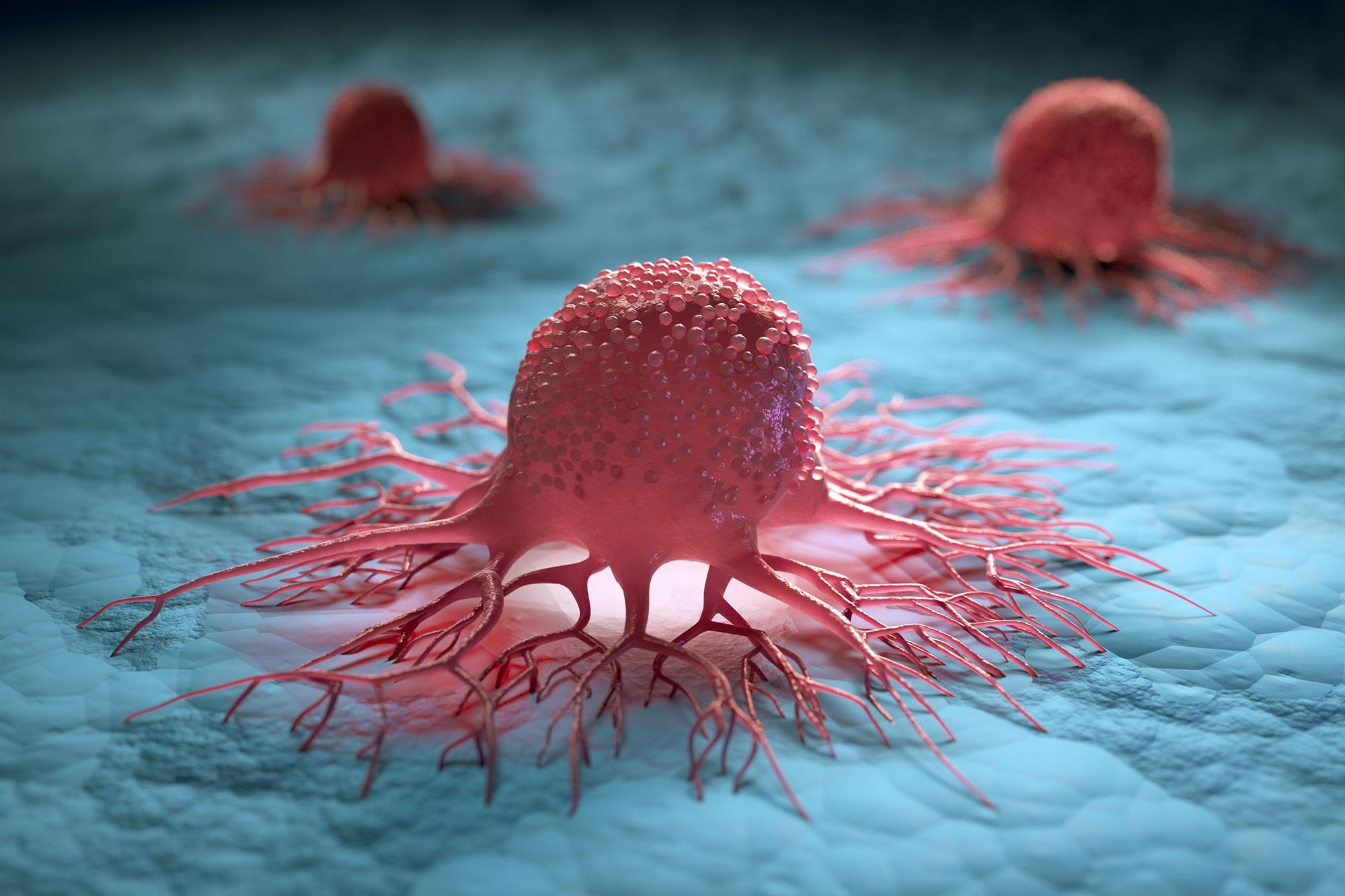
The body’s response to inflammation may disturb cancer cells that have been lying silent for years, giving them an opportunity to grow again.
Researchers at the Francis Crick Institute have found that gut inflammation can reactivate dormant breast cancer cells in a mouse model of bone marrow. Their study, published in Cell Reports, suggests that changes needed to produce more immune cells can also create conditions that favor cancer growth.
Cancer cells can leave the original tumor and settle elsewhere in the body, a process called metastasis that accounts for most cancer-related deaths. Breast cancer cells frequently reach bone marrow, where an inactive state helps them evade immune defenses and resist chemotherapy.
“Cancer cells that have moved to another part of the body can stay dormant for years after the original tumor has been treated,” explains Crick group leader Ilaria Malanchi, whose lab studies interactions between cancer cells and the body. “It’s a worrying period for people, as they don’t know if these metastatic cells will reactivate, leading to a relapse.”
“We can’t wait five years to see if dormant cancer cells reactivate in mice, as this exceeds their lifespan,” Ilaria explains. “We’ve known for a long time that we need to think creatively about a new model.”
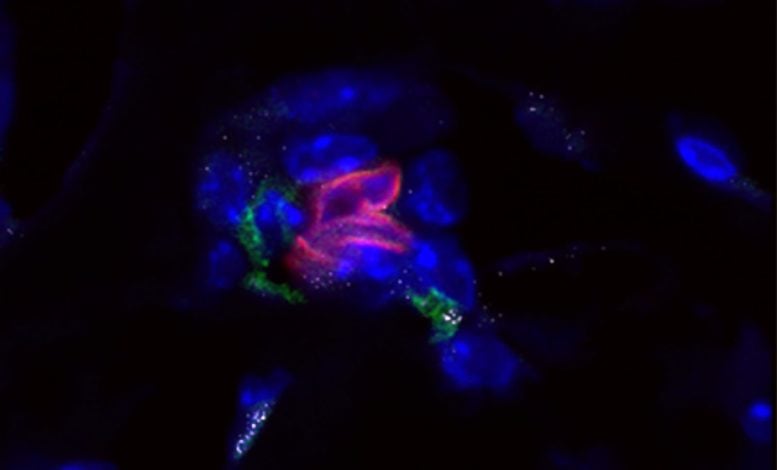
Recreating Dormant Cancer In Bone Marrow
Building on previous work by Laurie Gay, Stefania di Blasio, and Tatiana Rizou developed an “extramedullary bone model”: bone tissue grown from skeletal stem cells beneath the skin. The replica contains the marrow cells needed to produce blood cells and responds to inflammatory signals much like natural bone marrow.
“We then added cells from a mouse mammary tumor onto the replica bone,” explains Ilaria. “Most entered a dormant state, with only sporadic replication activity.”

The model gave the team a way to investigate how events elsewhere in the body affect these resting cells. Fractures and other bone injuries can encourage metastatic cancer growth in marrow, but the researchers wanted to test whether a more distant injury or infection could also disturb dormancy.
Gut Inflammation Changes The Cancer Environment
“We induced intestinal colitis—inflammation in the gut—in the mice with the extramedullary bone hosting dormant metastatic cells. Because the replica bone responds to the immune system, gut inflammation triggered a rapid production of immune cells from the bone,” Ilaria explains.
That response required the marrow environment to reorganize to support greater immune cell production. As it changed, more of the dormant cancer cells began dividing, increasing the chance of a tumor forming. The findings connect inflammation in one organ with changes in the tissue sheltering cancer cells elsewhere.
Examining gene activity in the bone and cancer cells pointed to HMGB2, a molecule that stimulates cell growth. Its levels rose alongside the surge in immune cell production, and it also promoted cancer cell reactivation.
“Even without inflammation elsewhere in the body, just the increased HMGB2 in the artificial bone was enough to stimulate more cancer cells to activate,” Ilaria says. “We also analyzed bone samples from people with breast or prostate cancer—HMGB2 was present where there were actively dividing cancer cells.
“All of these findings suggest that boosting immune cell production in the bone, as part of a normal response to inflammation, comes at the cost of disrupting tumor dormancy, tipping the balance towards reactivation and metastatic growth.”
Why Inflammation Does Not Guarantee Relapse
Ilaria emphasizes that inflammation does not automatically cause cancer to return. “We think it’s a piecemeal situation where each systemic change increases the chance of more metastatic cells waking up each time,” she says.
The research suggests that monitoring infections, inflammation, and injuries after remission might help identify periods when dormant cells are more likely to become active.
“Once cancer cells are actively replicating, they can respond to chemotherapy, so understanding developments affecting the bone marrow could lead to early intervention,” Ilaria concludes.
Reference: “An extramedullary bone model of metastatic dormancy reveals an increased rate of metastatic reactivation upon distant insults” by Stefania Di Blasio, Tatiana Rizou, Laurie J. Gay, Nicolas Rabas, Xuanxuan Fan, Xing-Yu Liu, Victoria L. Bridgeman, Ernesto Rodriguez, Probir Chakravarty, Thomas Snoeks, Adam Karoutas, Felipe S. Rodrigues, Elodie Montaudon, Cristina Lo Celso, Elisabetta Marangoni, Dominique Bonnet, Bin-Zhi Qian, Ander Abarrategi and Ilaria Malanchi, 1 October 2026, Cell Reports.
DOI: 10.1016/j.celrep.2026.118088
Never miss a breakthrough: Join the SciTechDaily newsletter.
Follow us on Google and Google News.