
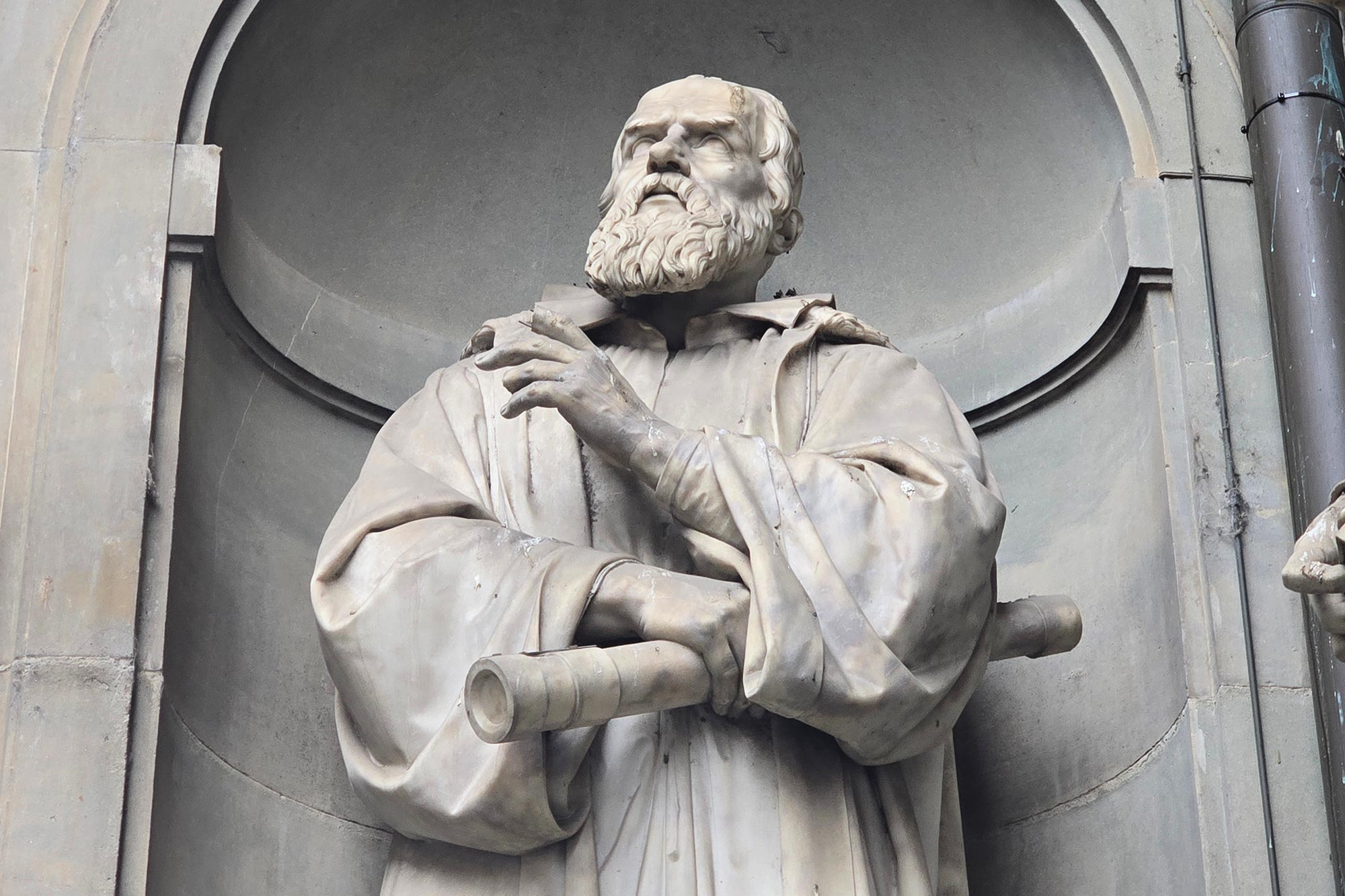
Galileo left no technical analyses of his telescopes, but a centuries-old manuscript may offer the clearest look yet at a more sophisticated instrument he could have built.
In 1666, a Spanish friar hoping to secure his passage home was given an unusual test of his scientific abilities. A powerful colonial official handed him a telescope and demanded a detailed explanation of how it worked. Nearly 360 years later, the account he produced has resurfaced with a remarkable claim: the instrument was made by Galileo Galilei, and its design may be far more advanced than historians previously believed possible for his time.
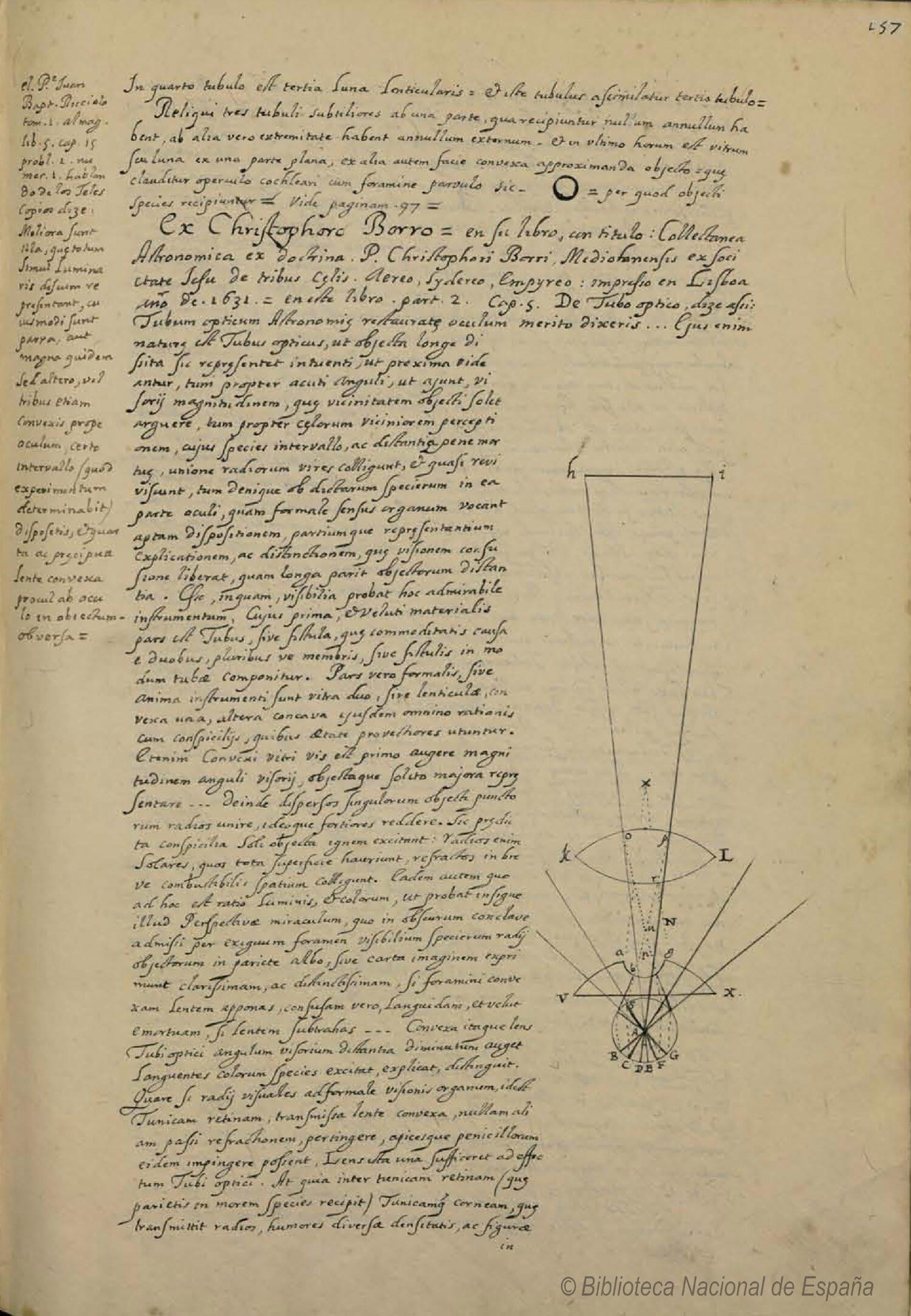
The account was discovered by Dr. José María Moreno Madrid, a researcher at the University of Limerick’s School of History and Geography in Ireland, while examining a manuscript written by Dominican friar Ignacio Muñoz. Dated 1666 and titled De Tellescopiis Stellarum, the document describes a four-lens telescope that Muñoz identified with the Latin phrase “fabricatum a Galilaeo,” meaning “manufactured by Galileo.”

The description is unusually precise. Muñoz documented the telescope’s individual components, including its reverse-tapered body and an arrangement of four lenses that allowed distant objects to appear upright. His account describes an erecting eyepiece and convex lenses separated by twice their focal lengths, accompanied by detailed diagrams and drawings that show how the instrument was constructed.
A telescope that challenges the timeline
These technical details matter because historical records have generally placed the earliest four-lens telescopes around 1643 to 1645, with their production becoming widespread across Europe beginning in the 1640s. If the instrument really came from Galileo’s workshop, the timeline of telescope development would need to be reconsidered.
In research published in Annals of Science, Moreno Madrid explains what the attribution could mean.
“If, as the text claims, the telescope analyzed was indeed manufactured by Galileo, then the earliest known experimentation with four-lens telescopes would have to be pushed back to 1630 at the latest and credited to him. Moreover, Muñoz’s De Tellescopiis Stellarum would become the most detailed technical analysis of a telescope provenly made by Galileo – and, somewhat paradoxically, it would concern a four-lens telescope rather than the Galilean design that ultimately came to bear his name,” said Dr. Moreno Madrid.
A royal test of scientific credibility
The circumstances surrounding Muñoz’s examination provide another intriguing piece of the story. After traveling from Spain to the Philippines, he became involved in an illicit attempt to establish a new Dominican religious order and was subsequently exiled to Portuguese India. Hoping to return to Spain, he contacted King Philip IV with a proposal that promised to improve the performance of Spanish fleets operating around the world.
Muñoz offered his nautical innovation in exchange for royal sponsorship of his journey home aboard the Manila Galleon, which traditionally stopped in New Spain, a Spanish colonial territory. His proposal, however, attracted suspicion from Antonio Sebastián de Toledo Molina y Salazar, the viceroy of New Spain and Marquis of Mancera.
The viceroy questioned whether Muñoz possessed the scientific knowledge he claimed and worried that the friar was simply trying to persuade the king to pay for his travels. To test his abilities, Mancera presented him with the telescope and ordered him to examine it thoroughly. That assignment produced the technical description Moreno Madrid has now brought to light.
Galileo’s telescopes and the missing proof
Determining whether Galileo actually manufactured the instrument is more complicated. Although the astronomer famously maintained that he had never sold a telescope and never intended to, very few instruments from his lifetime survive with reliable records of their origins. Of the eight surviving telescopes manufactured during the first half of the seventeenth century, none can be attributed to Galileo beyond dispute. Two preserved in the Museum of Florence have traditionally been credited to him, although that identification is not universally accepted. Galileo also left no technical analyses of his own telescopes.
There is, however, a possible connection between Galileo and the Spanish official who possessed Muñoz’s instrument.
Historical accounts indicate that Galileo presented three telescopes, one large and two smaller instruments, to Philip IV and his wife. He hoped to gain favor with the Spanish court and improve his chances of receiving a substantial reward offered for solving the “problem of longitude,” the longstanding difficulty of determining a ship’s east-west position while navigating at sea.
The optical designs of those three telescopes remain unknown, leaving open the possibility that one was the four-lens instrument described by Muñoz. Moreno Madrid suggests that the Spanish royal family may have later given it to Mancera in recognition of his diplomatic and political achievements.
“I believe that the unambiguous attribution of the telescope in the manuscript, together with the documentary evidence that three telescopes made by Galileo – whose optical configuration remain unspecified – may have been accessible to Mancera through his connections at the Spanish court, at the very least invites consideration of this possibility.”
No further reference to the telescope appears in Mancera’s surviving correspondence with the Spanish court, making Muñoz’s manuscript the only known document connecting this particular instrument to Galileo.
Moreno Madrid also points to Muñoz’s background in mathematics and astronomy as an important reason to take his technical account seriously. The manuscript describes an optical arrangement absent from existing documentation produced by or associated with Galileo and his contemporaries. Regardless of whether the attribution can ultimately be confirmed, it offers historians a rare opportunity to examine seventeenth-century telescope construction in detail. It also illustrates how these instruments served as prestigious possessions among Europe’s political and scientific elites.
For now, the identity of the telescope’s maker remains an open question, one that Moreno Madrid hopes further discoveries will help resolve.
“It is to be hoped that new documentary or material evidence will soon emerge to confirm the telescope’s attribution and further enhance our understanding of it.”
Reference: “De Tellescopiis Stellarum (1666). Was Galileo experimenting with four-lens terrestrial telescopes by 1630?” by José María Moreno Madrid, 12 May 2026, Annals of Science.
DOI: 10.1080/00033790.2026.2661195
Never miss a breakthrough: Join the SciTechDaily newsletter.
Follow us on Google and Google News.