
Close Menu
    Facebook X (Twitter) Instagram
    SciTechDaily
    • Biology
    • Chemistry
    • Earth
    • Health
    • Physics
    • Science
    • Space
    • Technology
    Facebook X (Twitter) Pinterest YouTube RSS
    SciTechDaily
    Home»Science»The Surprising “Secret” Lens Making Method Used by the “Father of Microbiology” Discovered After 300 Years
    Science

    The Surprising “Secret” Lens Making Method Used by the “Father of Microbiology” Discovered After 300 Years

    By Delft University of TechnologyMay 14, 2021No Comments3 Mins Read
    Facebook Twitter Pinterest Telegram LinkedIn WhatsApp Email Reddit
    Share
    Facebook Twitter LinkedIn Pinterest Telegram Email Reddit
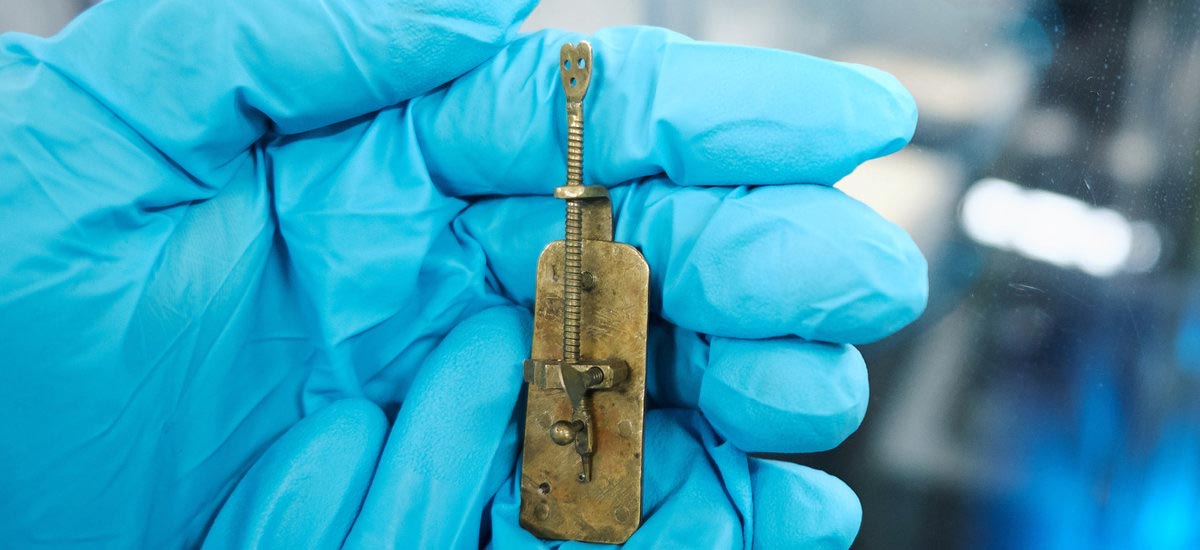
    Leeuwenhoek Microscope
    A Van Leeuwenhoek microscope. Credit: Utrecht University/Rijksmuseum Boerhaave/TU Delft

    Van Leeuwenhoek’s Microscopes Revealed as Surprisingly Ordinary

    A microscope used by Antoni van Leeuwenhoek to conduct pioneering research contains a surprisingly ordinary lens, as new research by Rijksmuseum Boerhaave Leiden and TU Delft shows. It is a remarkable finding, because Van Leeuwenhoek (1632-1723) led other scientists to believe that his instruments were exceptional. Consequently, there has been speculation about his method for making lenses for more than three centuries. The results of this study were published in Science Advances today (May 14, 2021).

    Previous research carried out in 2018 already indicated that some of Van Leeuwenhoek’s microscopes contained common ground lenses. Researchers have now examined a particularly highly magnifying specimen, from the collection of the University Museum Utrecht. Although it did contain a different type of lens, the great surprise was that the lens-making method used was a common one.
    Reactor Institute Delft
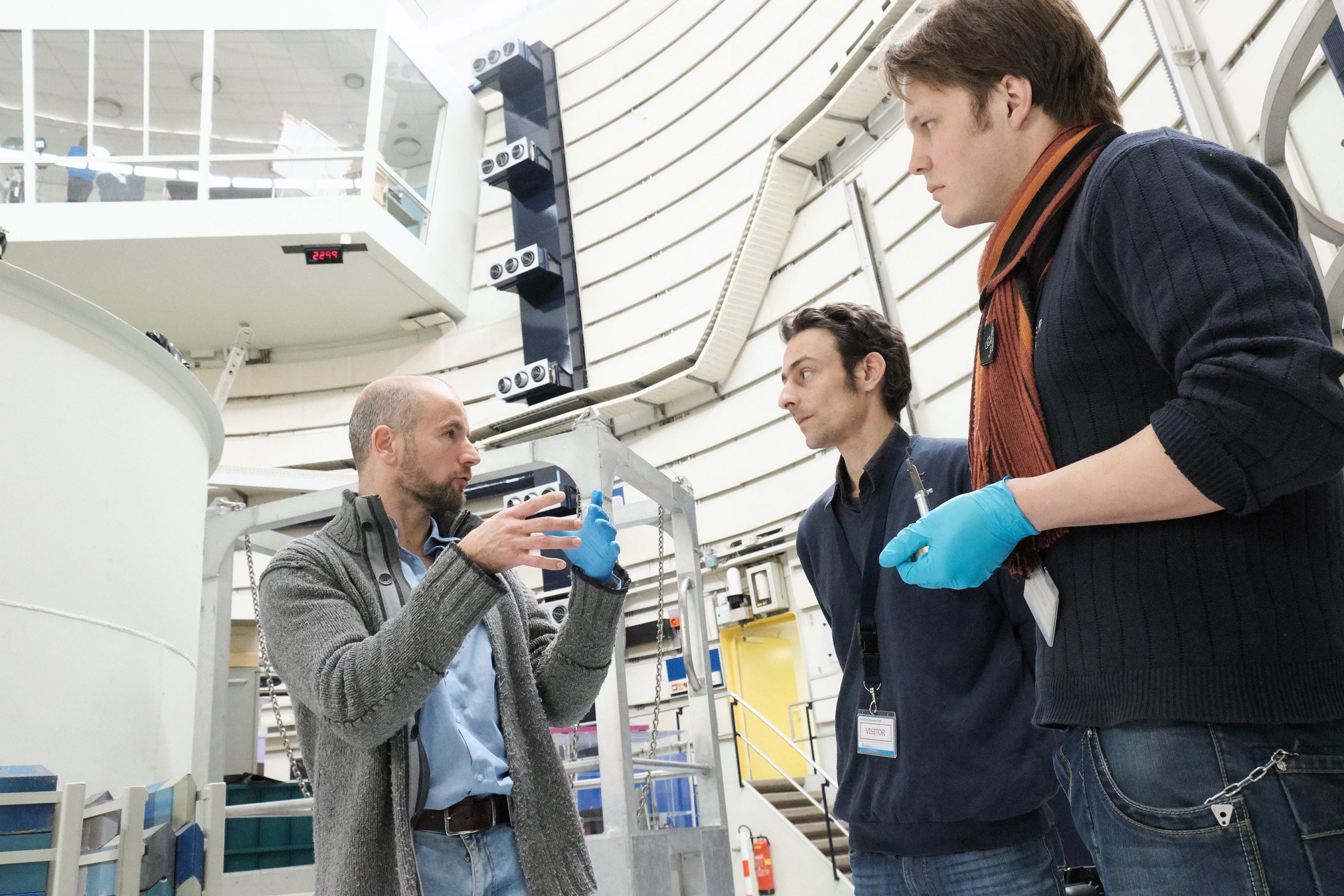
    TU Delft researcher Lambert van Eijck and curators Tiemen Cocquyt and Auke Gerrits of Rijksmuseum Boerhaave at the Reactor Institute Delft in The Netherlands. Credit: TU Delft

    Pioneering but Secretive

    With his microscopes, Antoni van Leeuwenhoek saw a whole new world full of minute life which nobody had ever suspected could exist. He was the first to observe unicellular organisms, which is why he is called the father of microbiology. The detail of his observations was unprecedented and was only superseded over a century after his death.

    His contemporaries were very curious about the lenses with which Van Leeuwenhoek managed to achieve such astounding feats. Van Leeuwenhoek, however, was very secretive about it, suggesting he had found a new way of making lenses. It now proves to have been an empty boast, at least as far as the Utrecht lens is concerned. This became clear when the researchers from Rijksmuseum Boerhaave Leiden and TU Delft subjected the Utrecht microscope to neutron tomography. It enabled them to examine the lens without opening the valuable microscope and destroying it in the process. The instrument was placed in a neutron beam at the Reactor Institute Delft, yielding a three-dimensional image of the lens.

    Hooke Lens
    Microscope lenses reconstructed according to the method of Robert Hooke, which Antoni van Leeuwenhoek also used for his highly magnifying microscopes. Credit: Rijksmuseum Boerhaave/TU Delft

    Small Globule

    This lens turned out to be a small globule, and its appearance was consistent with a known production method used in Van Leeuwenhoek’s time. The lens was very probably made by holding a thin glass rod in the fire, so that the end curled up into a small ball, which was then broken off the glass rod.

    This method was described in 1678 by another influential microscopist, the Englishman Robert Hooke, which inspired other scientists to do the same. Van Leeuwenhoek, too, may have taken his lead from Hooke. The new discovery is ironical, because it was in fact Hooke who was very curious to learn more about Van Leeuwenhoek’s ‘secret’ method.

    The new study shows that Van Leeuwenhoek obtained extraordinary results with strikingly ordinary lens production methods.
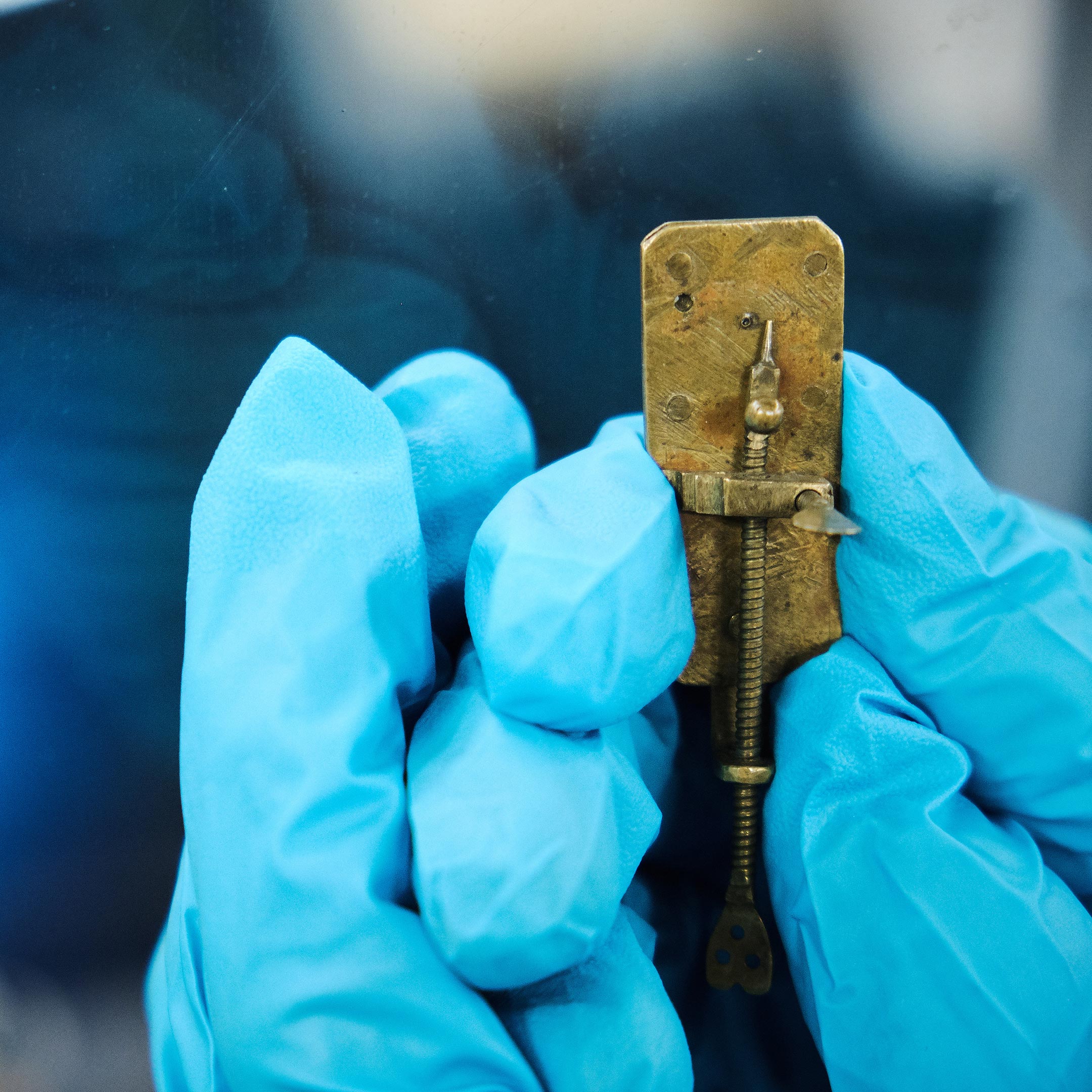
    Van Leeuwenhoek Microscope
    The Van Leeuwenhoek microscope in question, property of the University Museum of Utrecht University. Credit: Utrecht University/Rijksmuseum Boerhaave/TU Delft

    Reference: “Neutron tomography of Van Leeuwenhoek’s microscopes” by Tiemen Cocquyt, Zhou Zhou, Jeroen Plomp and Lambert van Eijck, 14 May 2021, Science Advances.
    DOI: 10.1126/sciadv.abf2402

    Never miss a breakthrough: Join the SciTechDaily newsletter.
    Follow us on Google and Google News.

    Delft University of Technology History Optics Popular
    Share. Facebook Twitter Pinterest LinkedIn Email Reddit

    Related Articles

    Scientists Solve Decades-Old Microscopy Problem

    Mystifying Puzzle of Early Neolithic House Orientations Finally Solved

    Previously Dismissed As Myths, New Study Boosts Credibility of Columbus’ Cannibal Claims

    Famous Battle of Britain ‘What If’ Scenarios Put to the Test by Mathematicians

    To See the Invisible – Scientific Astonishment and Two-Photon Vision

    What Really Caused Neanderthals to Go Extinct? New Study Has Shocking Answer

    MIT Engineers Demonstrate Second-Order Nonlinearity in Silicon

    TU Vienna Researchers Develop World’s Most Powerful Terahertz Quantum Cascade Laser

    Laser Beams Used to Create Filament Paths Could Potentially Direct Lightning

    Leave A Reply Cancel Reply

    • Facebook
    • Twitter
    • Pinterest
    • YouTube

    Don't Miss a Discovery

    Subscribe for the Latest in Science & Tech!

    Trending News

    The Universe Is Expanding Too Fast and Scientists Can’t Explain Why

    “Like Liquid Metal”: Scientists Create Strange Shape-Shifting Material

    Early Warning Signals of Esophageal Cancer May Be Hiding in Plain Sight

    Common Blood Pressure Drug Shows Surprising Power Against Deadly Antibiotic-Resistant Superbug

    Scientists Uncover Dangerous Connection Between Serotonin and Heart Valve Disease

    Scientists Discover a “Protector” Protein That Could Help Reverse Hair Loss

    Bone-Strengthening Discovery Could Reverse Osteoporosis

    Scientists Uncover Hidden Trigger Behind Stem Cell Aging

    Follow SciTechDaily
    • Facebook
    • Twitter
    • YouTube
    • Pinterest
    • Newsletter
    • RSS
    SciTech News
    • Biology News
    • Chemistry News
    • Earth News
    • Health News
    • Physics News
    • Science News
    • Space News
    • Technology News
    Recent Posts
    • A Common Diabetes Drug May Hold the Key to Stopping HIV From Coming Back
    • Ancient “Syphilis-Like” Disease in Vietnam Challenges Key Scientific Assumptions
    • Drinking Alcohol To Cope in Your 20s Could Damage Your Brain for Life
    • Scientists Crack Alfalfa’s Chromosome Mystery After Decades of Debate
    • Ancient Ant-Plant Alliance Collapses As Predatory Wasps Move In
    Copyright © 1998 - 2026 SciTechDaily. All Rights Reserved.
    • Science News
    • About
    • Contact
    • Editorial Board
    • Privacy Policy
    • Terms of Use

    Type above and press Enter to search. Press Esc to cancel.