
Close Menu
    Facebook X (Twitter) Instagram
    SciTechDaily
    • Biology
    • Chemistry
    • Earth
    • Health
    • Physics
    • Science
    • Space
    • Technology
    Facebook X (Twitter) Pinterest YouTube RSS
    SciTechDaily
    Home»Earth»Pūhāhonu Revealed: The Largest and Hottest Shield Volcano on Earth
    Earth

    Pūhāhonu Revealed: The Largest and Hottest Shield Volcano on Earth

    By University of Hawaii at ManoaMay 15, 20202 Comments3 Mins Read
    Facebook Twitter Pinterest Telegram LinkedIn WhatsApp Email Reddit
    Share
    Facebook Twitter LinkedIn Pinterest Telegram Email Reddit
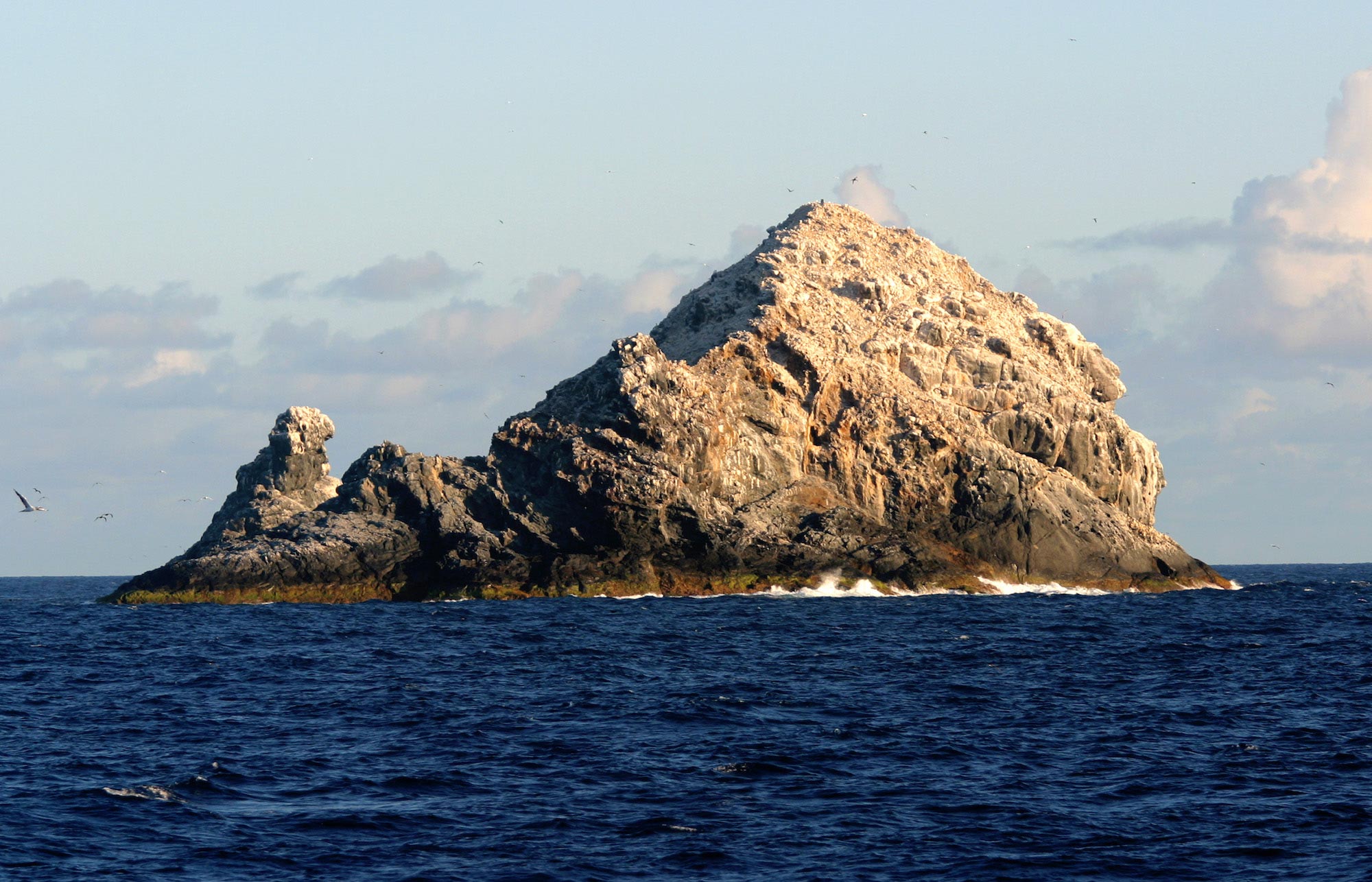
    Gardner Pinnacles Puhahonu Volcano
    The only remnants of Pūhāhonu that are above sea level (Gardner Pinnacles). Credit: NOAA

    In a recently published study, researchers from the University of Hawai‘i at Mānoa School of Ocean and Earth Science and Technology revealed the largest and hottest shield volcano on Earth. A team of volcanologists and ocean explorers used several lines of evidence to determine Pūhāhonu, a volcano within the Papahānaumokuākea Marine National Monument, now holds this distinction.

    Geoscientists and the public have long thought Mauna Loa, a culturally-significant and active shield volcano on the Big Island of Hawai‘i, was the largest volcano in the world. However, after surveying the ocean floor along the mostly submarine Hawaiian leeward volcano chain, chemically analyzing rocks in the UH Mānoa rock collection, and modeling the results of these studies, the research team came to a new conclusion. Pūhāhonu, meaning ‘turtle rising for breath’ in Hawaiian, is nearly twice as big as Mauna Loa.

    “It has been proposed that hotspots that produce volcano chains like Hawai‘i undergo progressive cooling over 1-2 million years and then die,” said Michael Garcia, lead author of the study and retired professor of Earth Sciences at SOEST. “However, we have learned from this study that hotspots can undergo pulses of melt production. A small pulse created the Midway cluster of now extinct volcanoes and another, much bigger one created Pūhāhonu. This will rewrite the textbooks on how mantle plumes work.”
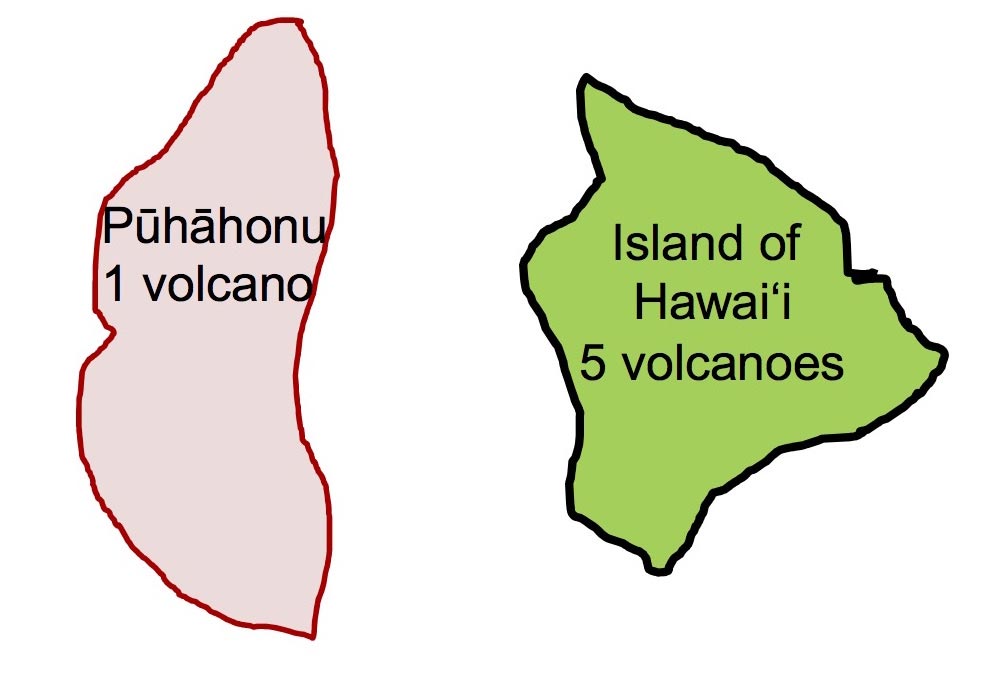
    Volcano Shoreline Comparison
    Shorelines of modern-day Hawai’i Island (5 volcanoes) compared to ancient Pūhāhonu (1 volcano). Credit: Garcia, et al., 2020.

    In 1974, Pūhāhonu (then called Gardner Pinnacles) was suspected as the largest Hawaiian volcano based on very limited survey data. Subsequent studies of the Hawaiian Islands concluded that Mauna Loa was the largest volcano but they included the base of the volcano that is below sea level that was not considered in the 1974 study. The new comprehensive surveying and modeling, using methods similar to those used for Mauna Loa show that Pūhāhonu is the largest.

    This study highlights Hawaiian volcanoes, not only now but for millions of years, have been erupting some of the hottest magma on Earth. This work also draws attention to an infrequently visited part of the state of Hawai‘i that has ecological, historical, and cultural importance.

    “We are sharing with the science community and the public that we should be calling this volcano by the name the Hawaiians have given to it, rather than the western name for the two rocky small islands that are the only above sea level remnants of this once majestic volcano,” said Garcia.

    Reference: “Pūhāhonu: Earth’s biggest and hottest shield volcano” by Michael O. Garcia, Jonathan P. Tree, Paul Wessel and John R. Smith, 8 May 2020, Earth and Planetary Science Letters.
    DOI: 10.1016/j.epsl.2020.116296

    This work was funded by the National Science Foundation, Schmidt Ocean Institute and the University of Hawai‘i.

    Never miss a breakthrough: Join the SciTechDaily newsletter.
    Follow us on Google and Google News.

    Geology Geophysics Tectonic Plates University of Hawaii at Manoa Volcano
    Share. Facebook Twitter Pinterest LinkedIn Email Reddit

    Related Articles

    The Hotspot Beneath Hawaii Is Getting Hotter, Defying a Long-Held Geological Theory

    Scientists May Have Finally Solved a Decades-Old Mystery Beneath the Pacific Ocean

    New Hazards of Earth’s Largest Volcano Uncovered

    New Type of Rock Created During Exceptionally Hot Volcanic Eruptions Discovered Beneath the Pacific Ocean

    World’s Longest Erupting Supervolcanoes Fueled by Magma “Conveyor Belt”

    A Tale of Two Kinds of Volcanoes – One Partially Responsible for a Civilization’s Demise

    Yale Researchers Find a Soft Spot in the Nazca Plate

    The First Complete View of the Yellowstone Magmatic System

    Unusual Indian Ocean Earthquakes May Signal Tectonic Breakup

    2 Comments

    1. TITA on May 22, 2020 7:02 am

      Thank you so much

      Reply
    2. John Bayer on May 28, 2021 5:30 pm

      A linked article from 2013 claims a Tamu Massif is the largest volcano on Earth.

      Reply
    Leave A Reply Cancel Reply

    • Facebook
    • Twitter
    • Pinterest
    • YouTube

    Don't Miss a Discovery

    Subscribe for the Latest in Science & Tech!

    Trending News

    Don’t Miss: A Brilliant Venus and Glowing Harvest Moon Light Up the Sky

    New Twist on the Einstein Problem Reveals Unexpected Physics

    JWST Captures Stunning Evidence of How Supermassive Black Holes Feed

    Early Exercise May Permanently Change How Much Energy the Body Uses To Move

    New Molecule Wipes Out Aggressive Lymphoma Tumors in Mice in Just 11 Days

    The Human Family Tree May Need a Major Rewrite

    Scientists Find a Surprising Cancer-Fighting Effect in Dark Sweet Cherries

    New AI Detects Hidden Warning Signs of Solar Eruptions Hours Before They Emerge

    Follow SciTechDaily
    • Facebook
    • Twitter
    • YouTube
    • Pinterest
    • Newsletter
    • RSS
    SciTech News
    • Biology News
    • Chemistry News
    • Earth News
    • Health News
    • Physics News
    • Science News
    • Space News
    • Technology News
    Recent Posts
    • Africa’s Giant Herbivores Were Disappearing Millions of Years Before Humans Could Hunt Them
    • This Utah Mountain Is Hiding Enough Ice To Fill 600 Olympic Pools
    • Vagus Nerve Stimulation Could Unlock the Brain’s Hidden Learning Potential
    • Your Mother’s Age May Leave a Biological Mark That Lasts for Generations
    • Women Who Ate More Antioxidants Had Strikingly Lower Rates of Cervical Cancer
    Copyright © 1998 - 2026 SciTechDaily. All Rights Reserved.
    • Science News
    • About
    • Contact
    • Editorial Board
    • Privacy Policy
    • Terms of Use

    Type above and press Enter to search. Press Esc to cancel.