

Astronauts on the Moon could one day breathe oxygen pulled from lunar soil using a technique borrowed from chipmaking.
Computer chip manufacturing and lunar exploration seem like completely different worlds. Yet our latest research suggests the two may be more closely connected than expected.
Using technology widely employed in semiconductor manufacturing, we have shown that it is possible to extract oxygen and products containing oxygen from material designed to mimic lunar soil.
This matters because oxygen is one of the most valuable resources for future space exploration. Astronauts need it to breathe, and it is also a major component of rocket propellant.
But transporting large quantities from Earth would be enormously expensive, so space agencies are investigating ways to obtain it directly on the Moon instead.
The challenge is that lunar oxygen does not exist as a readily available gas. Instead, it is chemically bound within minerals that make up the Moon’s surface layer. And although that layer contains a large amount of oxygen by weight, extracting it requires breaking strong chemical bonds within lunar minerals.
Many of the complex techniques that could potentially achieve this extraction would require large amounts of energy.
So our team decided to explore an alternative, lower-temperature approach inspired by a well-established industrial technology called “plasma-processing.”
Plasma is often called the fourth state of matter (after solid, liquid, and gas). It forms when sufficient energy is supplied to a gas, creating a mixture of charged particles, electrons, and highly reactive chemical species.
In semiconductor fabrication, plasma interacts with silicon dioxide in a process that underpins the production of billions of electronic devices every year.
We asked a simple question: if plasmas are highly effective at reacting with compounds containing oxygen in semiconductor processing, could a similar approach be applied to the oxygen-based compounds in lunar soil?
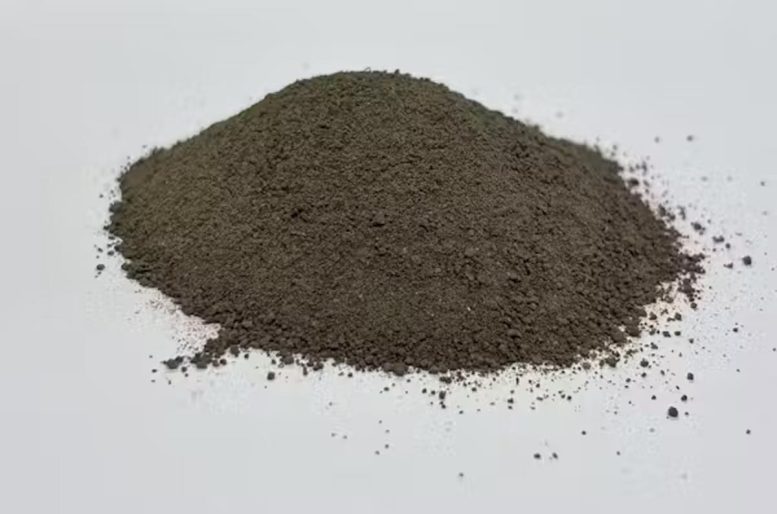
To investigate, we exposed artificial moon soil (known as lunar regolith simulants) to plasmas generated using gases that are commonly employed in semiconductor manufacturing.
Mining oxygen from moon dust
The results were encouraging. During plasma treatment of the lunar regolith simulants, we detected oxygen and oxygen-containing gaseous products being released.
Further analyses confirmed that the plasma was chemically modifying oxygen-bearing minerals within the material, with some lunar minerals reacting more readily than others.
Understanding these underlying mechanisms is important for enhancing the efficiency of the process and identifying opportunities to improve future systems. But oxygen yields would need to increase substantially before any practical lunar system becomes possible.
Why established technologies matter
One reason this approach is attractive is that it builds on decades of experience developed by the semiconductor industry. Space engineering often requires entirely new technologies, but there are advantages in adapting systems that already exist, are well-understood, and have been refined for years on Earth.
The semiconductor industry has spent decades studying how fluorine plasmas interact with materials containing oxygen. Rather than starting from scratch, future researchers can draw on that extensive knowledge base.
There are practical benefits too. Plasma processing is a dry process, avoiding some of the challenges associated with transporting and handling liquid reagents (chemicals added to the process to make a reaction occur) in space. The operating temperatures of plasma processing can also be significantly lower than those required by some conventional oxygen extraction methods.
The implications may extend beyond using oxygen for life support on lunar bases. Lunar soil contains useful elements, including silicon, aluminum, and iron. While our current work focused on oxygen-bearing reactions, future studies may explore whether plasma-based processes could contribute more broadly to the use of other lunar resources.
Much more research is needed to understand the chemistry, to improve yields, and to determine whether the process can be scaled economically.
But the plasma technology that enables the manufacture of billions of transistors may also help humanity tackle one of the biggest challenges of space exploration: learning how to live off the land on another world.
Reference: “Impact of oxygen extraction from lunar regolith simulant using fluorinated plasma processes” by Aneeta Jaggernauth, Sean Kelly, Brian K. Tanner, Robert O’Connor, Aidan Cowley and Rajani K. Vijayaraghavan, 2 September 2026, Scientific Reports.
DOI: 10.1038/s41598-026-67891-2
Adapted from an article originally published in The Conversation.
Never miss a breakthrough: Join the SciTechDaily newsletter.
Follow us on Google and Google News.