
Close Menu
    Facebook X (Twitter) Instagram
    SciTechDaily
    • Biology
    • Chemistry
    • Earth
    • Health
    • Physics
    • Science
    • Space
    • Technology
    Facebook X (Twitter) Pinterest YouTube RSS
    SciTechDaily
    Home»Space»Super Lunar Event: Supermoon! Red Blood Lunar Eclipse! All Happening at Once – Here’s What It Means
    Space

    Super Lunar Event: Supermoon! Red Blood Lunar Eclipse! All Happening at Once – Here’s What It Means

    By Shannon Schmoll, Michigan State UniversityMay 22, 20213 Comments4 Mins Read
    Facebook Twitter Pinterest Telegram LinkedIn WhatsApp Email Reddit
    Share
    Facebook Twitter LinkedIn Pinterest Telegram Email Reddit
    Red Blood Moon
    A red blood moon is caused by sunlight passing through the Earth’s atmosphere. Credit: U.S. Navy/Joshua Valcarcel/WikimediaCommons

    The first lunar eclipse of 2021 is going to happen during the early hours of May 26. But this is going to be a very spectacular lunar event, as it will be a supermoon, a lunar eclipse, and a red blood moon all at once. So what does all of this mean?
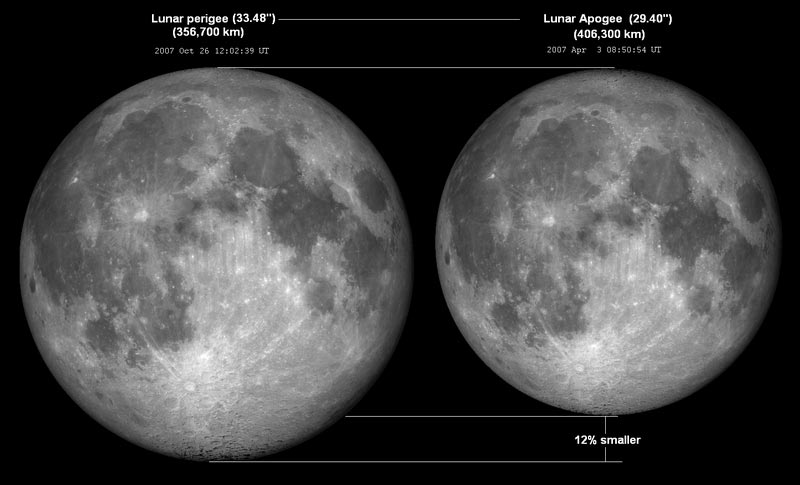
    Lunar Perigee vs Apogee
    The Moon appears 12% bigger when it is closest to Earth compared with its appearance when it’s farthest away. Credit: Tomruen/WikimediaCommons, CC BY-SA

    What’s a Super Moon?

    A supermoon occurs when a full or new moon coincides with the Moon’s closest approach to the Earth.

    The Moon’s orbit around Earth is not perfectly circular. This means the Moon’s distance from Earth varies as it goes around the planet. The closest point in the orbit, called the perigee, is roughly 28,000 miles (45,000 kilometers) closer to Earth than the farthest point of the orbit. A full moon that happens near the perigee is called a supermoon.
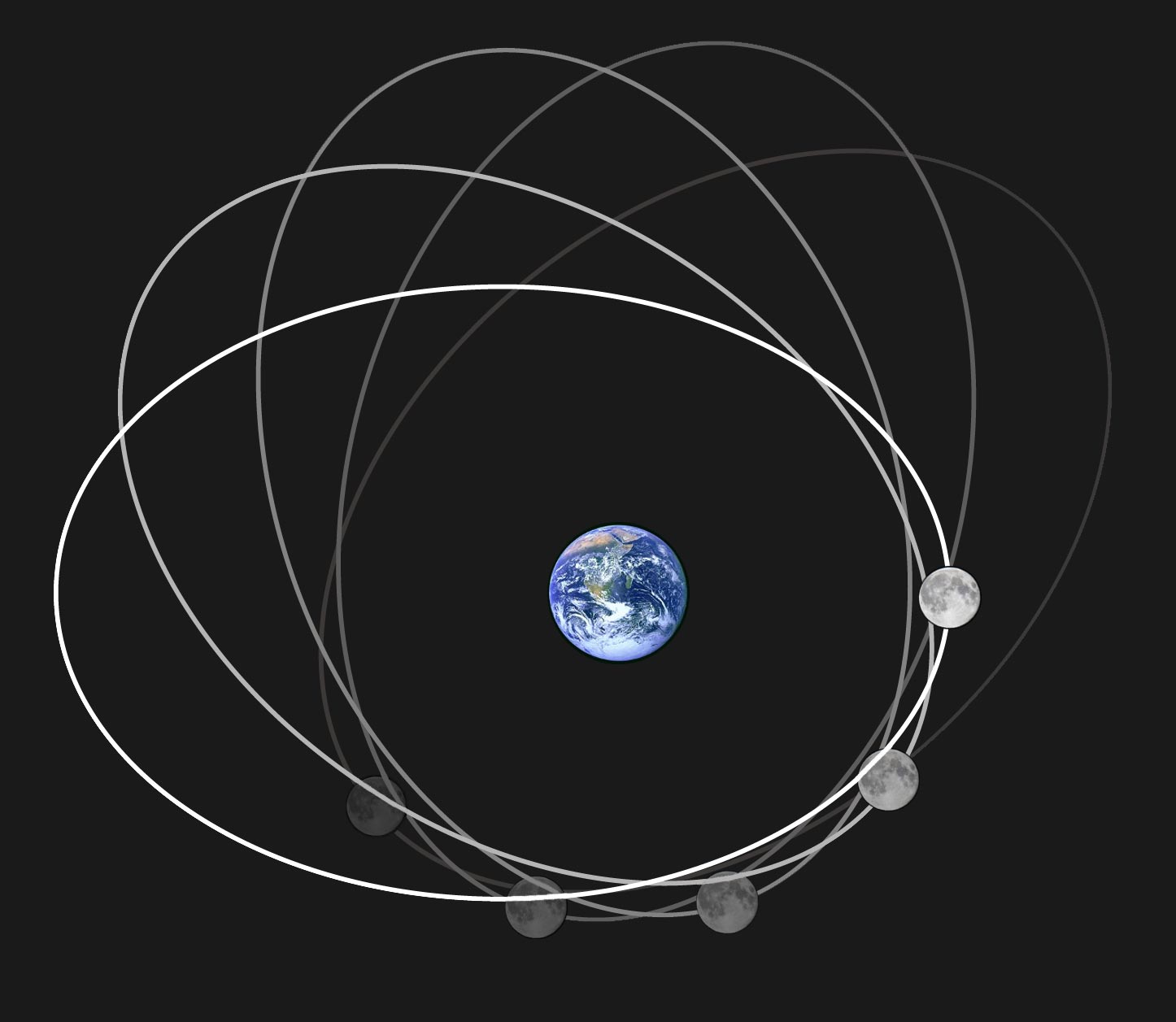
    Moon's Orbit Around Earth
    The Moon’s orbit is not a perfect circle as it slowly rotates around Earth. Credit: Rfassbind/WikimediaCommons

    So why is it super? The relatively close proximity of the Moon makes it seem a little bit bigger and brighter than usual, though the difference between a supermoon and a normal moon is usually hard to notice unless you’re looking at two pictures side by side.

    How Does a Lunar Eclipse Work?

    A lunar eclipse happens when the Earth’s shadow covers all or part of the Moon. This can only happen during a full moon, so first, it helps to understand what makes a full moon.

    Like the Earth, half of the Moon is illuminated by the sun at any one time. A full moon happens when the Moon and the Sun are on opposite sides of the Earth. This allows you to see the entire lit-up side, which looks like a round disc in the night sky.
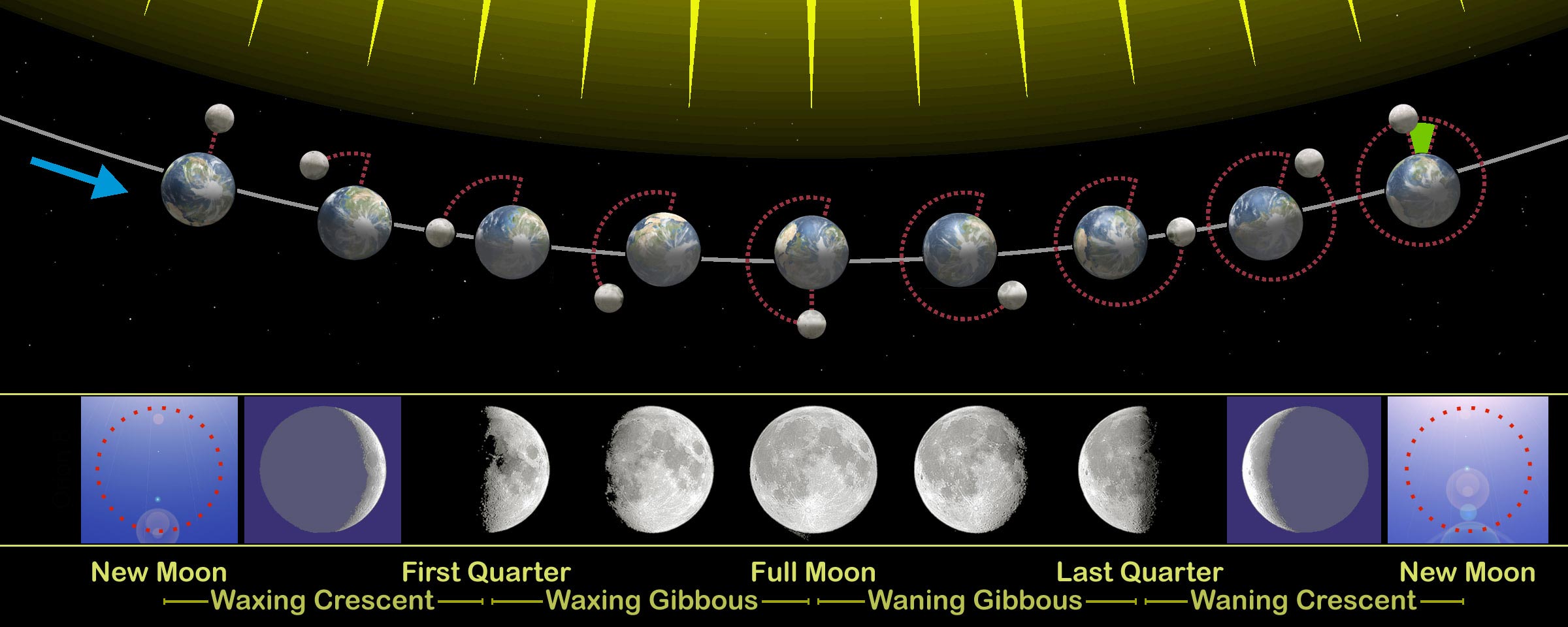
    Phases of the Moon From Earth
    The phases of the Moon correspond to how much of the lit–up side you can see from Earth. Credit: Orion 8/WikimediaCommons, CC BY-SA

    If the Moon had a totally flat orbit, every full moon would be a lunar eclipse. But the Moon’s orbit is tilted by about 5 degrees relative to Earth’s orbit. So, most of the time a full moon ends up a little above or below the shadow cast by the Earth.

    But twice in each lunar orbit, the Moon is on the same horizontal plane as both the Earth and Sun. If this corresponds to a full moon, the Sun, the Earth and the Moon will form a straight line and the Moon will pass through the Earth’s shadow. This results in a total lunar eclipse.
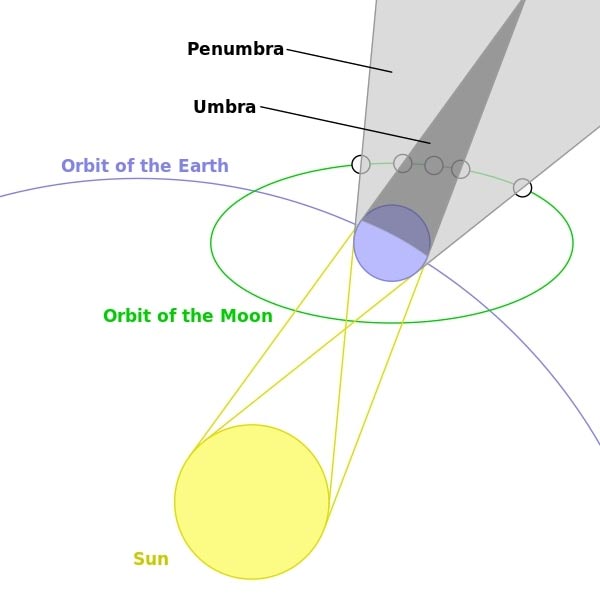
    Lunar Eclipse Diagram
    A lunar eclipse occurs when the Moon passes through Earth’s shadow. Credit: Sagredo/WikimediaCommons

    To see a lunar eclipse, you need to be on the night side of the Earth while the Moon passes through the shadow. The best place to see the eclipse on May 26, 2021, will be the middle of the Pacific Ocean, Australia, the East Coast of Asia and the West Coast of the Americas. It will be visible in the eastern half of the U.S., but only in the very earliest stages before the Moon sets.

    Why Does the Moon Look Red?

    When the Moon is completely covered by Earth’s shadow it will darken, but doesn’t go completely black. Instead, it takes on a red color, which is why total lunar eclipses are sometimes called red or blood moons.
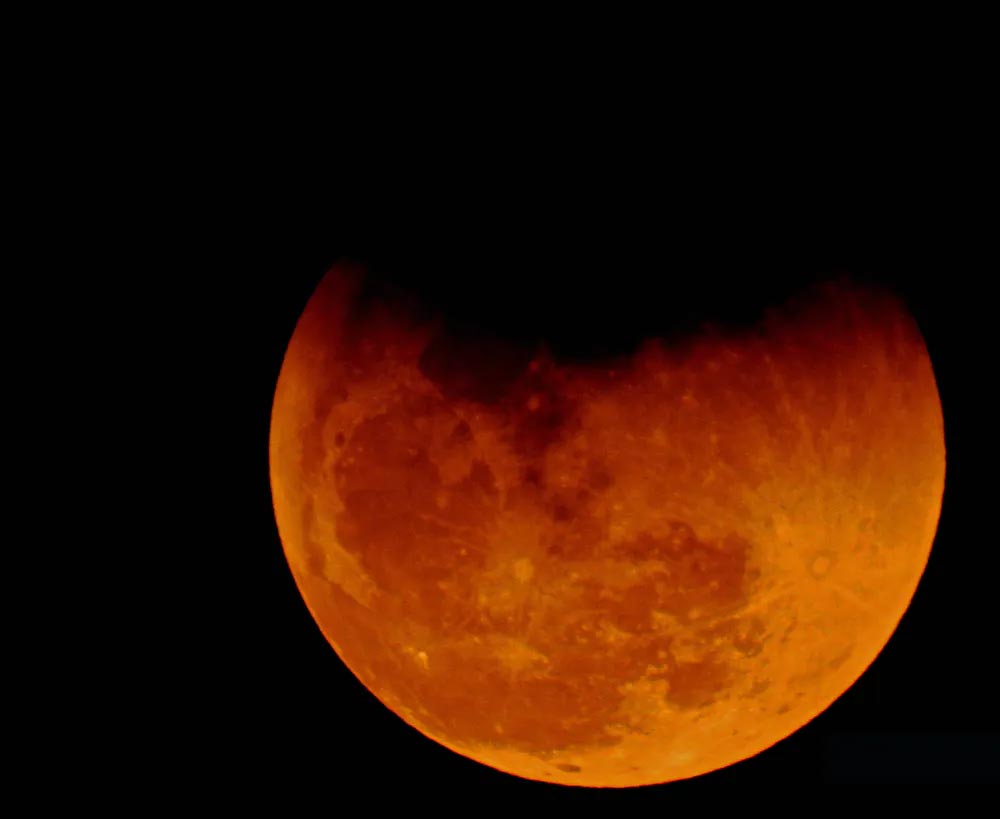
    Blood Red Moon
    The Earth’s atmosphere gives the Moon a blood-red glow during total lunar eclipses. Credit: Irvin Calicut/WikimediaCommons, CC BY-SA

    Sunlight contains all colors of visible light. The particles of gas that make up Earth’s atmosphere are more likely to scatter blue wavelengths of light while redder wavelengths pass through. This is called Rayleigh scattering, and it’s why the sky is blue and sunrises and sunsets are often red.

    In the case of a lunar eclipse, red light can pass through the Earth’s atmosphere and is refracted – or bent – toward the Moon, while blue light is filtered out. This leaves the moon with a pale reddish hue during an eclipse.

    Hopefully you will be able to go see this super lunar eclipse. When you do, now you will know exactly what makes for such a special sight.

    Written by Shannon Schmoll, Director, Abrams Planetarium, Department of Physics and Astronomy, Michigan State University.

    Adapted from an article originally published on The Conversation.The Conversation

    Never miss a breakthrough: Join the SciTechDaily newsletter.
    Follow us on Google and Google News.

    Astronomy Michigan State University Moon Popular The Conversation
    Share. Facebook Twitter Pinterest LinkedIn Email Reddit

    Related Articles

    Crystalline Quest: The International Pursuit of Lunar Ice Deposits

    Earthrise Revealed: Unearthing the True Story Behind the “Image of the Century”

    The Moon’s Top Layer Has Enough Oxygen To Sustain 8 Billion People for 100,000 Years

    Massive Flare Seen on Closest Star to the Solar System: What It Means for Chances of Alien Neighbors

    Mars Missions From China and UAE Are Set to Go Into Orbit – Here’s What You Need to Know

    Successful High-Resolution Moon Imaging Test Paves Way for New Planetary Radar

    Growing Interest in Limited Moon Resources Could Cause Tension

    Incredible Photograph Captures Space Station As It Transited the Waning Gibbous Moon

    Asteroid Trailing Mars May Be Our Moon’s Long-Lost Twin

    3 Comments

    1. xABBAAA on May 23, 2021 8:38 am

      … and the Moon is getting away from the Earth.
      Hmh, how does Albert’s theory explains that? And what happens to the Earth on the respect to the Suns motion.

      Reply
    2. Nicole C on May 24, 2021 11:29 am

      “it will be a supermoon, a lunar eclipse and a red blood moon all at once.” “Instead, it takes on a red color, which is why total lunar eclipses are sometimes called red or blood moons.”
      …So it’s not a lunar eclipse AND a red blood moon. That’d be like saying ‘it’s a moon and a natural satellite.’
      (I’m not *just* being anal 😉 While this one is benign, I dislike misleading headlines/openers that try to make something more sensational than it really is.)

      Reply
      • Nicole C on May 24, 2021 11:36 am

        Okay. So technically lunar eclipse and red blood moon aren’t synonymous. ‘Total lunar eclipse’ and red blood moon are.

        Reply
    Leave A Reply Cancel Reply

    • Facebook
    • Twitter
    • Pinterest
    • YouTube

    Don't Miss a Discovery

    Subscribe for the Latest in Science & Tech!

    Trending News

    Scientists Warn That This Common Pet Fish Can Wreck Entire Ecosystems

    Scientists Make Breakthrough in Turning Plastic Trash Into Clean Fuel Using Sunlight

    This Popular Supplement May Interfere With Cancer Treatment, Scientists Warn

    Scientists Finally Solved One of Water’s Biggest Mysteries

    Could This New Weight-Loss Pill Disrupt the Entire Market? Here’s What You Should Know About Orforglipron

    Earth’s Crust Is Tearing Open in Africa, and It Could Form a New Ocean

    Breakthrough Bowel Cancer Trial Leaves Patients Cancer-Free for Nearly 3 Years

    Natural Compound Shows Powerful Potential Against Rheumatoid Arthritis

    Follow SciTechDaily
    • Facebook
    • Twitter
    • YouTube
    • Pinterest
    • Newsletter
    • RSS
    SciTech News
    • Biology News
    • Chemistry News
    • Earth News
    • Health News
    • Physics News
    • Science News
    • Space News
    • Technology News
    Recent Posts
    • Ancient Roman Ship Coating Reveals Secrets Hidden for 2,200 Years
    • Enormous Prehistoric Insects Puzzle Scientists
    • College Student Identifies Bizarre New Carnivorous Dinosaur Three Times Older Than T. rex
    • The Most Effective Knee Arthritis Treatments Aren’t What You Expect
    • Scientists Develop Bioengineered Chewing Gum That Could Help Fight Oral Cancer
    Copyright © 1998 - 2026 SciTechDaily. All Rights Reserved.
    • Science News
    • About
    • Contact
    • Editorial Board
    • Privacy Policy
    • Terms of Use

    Type above and press Enter to search. Press Esc to cancel.