
Close Menu
    Facebook X (Twitter) Instagram
    SciTechDaily
    • Biology
    • Chemistry
    • Earth
    • Health
    • Physics
    • Science
    • Space
    • Technology
    Facebook X (Twitter) Pinterest YouTube RSS
    SciTechDaily
    Home»Earth»Glaciers Are Melting at Alarmingly Different Rates and Climate Alone Can’t Explain Why
    Earth

    Glaciers Are Melting at Alarmingly Different Rates and Climate Alone Can’t Explain Why

    By Graz University of TechnologyNovember 27, 2026No Comments4 Mins Read
    Facebook Twitter Pinterest Telegram LinkedIn WhatsApp Email Reddit
    Share
    Facebook Twitter LinkedIn Pinterest Telegram Email Reddit
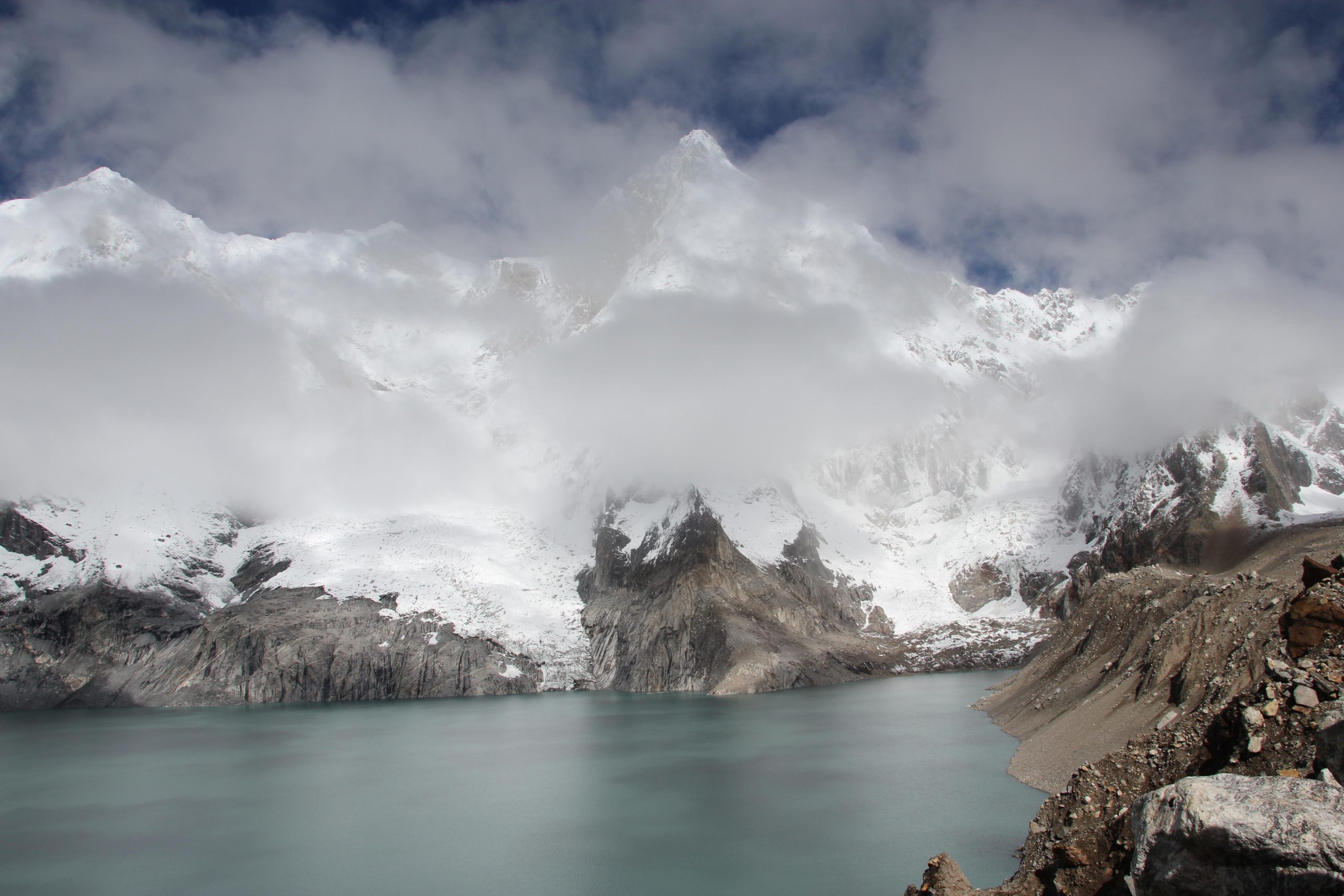
    Galong Co Glacial Lake in the Himalayas
    The Galong Co glacial lake in the central Himalayas has grown significantly as a result of glacial melt. Credit: Jan Bouke Pronk

    Where a glacier ends can influence how quickly it disappears, with implications for communities that depend on mountain meltwater or face the threat of flooding.

    Between 2000 and 2020, the number of lakes in direct contact with glaciers worldwide grew by about 35 percent. Their expansion has consequences for the ice that remains. Lake water can melt glaciers from underneath, while chunks of ice can break away and fall into the water. Until recently, scientists had struggled to determine how much these processes contribute to glacier loss worldwide.

    An international research team, including Tobias Bolch from the Institute of Geodesy at Graz University of Technology (TU Graz), used artificial intelligence to map glacial lakes from satellite images taken in 2000 and 2020. The researchers manually checked the results, distinguishing lakes that touched glaciers from those already separated from the ice. Their findings were published in Nature Climate Change.

    Glaciers lose ice faster in lakes

    Over the 20-year period, glaciers ending in lakes lost an average of 66 centimeters (26 inches) of water equivalent annually, meaning the lost ice would produce a layer of water that deep. By comparison, glaciers ending on land lost 40 centimeters (16 inches), and those ending in the sea lost 36 centimeters (14 inches).
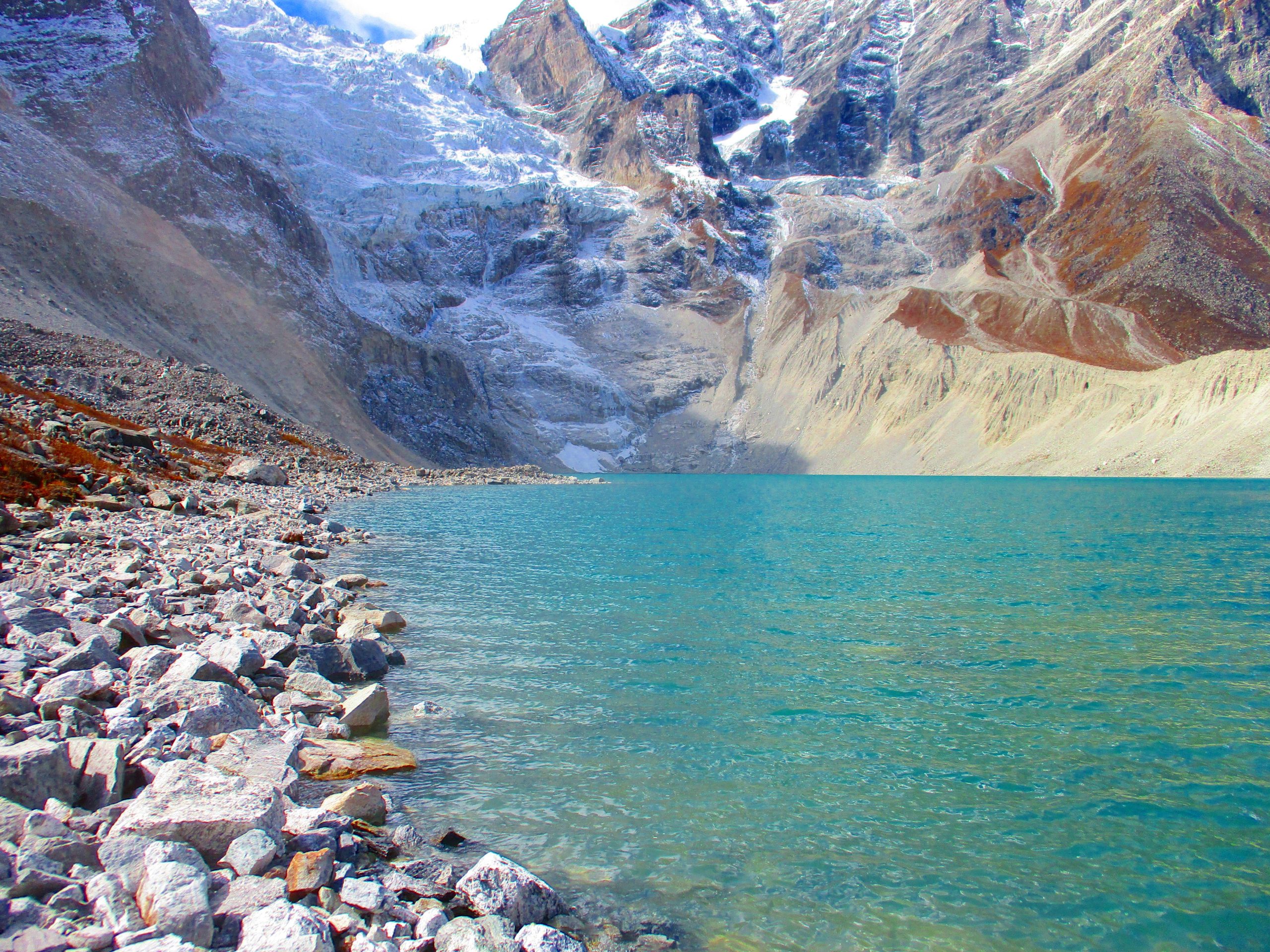
    Jialong Co Glacial Lake in the Himalayas
    The Jialong Co glacial lake in the central Himalayas has grown considerably in recent decades. Credit: Tobias Bolch

    “Our research has shown that contact with a lake further accelerates the loss of ice from a glacier,” says Tobias Bolch. “While the climate and the topography of the glacier are the most significant factors influencing glacial mass loss, lakes significantly exacerbate it.”

    A surge in glacial lake water

    The number of lakes touching glaciers increased by more than 3,500, with particularly pronounced expansion in Alaska and the southern Andes. Their combined area grew by around 600 square kilometers (232 square miles). They also gained an estimated 66 cubic kilometers of water, enough to submerge the entire city of Vienna under approximately 160 meters (525 feet) of water
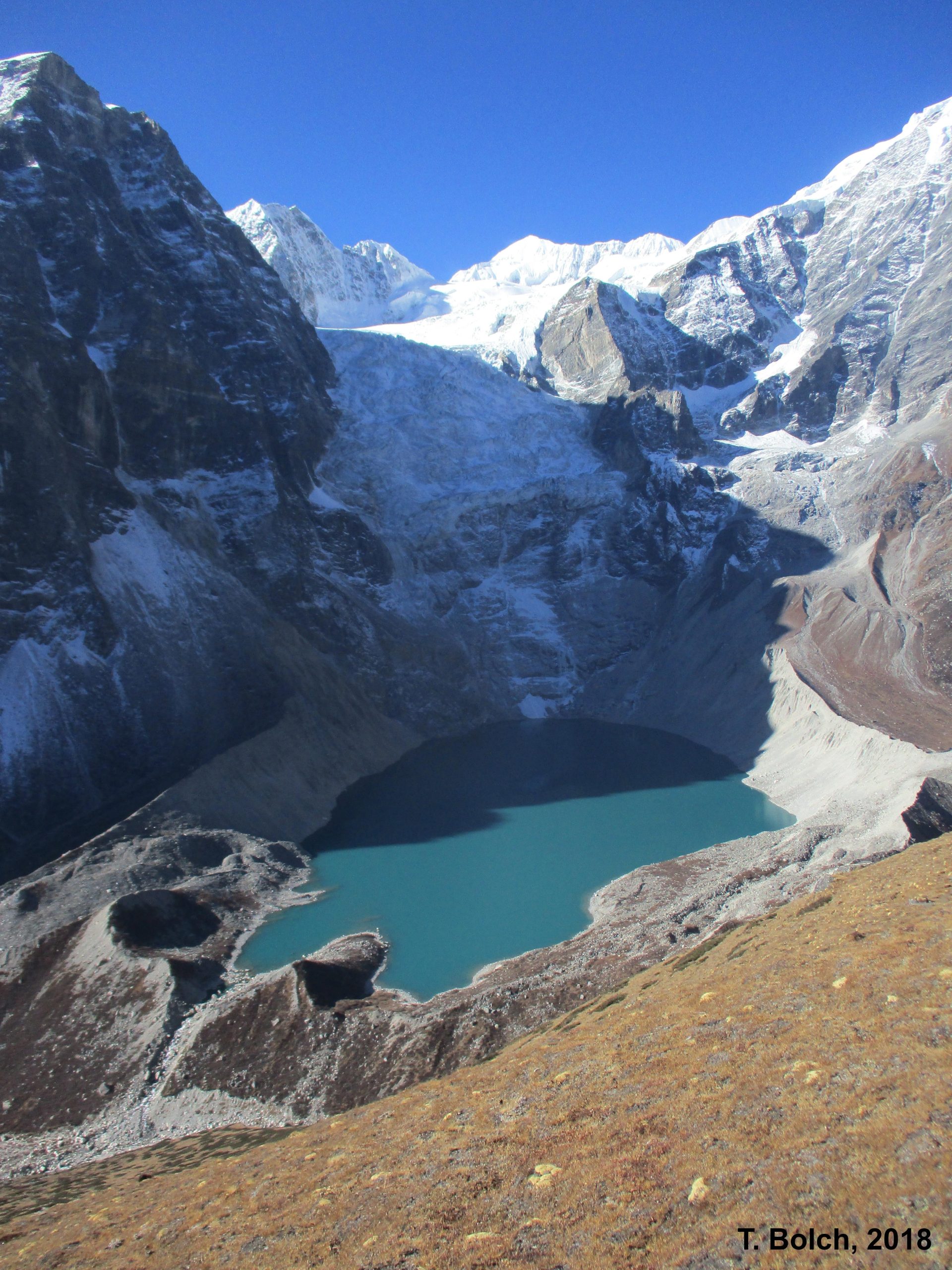
    Aerial View of Jialong Co Glacial Lake
    The Jialong Co glacial lake in the central Himalayas has grown considerably in recent decades. Credit: Tobias Bolch

    Climate alone cannot explain ice loss

    Using machine learning models, the researchers found that glacier characteristics such as elevation and slope accounted for 46 percent of the explained influence on ice gains and losses. Temperature, precipitation, and other climatic factors accounted for around 43 percent, while glacial lakes contributed approximately 11 percent.

    “The findings from this study will help us to estimate future changes to the glaciers more accurately,” says Tobias Bolch. “This is particularly important for mountainous regions and their forelands, where meltwater is a significant source of water. Such findings are also relevant when assessing the risks posed by glacial lakes in the event of potential outbursts.”

    Reference: “Climate and glacier geometry dominate global glacier–lake interactions” by Shaochun Zhao, Guoqing Zhang, Matthias Huss, Georg Veh, Jonathan L. Carrivick, Tobias Bolch, David R. Rounce, Qian Tang, Yifan Bu, Yan Song, Menger Peng, Xue Wang, Xinhai Zeng, Danni Huang, Mengjie Zhu, Tao Zhou and Jie Cheng, 20 November 2026, Nature Climate Change.
    DOI: 10.1038/s41558-026-02808-5

    This work was supported by grants from the Basic Excellent Research Group for Tibetan Plateau Earth System, National Natural Science Foundation of China (NSFC ERGTPES project no. 42588201), the National Key Research and Development Project of China (2024YFF0809104), the National Natural Science Foundation of China (grant no. 42571153), the Second Tibetan Plateau Scientific Expedition and Research Program (STEP, 2024QZKK0301), the Department of Science and Technology of the Tibet Autonomous Region (XZ202502JD0025, XZ202403ZY0028) and the High-Level Talent Program of Xizang University (XZDXDR202501).

    Never miss a breakthrough: Join the SciTechDaily newsletter.
    Follow us on Google and Google News.

    Climate Change Environmental Science Glaciology Graz University of Technology Ice Melt
    Share. Facebook Twitter Pinterest LinkedIn Email Reddit

    Related Articles

    Glaciers Vanishing Fast – 273 Billion Tons of Ice Lost Annually

    Greenland Ice Sheet Holds Summer Meltwater: Surprising New Discovery Challenges Sea-Level Rise Predictions

    Melting Mystery Solved: Why Ice Sheets Shrink Faster Than They Grow

    Challenging Modern Climate Narratives: Forgotten 1937 Aerial Photos Expose Antarctic Anomaly

    Groundbreaking New Data Unveils Secrets of Arctic Glacier Loss

    Antarctica’s Ice Deception: New Study Reveals Surprising Thinness of Ice Shelves

    Machine Learning Helps Predict the Geothermal Heat Flux in Greenland

    New Research Shows Greenland Ice Sheet Movement is Decreasing Despite Warming

    Satellite Records Show Antarctic Sea Ice Reaches New Record Maximum

    Leave A Reply Cancel Reply

    • Facebook
    • Twitter
    • Pinterest
    • YouTube

    Don't Miss a Discovery

    Subscribe for the Latest in Science & Tech!

    Trending News

    America’s Data Centers Have a Hidden Death Toll, MIT Researchers Warn

    Scientists Discover a Potential New Way To Treat Diabetes – No Insulin Required

    “This Star System Should Not Exist”: Astronomers Discover a Cosmic Mystery Just 28 Light-Years Away

    Scientists Discover the Human Ear May Work Very Differently Than We Thought

    A Metal Foam Designed for Armor Could Make Cars Dramatically Safer

    This Common Vitamin Deficiency Could Be Quietly Disrupting Your Sleep

    A 360-Year-Old Manuscript Reveals Galileo May Have Built a Telescope Far Ahead of Its Time

    Your Personality May Be Partly Written in Your DNA, Massive Study of 1 Million People Reveals

    Follow SciTechDaily
    • Facebook
    • Twitter
    • YouTube
    • Pinterest
    • Newsletter
    • RSS
    SciTech News
    • Biology News
    • Chemistry News
    • Earth News
    • Health News
    • Physics News
    • Science News
    • Space News
    • Technology News
    Recent Posts
    • Glaciers Are Melting at Alarmingly Different Rates and Climate Alone Can’t Explain Why
    • Eagles Hunting Human-Sized Baboons Challenge Long-Held Evolutionary Theory
    • New Technology Could Help Astronauts Make Their Own Oxygen on the Moon
    • Astronomers Discover the Sun Contains 55% More Silver Than Previously Thought
    • A Black Hole Smaller Than an Atom Could Trigger One of the Universe’s Most Violent Explosions
    Copyright © 1998 - 2026 SciTechDaily. All Rights Reserved.
    • Science News
    • About
    • Contact
    • Editorial Board
    • Privacy Policy
    • Terms of Use

    Type above and press Enter to search. Press Esc to cancel.