
Samples from the Mariana Trench suggest its seafloor is stretching in two different ways, a process that could influence tectonic plate movements across the western Pacific.
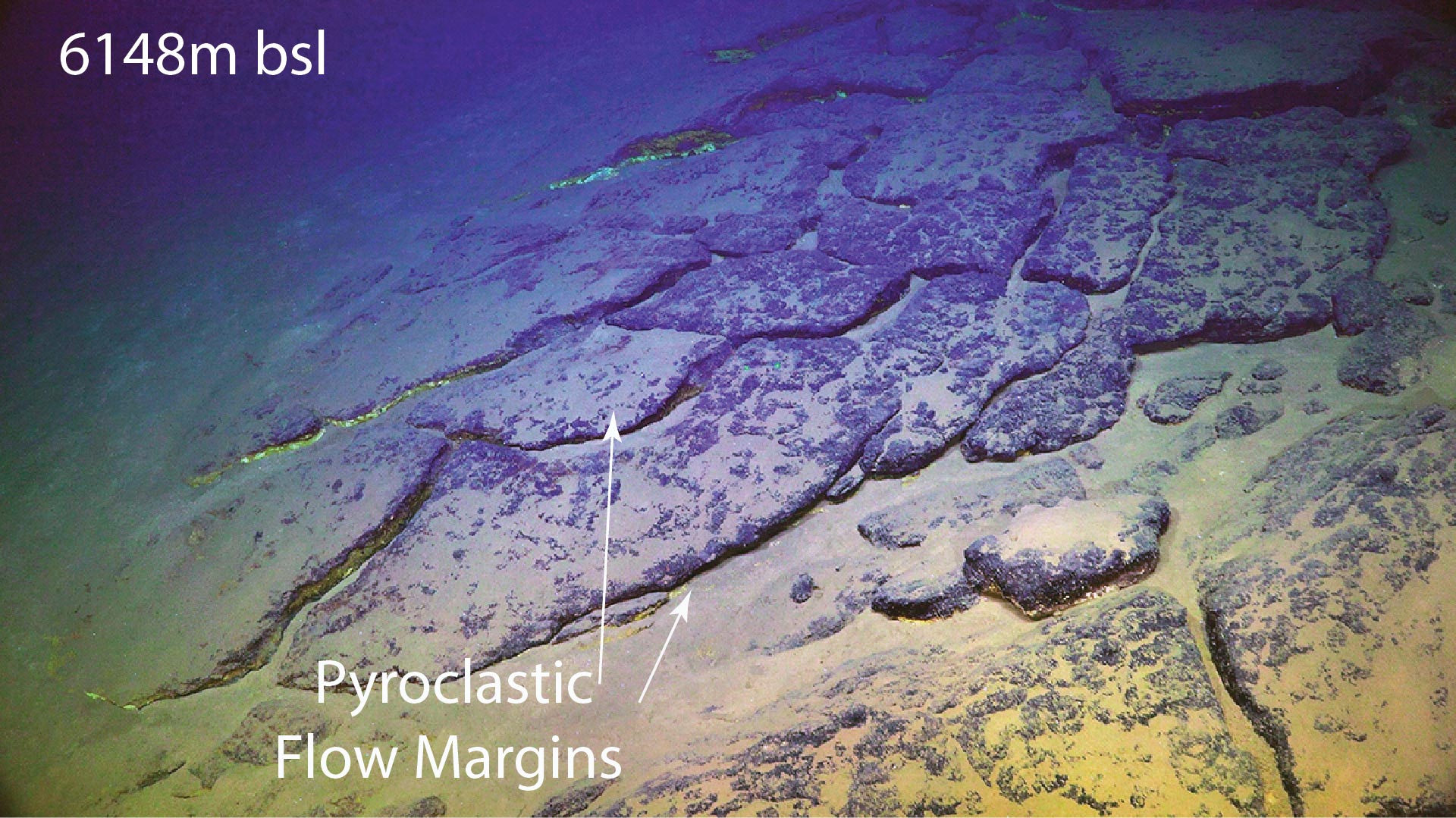
Scientists exploring the Mariana Trench have discovered evidence of the deepest explosive underwater volcanic eruptions ever documented. The finding came from thin layers of volcanic rock along the trench’s western forearc, an unexpected location where young volcanic activity is rarely found.
The Mariana Trench began forming about 52 million years ago as the Pacific plate started sliding beneath the Philippine Sea plate. In late 2024, researchers sent the remotely operated vehicle (ROV) Jason/Medea to investigate a 550-kilometer stretch of the forearc near Challenger Deep, the trench’s deepest point. Although the vehicle could descend only 6,500 meters, seven dives across approximately 300 kilometers revealed significant differences between the eastern and western sections. The eastern section had deeper waters and steeper walls, while the western section contained the unexpected volcanic deposits.
“Explosive volcanism near trenches is unusual, so we were very surprised,” said Dr. Robert J. Stern of the University of Texas at Dallas, lead author of the study published in Frontiers in Earth Science. “These are the deepest pyroclastic rocks documented to date from anywhere in the ocean.”
Volcanism in an unlikely setting
The discovery is particularly unusual because the mantle beneath the forearc is generally not hot enough to melt, making young volcanic rocks rare. Extreme underwater pressure also changes how these eruptions behave by restricting the expansion of gases inside magma.
“The intense pressures at the depths that these submarine volcanoes erupted makes the eruption style different than it would be on land or in shallow water, where the pressures are much lower,” said Stern. “The explosive eruptions observed on land cannot be as powerful under these high-pressure conditions because the gases in the magma cannot expand so much. We are still studying this phenomenon and trying to understand it.”
Two forces are stretching the forearc
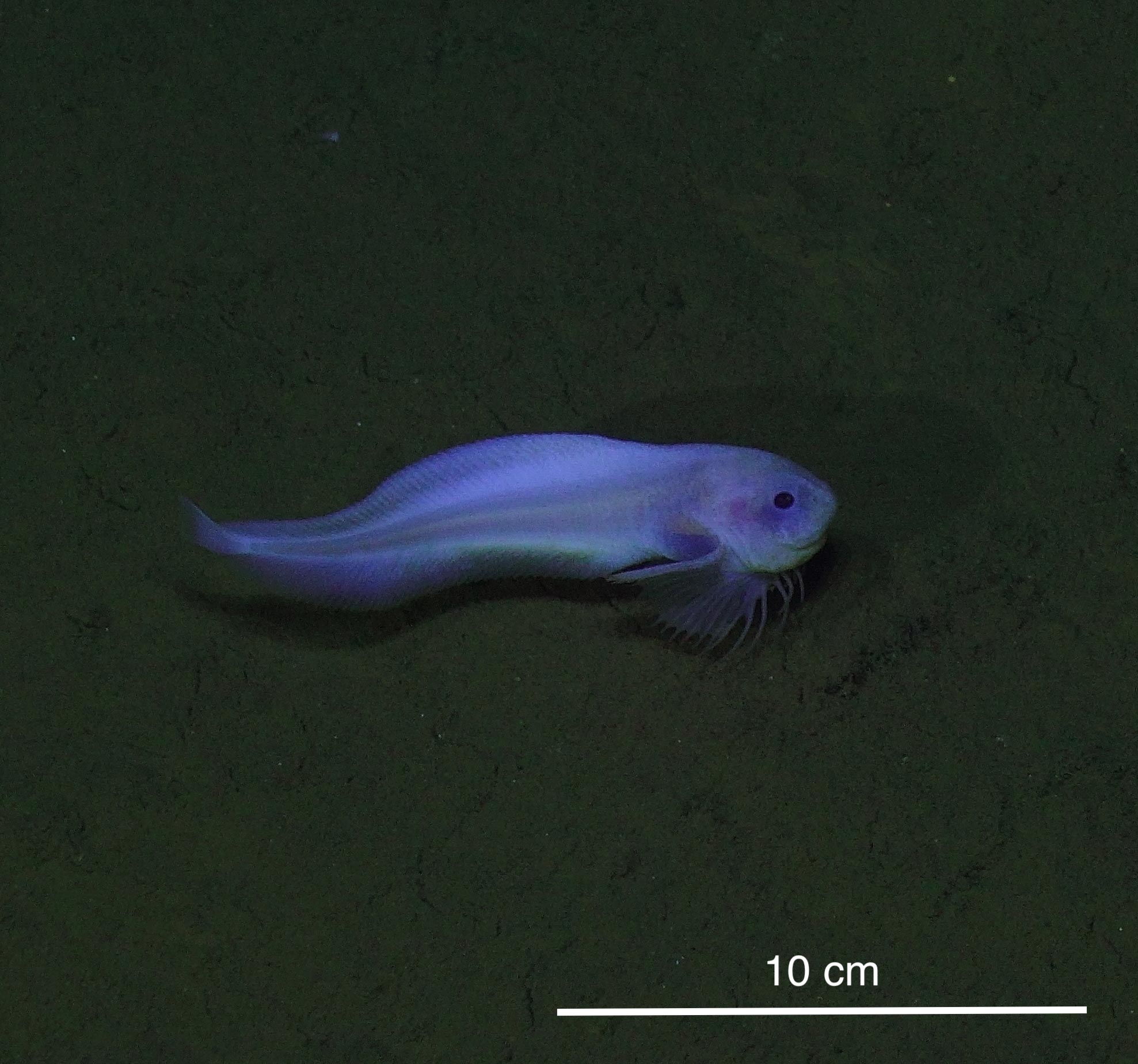
The rocks also revealed differences in how the forearc is stretching. Older rocks in the east suggest that tectonic plates are being pulled apart mechanically, while younger volcanic rocks in the west point to magma rising from the mantle and adding new material. The researchers believe both processes are occurring, although additional samples and radiometric dating are needed to confirm the explanation.
The findings also help explain the Challenger Deep’s extraordinary depth. The tectonic plates are relatively weakly attached, allowing the descending Pacific plate to move more easily. Because the plate is relatively narrow and short, it can bend more sharply as it sinks, creating a steeper trench. The researchers also expect the stretching forearc to widen the existing subduction zone, potentially affecting plate movements across the western Pacific.
“The sinking of oceanic plates in subduction zones provides most of the energy that make Earth’s tectonic plates move, so as this subduction zone widens, it will affect plate motions at least in the western Pacific,” said Stern.
The eruption sites remain unexplored
The team has yet to locate the volcanic eruption sites. However, the condition of the recovered rocks offers a clue about how far the volcanic material traveled.
“We haven’t identified the eruption sites yet,” said Stern. “We know that these hot pyroclastic flows moved down slopes, but we don’t think they moved very far. They retained enough heat to re-weld themselves into pretty hard rocks, and that heat would’ve been lost if the pyroclastic flows traveled great distances.”
The researchers hope to return to explore deeper sections of the trench. Reaching Challenger Deep, nearly 11,000 meters below sea level, remains beyond the capabilities of the equipment used in this expedition.
“We would like to study more of the Challenger Deep forearc segment and go to greater depths,” added Stern. “We were unable to study the seafloor between the depths of 6,500 meters and 11,000 meters, the depth of the Challenger Deep. Only Chinese scientists and some wealthy entrepreneurs now have research tools capable of working down to the bottom of the Challenger Deep.”
Reference: “ROVing in the deep: tectonic and magmatic complexities of the Challenger Deep forearc segment, Southern Mariana convergent margin” by Robert J. Stern, Ignacio Pujana, Molly K. Anderson, Emily J. Chin, Nicholas Dygert, Yumiko Harigane, Veronique Le Roux, Matthew Leybourne, Yasuhiko Ohara, Tomoyo Okumura, George Segee-Wright and Emily Etheridge, 24 September 2026, Frontiers in Earth Science.
DOI: 10.3389/feart.2026.1929806
This research is supported by NSF OCE-Marine Geology and Geophysics grants 205455 to RS and IP, 2054551 to ND, 2054539 to VL, 2016378 to EC, and OCE-Postdoctoral Research Fellowship 2308183 to MA.
Never miss a breakthrough: Join the SciTechDaily newsletter.
Follow us on Google and Google News.