
Close Menu
    Facebook X (Twitter) Instagram
    SciTechDaily
    • Biology
    • Chemistry
    • Earth
    • Health
    • Physics
    • Science
    • Space
    • Technology
    Facebook X (Twitter) Pinterest YouTube RSS
    SciTechDaily
    Home»Health»Scientists Reveal Another Way HIV Hides From Vaccines
    Health

    Scientists Reveal Another Way HIV Hides From Vaccines

    By Bill Hathaway, Yale UniversityApril 12, 2019No Comments2 Mins Read
    Facebook Twitter Pinterest Telegram LinkedIn WhatsApp Email Reddit
    Share
    Facebook Twitter LinkedIn Pinterest Telegram Email Reddit
    Scientists Reveal Another Way HIV Hides From Vaccines
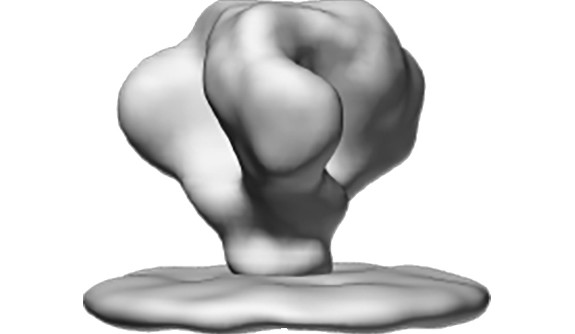
    HIV forms trimers to attach to cells and its conformation is of great interest to scientists developing vaccines.

    A Yale-led team has discovered yet another molecular trick HIV uses to survive immune system attacks, a finding that may influence efforts to develop an effective vaccine against HIV/AIDS.

    The virus forms specifically shaped structures called trimers on its surface, which are designed to attach to and infect cells and produce more HIV. To escape the immune system, the trimer can change shapes over time into three separate conformations. Vaccines now under development target one form of those structures in order to spur an immune system response. However, the new study published April 10 in the journal Nature shows that the HIV may escape immune system detection by hiding in yet another trimer conformation, called State 1.

    Patients fight HIV by developing broadly neutralizing antibodies, and most of these antibodies recognize the State 1 conformation, the authors report.

    “If these antibodies can bind to a trimer in State 1, any immunogens in a vaccine should recognize this conformation,” said Walther Mothes, professor of microbial pathogenesis and co-senior author of the paper. “Surprisingly, however, current immunogens recognize the State 2 conformation and apparently elicit State 2-specific antibodies.”

    Mothes’ lab plans to help determine the State 1’s structure, which could potentially lead to immunogens that recognize this conformation.

    Yale’s Maolin Lu is lead author of the paper. Scott C. Blanchard of Weill Cornell Medicine and Joseph G. Sodroski of Harvard Medical School are co-senior authors.

    Mothes is also leader of Yale Cancer Center’s Virus and Other Infection-associated Cancers Research Program.

    Reference: “Associating HIV-1 envelope glycoprotein structures with states on the virus observed by smFRET” by Maolin Lu, Xiaochu Ma, Luis R. Castillo-Menendez, Jason Gorman, Nirmin Alsahafi, Utz Ermel, Daniel S. Terry, Michael Chambers, Dongjun Peng, Baoshan Zhang, Tongqing Zhou, Nick Reichard, Kevin Wang, Jonathan R. Grover, Brennan P. Carman, Matthew R. Gardner, Ivana Nikić-Spiegel, Akihiro Sugawara, James Arthos, Edward A. Lemke, Amos B. Smith III, Michael Farzan, Cameron Abrams, James B. Munro, Adrian B. McDermott, Andrés Finzi, Peter D. Kwong, Scott C. Blanchard, Joseph G. Sodroski and Walther Mothes, 10 April 2019, Nature. 
    DOI: 10.1038/s41586-019-1101-y

    Never miss a breakthrough: Join the SciTechDaily newsletter.
    Follow us on Google and Google News.

    HIV Medicine Yale University
    Share. Facebook Twitter Pinterest LinkedIn Email Reddit

    Related Articles

    New HIV Therapy Boosts Immunity and Reduces Viral Replication

    Newly Developed Compounds Maintain Anti-HIV Activity Better Than FDA-Approved Medications

    Study Shows Viral Suppression Helps Lower Risk for Many Types of Cancer

    Study Shows Early HIV Treatment Helps Halt Brain Damage

    New Drug Suppresses HIV & Protects Immune Cells With a Single Dose

    Yale Researchers Reveal How HIV Spreads in Real Time

    Researchers May Have Pinpointed a Strategy for Eliminating Latent HIV

    New Class of Proteins Inhibit HIV Infection in Cell Cultures

    Intensive Glycemic Control Does Not Definitively Reduce the Risk of Impaired Kidney Function

    Leave A Reply Cancel Reply

    • Facebook
    • Twitter
    • Pinterest
    • YouTube

    Don't Miss a Discovery

    Subscribe for the Latest in Science & Tech!

    Trending News

    A 50-Year-Old Mystery: Scientists Discover What May Have Killed Brazil’s Frogs

    Scientists Discover Exercise Changes the Body in Ways We Never Fully Understood

    Scientists Restore Memory in Mice With Alzheimer’s by Boosting a Single Brain Protein

    Scientists Create “Super Ice” That’s 10 Times Stronger and Rivals Concrete in Strength

    Not Getting Enough Daylight Could Be Linked to a Higher Risk of Dementia

    What Kills Schrödinger’s Cat? Scientists Just Ruled Out a 60-Year-Old Theory

    Scientists Discover Metals That Refuse To Crack at an Astonishing -424°F

    A 1,000-Year-Old DNA Mystery Links Hawaii and Easter Island and Reveals Hidden Genetic Dangers

    Follow SciTechDaily
    • Facebook
    • Twitter
    • YouTube
    • Pinterest
    • Newsletter
    • RSS
    SciTech News
    • Biology News
    • Chemistry News
    • Earth News
    • Health News
    • Physics News
    • Science News
    • Space News
    • Technology News
    Recent Posts
    • These Mysterious Underwater Reefs Could Help Save Marine Life As Coral Reefs Decline
    • Scientists Discover “D-Rex,” a Giant Fungus Unlike Anything Seen Before
    • Scientists Develop a Remarkable New Coating for the Powerhouses of Our Cells
    • A Single Gene Could Hold the Key to Taming One of the Deadliest Cancers
    • Scientists Discover That One Common Protein Source Makes Gut Inflammation Much Worse
    Copyright © 1998 - 2026 SciTechDaily. All Rights Reserved.
    • Science News
    • About
    • Contact
    • Editorial Board
    • Privacy Policy
    • Terms of Use

    Type above and press Enter to search. Press Esc to cancel.