
Close Menu
    Facebook X (Twitter) Instagram
    SciTechDaily
    • Biology
    • Chemistry
    • Earth
    • Health
    • Physics
    • Science
    • Space
    • Technology
    Facebook X (Twitter) Pinterest YouTube RSS
    SciTechDaily
    Home»Earth»Arsenic Contamination in Groundwater Influenced by Natural Organic Matter
    Earth

    Arsenic Contamination in Groundwater Influenced by Natural Organic Matter

    By American Chemical SocietyMarch 11, 2020No Comments3 Mins Read
    Facebook Twitter Pinterest Telegram LinkedIn WhatsApp Email Reddit
    Share
    Facebook Twitter LinkedIn Pinterest Telegram Email Reddit
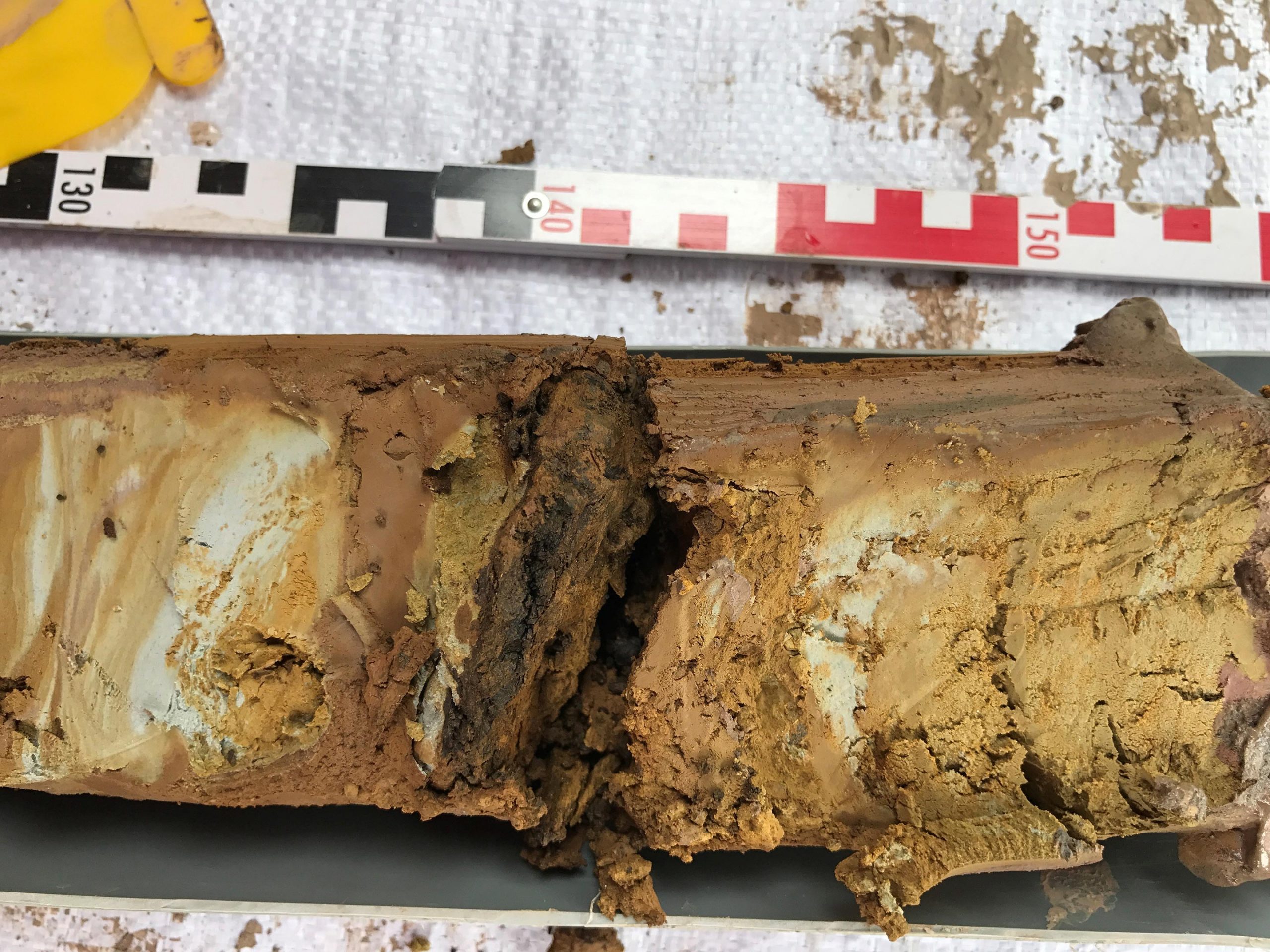
    Aquifer Sediment Core Sample
    A sediment core sample from an aquifer in Vietnam shows orange, arsenic-bearing iron oxides and black NOM. Credit: Andreas Kappler

    Millions of people worldwide consume water contaminated with levels of arsenic that exceed those recommended by the World Health Organization. This could cause health problems, such as arsenic poisoning, cardiovascular disease, and cancer. Microbes in groundwater release arsenic from sediments, and organic matter helps fuel this reaction. Now, researchers reporting in ACS’ Environmental Science & Technology have discovered that the type of natural organic matter (NOM) influences the rate and level of arsenic release.

    Arsenic occurs naturally in the minerals that make up aquifer sediments. Some species of bacteria can dissolve arsenic- and iron-containing minerals, releasing arsenic into the water. Scientists have tried to simulate this process in the lab by using simple carbon sources, such as acetate and lactate, as food for arsenic-freeing bacteria. However, NOM in groundwater contains more complex carbon sources, such as plant-derived organic matter, amino acids, and carbohydrates. Andreas Kappler and colleagues wanted to study how NOM from actual aquifer sediments near the village of Van Phuc, Vietnam (where groundwater is contaminated with high levels of arsenic), influenced arsenic release.

    In the field, the team collected sediment samples from the aquifer as far down as 150 feet (45 meters) below ground level. They found more total NOM, and more complex molecules within that NOM, from upper clayey silt layers than from lower sandy sediments. Back in the lab, the researchers placed arsenic-containing minerals and simulated groundwater in test tubes. Then, they added acetate/lactate or NOM from the two layers. At first, they found that acetate/lactate caused bacteria in the sediments to release more arsenic than when they added NOM from the clayey silt or sandy layers. However, after 100 days, the tubes with NOM from the two aquifer layers contained more dissolved arsenic, as well as more diverse microbial communities, than those containing lactate/acetate. Although NOM from the aquifer caused bacteria to release arsenic more slowly than the simple carbon sources, over time it could help free the same amount of or even more arsenic, the researchers say.

    Reference: “Role of in Situ Natural Organic Matter in Mobilizing As during Microbial Reduction of FeIII-Mineral-Bearing Aquifer Sediments from Hanoi (Vietnam)” by M. Glodowska, E. Stopelli, M. Schneider, A. Lightfoot, B. Rathi, D. Straub, M. Patzner, V. T. Duyen, AdvectAs Team Members, M. Berg, S. Kleindienst and A. Kappler, 11 March 2020, Environmental Science & Technology.
    DOI: 10.1021/acs.est.9b07183

    The authors acknowledge funding from the Deutsche Forschungsgemeinschaft, the Institutional Strategy of the University of Tübingen, the Collaborative Research Center CAMPOS and an Emmy Noether Programme.

    Never miss a breakthrough: Join the SciTechDaily newsletter.
    Follow us on Google and Google News.

    American Chemical Society Environment Pollution
    Share. Facebook Twitter Pinterest LinkedIn Email Reddit

    Related Articles

    Toxic Downpour: “Forever Chemicals” Rain on All Five Great Lakes

    A Single Clothes Dryer Can Discharge Up to 120 Million Airborne Microfibers Annually

    Polystyrene, a Common Plastic, Degrades Much Faster Than Expected in Sunlight

    Global Warming Impacts Lake Water

    Nitrogen Pollution Is Altering Sensitive Ecosystems

    The First ‘Bottom-Up’ Estimates of China’s CO2 Emissions

    Coral Reveals Lead Levels from Gasoline in the Ocean

    Particulate Pollution Created ‘Warming Hole’ that Delayed Climate Change

    Study Reports Air Pollution Causes Thousands of Premature Deaths Each Year

    Leave A Reply Cancel Reply

    • Facebook
    • Twitter
    • Pinterest
    • YouTube

    Don't Miss a Discovery

    Subscribe for the Latest in Science & Tech!

    Trending News

    JWST Finds a “Star” 100 Billion Times Brighter Than Any Star Should Be

    Scientists Find a Hidden Biological Link Across Different Forms of Autism

    Astronomers Discover a Ghostly River of Stars That Could Reveal Dark Matter

    Why Is Colorectal Cancer Rising in People Under 50? New Clues Point to the Environment

    Quantum Fluctuations Break a Crystal’s Symmetry Rules

    Why Does an Irregular Heartbeat Strike 40 Years Early in Some People?

    Scientists Reveal How ADHD Could Fuel Creative Thinking

    Scientists Find Just 3 Minutes of Sprinting Can Transform Blood Chemistry

    Follow SciTechDaily
    • Facebook
    • Twitter
    • YouTube
    • Pinterest
    • Newsletter
    • RSS
    SciTech News
    • Biology News
    • Chemistry News
    • Earth News
    • Health News
    • Physics News
    • Science News
    • Space News
    • Technology News
    Recent Posts
    • A Vast Clean Energy Source May Be Hiding Beneath Australia’s Red Soil
    • Scientists Uncover Signs of an Ancient Climate “Tipping Point”
    • Cleaner Cars May Be Hiding a New Pollution Problem
    • Common Plant Chemical Linked to Widespread Organ Damage in Aquatic Animals
    • Scientists Discover a Hidden Baobab Species in Madagascar
    Copyright © 1998 - 2026 SciTechDaily. All Rights Reserved.
    • Science News
    • About
    • Contact
    • Editorial Board
    • Privacy Policy
    • Terms of Use

    Type above and press Enter to search. Press Esc to cancel.