
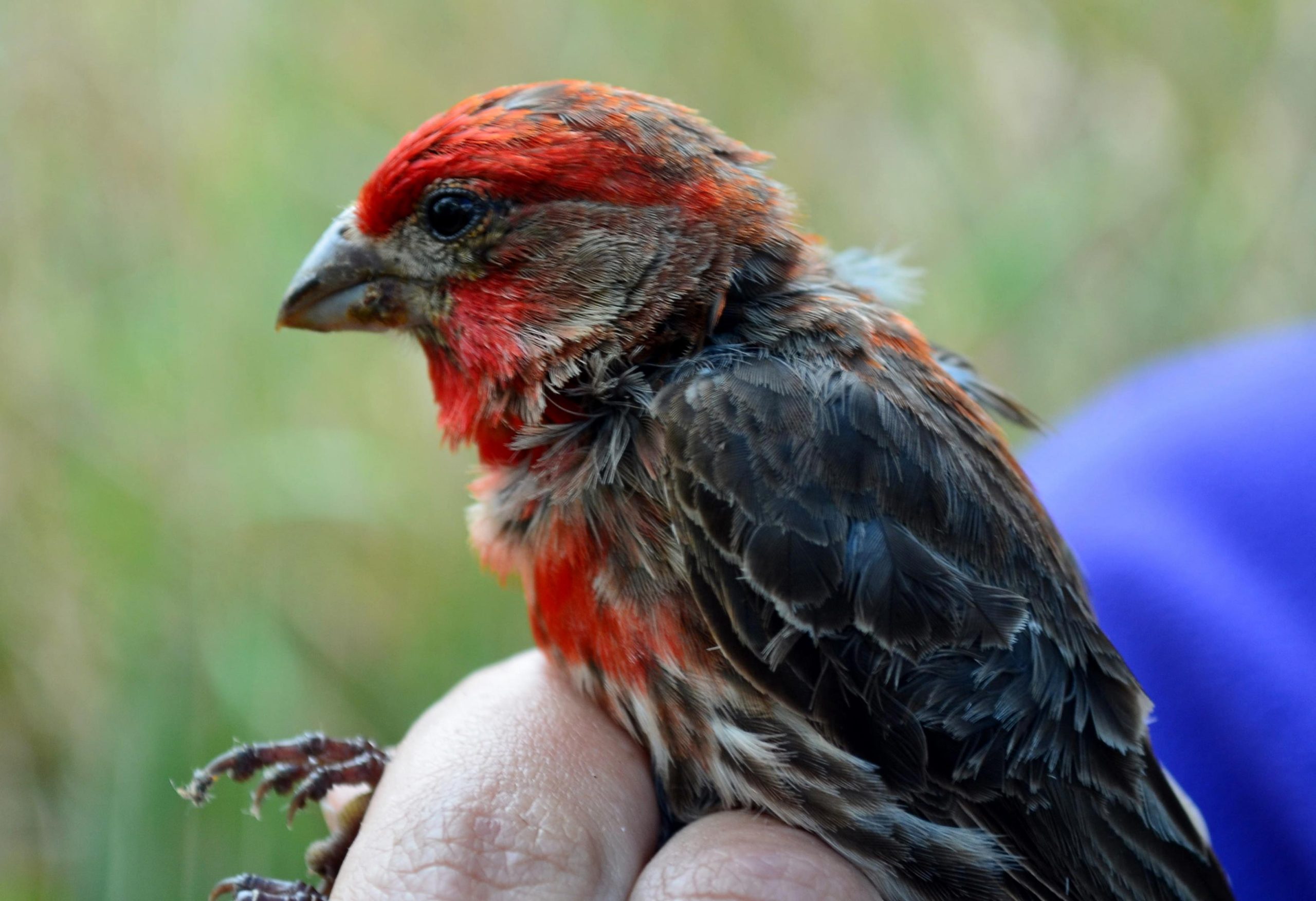
A new study led by a University of Hawaiʻi at Mānoa researcher has found that nearly every forest bird species in Hawaiʻi can help spread avian malaria. The discovery offers a major clue as to why the disease has become so widespread across the islands wherever mosquitoes are present.
The research, published in Nature Communications, detected avian malaria at 63 of 64 sites surveyed throughout Hawaiʻi. The sites included forests with very different combinations of bird species. Scientists say the disease is caused by the parasite Plasmodium relictum, which has been a key factor behind sharp population declines and extinctions among native Hawaiian honeycreepers.
“Avian malaria has taken a devastating toll on Hawaiʻi’s native forest birds, and this study shows why the disease has been so difficult to contain,” said Christa M. Seidl, mosquito research and control coordinator for the Maui Forest Bird Recovery Project, who conducted this research as part of her PhD at the University of California, Santa Cruz. “When so many bird species can quietly sustain transmission, it narrows the options for protecting native birds and makes mosquito control not just helpful, but essential.”
How Avian Malaria Harms Hawaiian Birds
Avian malaria damages red blood cells, leaving birds vulnerable to anemia, organ failure, lower survival rates and, in severe cases, death. The disease has had especially devastating effects on Hawaiʻi’s native birds. Research and field reports show that the ʻiʻiwi, also known as the scarlet honeycreeper, faces about a 90% mortality rate after infection. The ʻakikiki, a honeycreeper found only on Kauaʻi, is now considered extinct in the wild largely because of avian malaria.
Many infectious diseases rely heavily on just a few species to keep spreading. This study found something very different in Hawaiʻi. Most forest birds, including both native and introduced species, were at least moderately capable of infecting southern house mosquitoes, the primary mosquito species responsible for transmitting avian malaria. Even birds carrying very low levels of the parasite were still able to infect mosquitoes, allowing many different bird communities to maintain transmission.
“We often understandably think first of the birds when we think of avian malaria, but the parasite needs mosquitoes to reproduce, and our work highlights just how good it has gotten at infecting them through many different birds,” Seidl said.

Long Lasting Infections Fuel Disease Spread
Researchers collected and analyzed blood samples from more than 4,000 birds across Kauaʻi, Oʻahu, Maui and Hawaiʻi Island. The team also conducted laboratory experiments to determine how easily mosquitoes became infected after feeding on birds.
The results showed that native and introduced birds often shared similar levels of infectiousness, meaning both groups can help spread the disease. Researchers also found that birds can carry chronic avian malaria infections for months or even years. During that time, birds with low to moderate infection levels can continue transmitting the parasite to mosquitoes. The study suggests this prolonged infectious period accounts for most avian malaria transmission across Hawaiʻi.
Climate Change Threatens Remaining Safe Areas
Scientists say the parasite’s ability to spread through such a wide range of bird species likely explains why avian malaria is now found across so much of Hawaiʻi. The findings indicate there may be very few mosquito-infested habitats left where birds are not at risk of infection.
Conditions are becoming even more dangerous as rising temperatures allow mosquitoes and avian malaria to expand into higher elevation forests that once served as safe refuges for native birds.
Reference: “Variation in pathogen load and the pathogen load–infectiousness relationship broaden avian malaria’s distribution” by Christa M. Seidl, Katy L. Parise, Isaiah J. Ipsaro, Sarah Leach, Delson Hays, Ranger Morimoto, Kelsey Banister, Francisco C. Ferreira, Elizabeth C. Abraham, Jeffrey T. Foster, Eben H. Paxton and A. Marm Kilpatrick, 10 February 2026, Nature Communications.
DOI: 10.1038/s41467-026-68927-x
Seidl and the Maui Forest Bird Recovery Project are part of Birds, Not Mosquitoes, a partnership that includes academic, state, federal, non-profit, and industry organizations working together on mosquito control efforts to protect Hawaiian forest birds.
The Maui Forest Bird Recovery Project operates under the Pacific Cooperative Studies Unit in the College of Natural Sciences. All birds involved in the study were captured and handled by trained ornithologists under state/federal permits.
Never miss a breakthrough: Join the SciTechDaily newsletter.
Follow us on Google and Google News.
1 Comment
Mating mosquitos ‘hum’ at 400 to 600hz – kind of a song. A possible abatement may be a series of piezo tweeters with electronics package, mounted on stakes and set about ponds where, when mating hum is sensed, a countervailing and, for them, loudly interfering skew upsets or warbles their song – like kicking them out of bed. :-}
Also, an amplified skew from what is called ‘beat-frequencies’ where two -or three- very similar frequencies sum into powerful low frequency beats – can be employed to actually knock the mating pair down – like breaking up kidney-stones with sound.
Since I’m probably not going to do anything with this, perhaps one of your good readers will develop it. If you do, all I ask is public credit. -Robert