

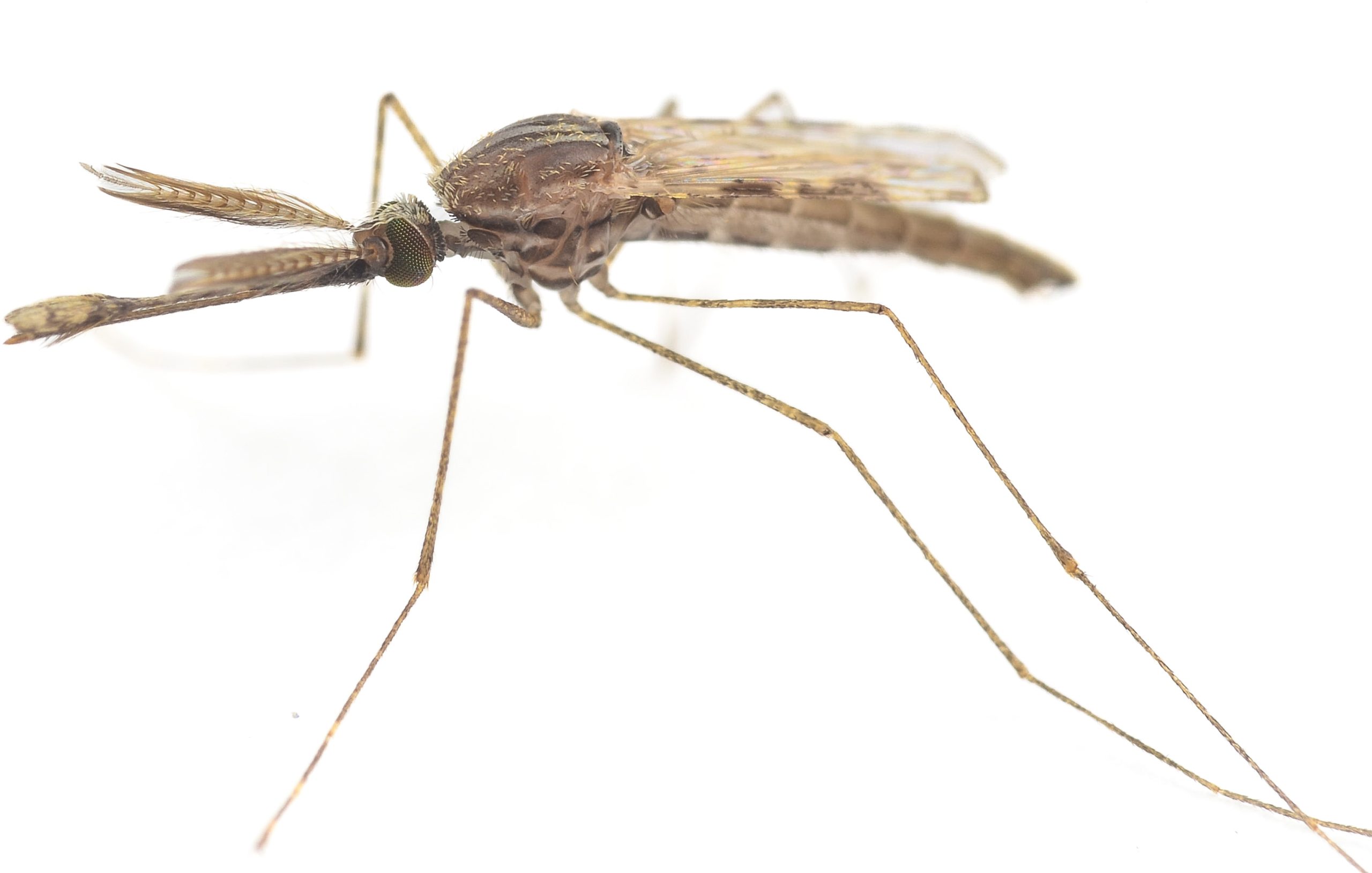
Researchers have discovered that male Anopheles coluzzii mosquitoes, significant carriers of malaria, are drawn to the sound of female wingbeats, triggering their vision in search of mates.
This finding from the University of Washington could lead to new mosquito control strategies, such as traps that exploit these auditory and visual cues to reduce malaria transmission.
A high-pitched buzzing sound in your ear is an unmistakable sign that a female mosquito is out on the hunt — for they, not males, drink blood. Hearing that tone might make you turn to try to swat the pest. But for a male mosquito, that tone means it’s time to mate.
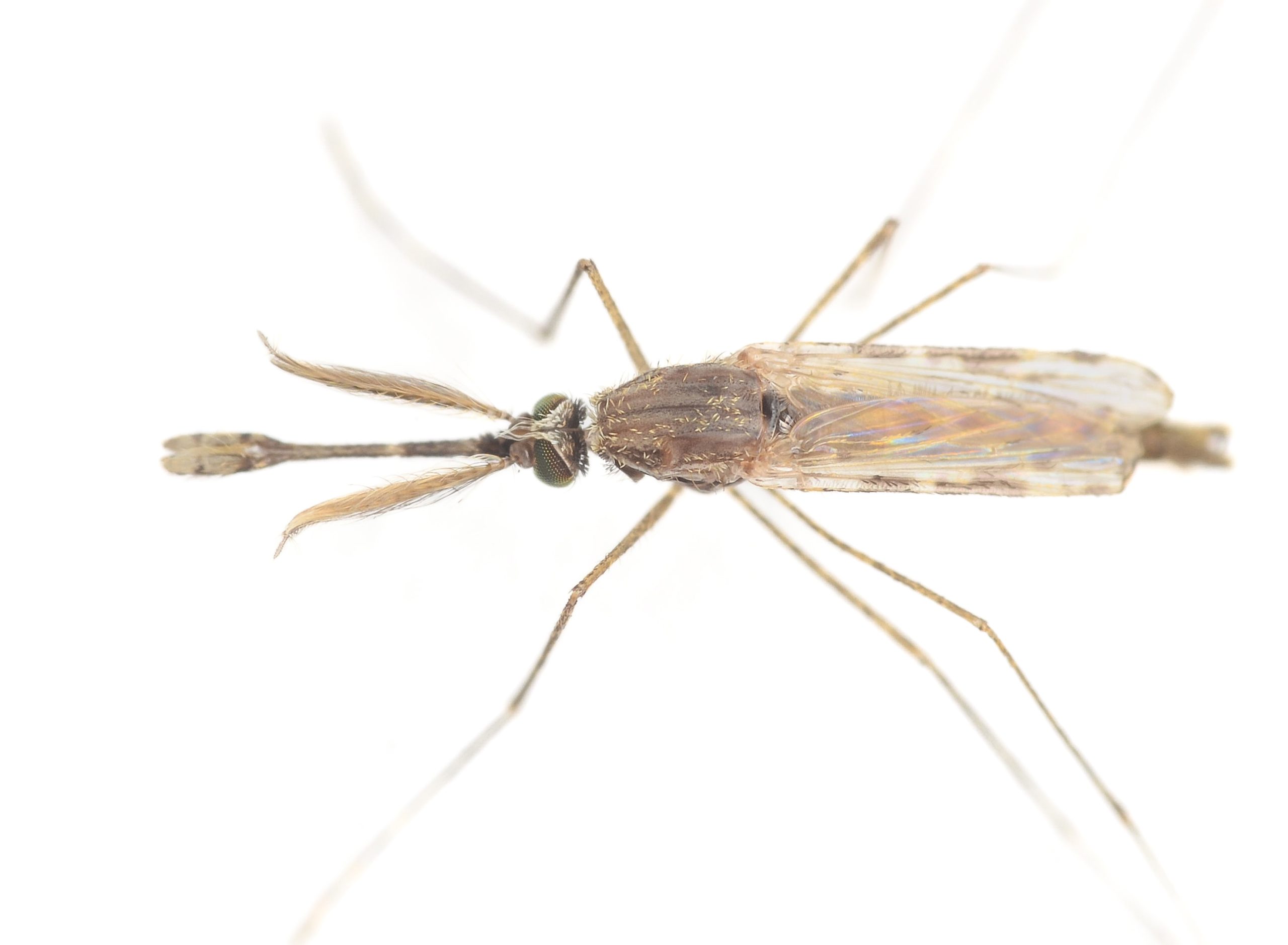
An international team led by researchers at the University of Washington has uncovered surprising details about mosquito mating, which could lead to improved malaria control techniques and even help develop precision drone flight. In a paper published today (August 30) in the journal Current Biology, the team revealed that when a male Anopheles coluzzii mosquito hears the sound of female-specific wingbeats, his vision becomes active.
Vision Activation in Mosquitoes
Many mosquito species have relatively poor vision, and Anopheles coluzzii — a major spreader of malaria in Africa — is no exception. But the team found that when a male hears the telltale buzz of female flight, his eyes “activate” and he visually scans the immediate vicinity for a potential mate. Even in a busy, crowded swarm of amorous mosquitoes, which is how A. coluzzii mates, the researchers found that the male can visually lock on to his target. He then speeds up and zooms deftly through the swarm — and avoids colliding with others.
“We have discovered this incredibly strong association in male mosquitoes when they are seeking out a mate: They hear the sound of wingbeats at a specific frequency — the kind that females make — and that stimulus engages the visual system,” said lead author Saumya Gupta, a UW postdoctoral researcher in biology. “It shows the complex interplay at work between different mosquito sensory systems.”
New Approaches to Mosquito Control
This strong link between males hearing the female-like buzz and moving toward an object in their field of vision may open up a new route for mosquito control: a new generation of traps specific to the Anopheles mosquitoes that spread malaria.
“This sound is so attractive to males that it causes them to steer toward what they think might be the source, be it an actual female or, perhaps, a mosquito trap,” said senior author Jeffrey Riffell, a UW professor of biology.
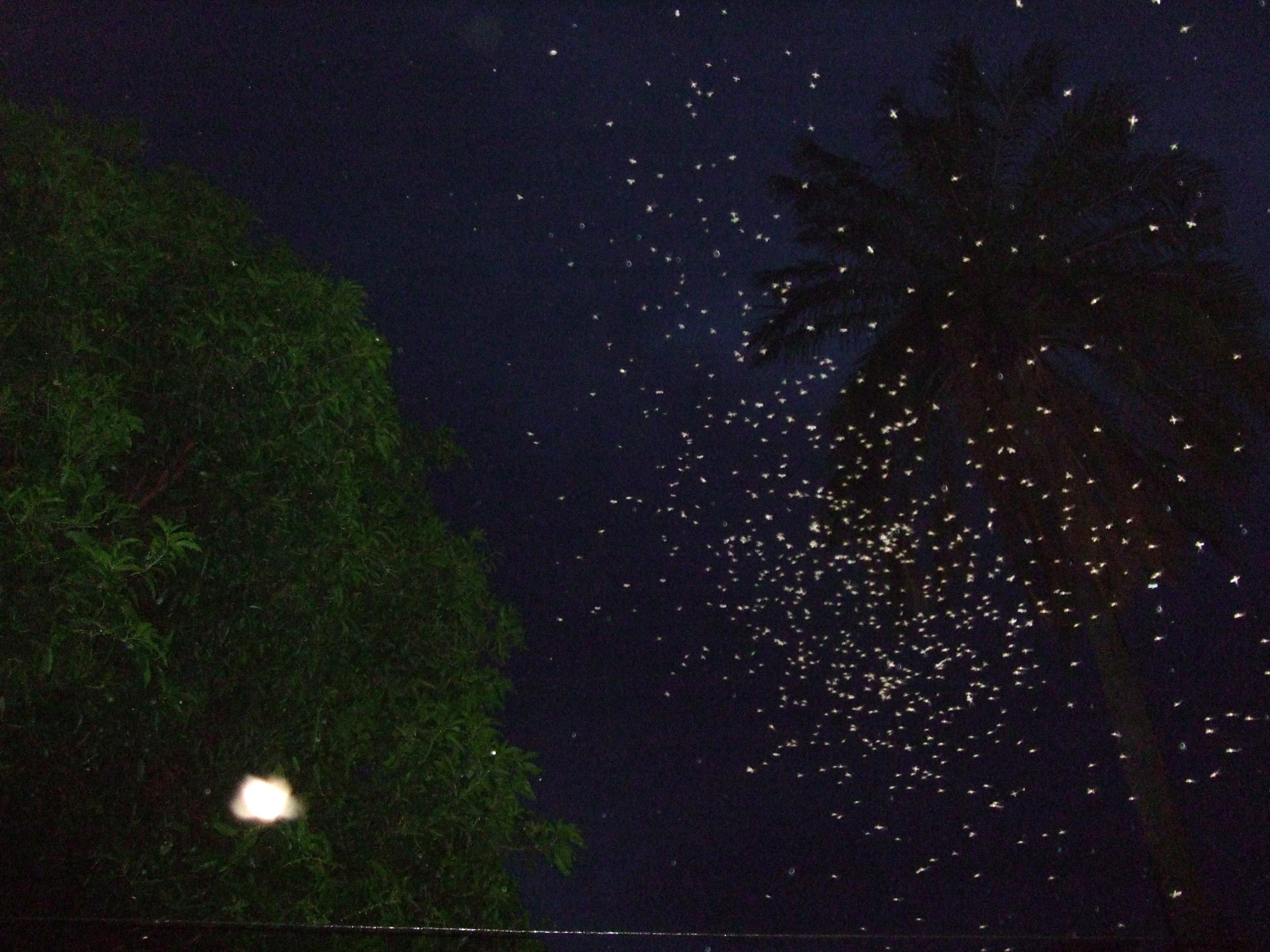
Like most Anopheles species, Anopheles coluzzii mate in large swarms at sunset. The bulk of the bugs in these swarms are males, with only a few females. To human eyes, the swarms may appear chaotic. Mosquitoes of both sexes rapidly zip past each other. Males must use their senses to both avoid collision and find a rare female.
Flight Behavior Studies in Controlled Environments
Gupta, Riffell and their colleagues — including scientists from Wageningen University in the Netherlands, the Health Sciences Research Institute in Burkina Faso, and the University of Montpelier in France — wanted to understand the interplay between mosquitoes’ senses and how they work together in these swarms.
To test the flight behavior of individual male mosquitoes, they built a miniature arena that uses a curved, pixelated screen to mimic the visual chaos of a swarm. The arena is essentially a mosquito flight simulator. In it, the mosquito test subject, which is tethered and cannot freely move, can still see, smell and hear, and also beat its wings as if it is in flight.

In arena tests with dozens of male Anopheles coluzzii mosquitoes, the researchers discovered that males responded differently to an object in their field of vision based on what sound the researchers broadcast into the arena. If they played to a tone at 450 hertz — the frequency at which female mosquito wings beat in these swarms — males steered toward the object. But males did not try to turn toward the object if the researchers played a tone at 700 hertz, which is closer to the frequency at which their fellow males beat their wings.
The mosquito’s perceived distance to the object also mattered. If the simulated object appeared more than three body lengths away, he would not turn toward it, even in the presence of female-like flight tones.
“The resolving power of the mosquito eye is about 1,000-fold less than the resolving power of the human eye,” said Riffell. “Mosquitoes tend to use vision for more passive behaviors, like avoiding other objects and controlling their position.”

The Potential for New Mosquito Control Methods
In addition to their dramatic response to objects when hearing female flight tones, arena experiments revealed that males made a different set of subtle flight adjustments to other objects. They modified their wingbeat amplitude and frequency in response to an object in their field of view, even with no wingbeat sounds piped in through the speaker. The team hypothesized that these visually driven responses may be preparatory maneuvers to avoid an object. To learn more, they filmed male-only swarms in the laboratory. Analyses of those movements showed that males accelerated away when they neared another male.
“We believe our results indicate that males use close-range visual cues for collision avoidance within swarms,” said Gupta. “However, hearing female flight tones appears to dramatically alter their behavior, suggesting the importance of integrating sound and visual information.”
This research may demonstrate a new method for mosquito control by targeting how mosquitoes integrate auditory and visual cues. The males’ strong and consistent attraction to visual cues when they hear the female buzz may be a vulnerability that researchers can utilize while designing the next generation of mosquito traps —particularly traps for the Anopheles species, which are a major spreader of malaria pathogens.
“Mosquito swarms are a popular target for mosquito control efforts, because it really leads to a strong reduction in biting overall,” said Riffell. “But today’s measures, like insecticides, are increasingly less effective as mosquitoes evolve resistance. We need new approaches, like lures or traps, which will draw in mosquitoes with high fidelity.”
Reference: “Mosquitoes integrate visual and acoustic cues to mediate conspecific interactions in swarms” by Saumya Gupta, Antoine Cribellier, Serge B. Poda, Olivier Roux, Florian T. Muijres and Jeffrey A. Riffell, 30 August 2024, Current Biology.
DOI: 10.1016/j.cub.2024.07.043
Co-authors are Antoine Cribellier, Serge Poda and Florian Muijres of Wageningen University of Wageningen University in the Netherlands and Olivier Roux of the University of Montpelier in France. Roux and Poda are also with the Health Sciences Research Institute in Burkina Faso. The research was funded by the Human Frontiers Science Program, the National Institutes of Health, the Air Force Office of Scientific Research and the French National Research Agency.
Grant numbers:
- Human Frontiers Science Program: HFSP-RGP0044/2021
- National Institutes of Health: R01AI148300, R01AI175152
- Air Force Office of Scientific Research: FA9550-21-1-0101, AWD-004055-G4
- French National Research Agency: ANR-15-CE35-0001-01
Never miss a breakthrough: Join the SciTechDaily newsletter.
Follow us on Google and Google News.