
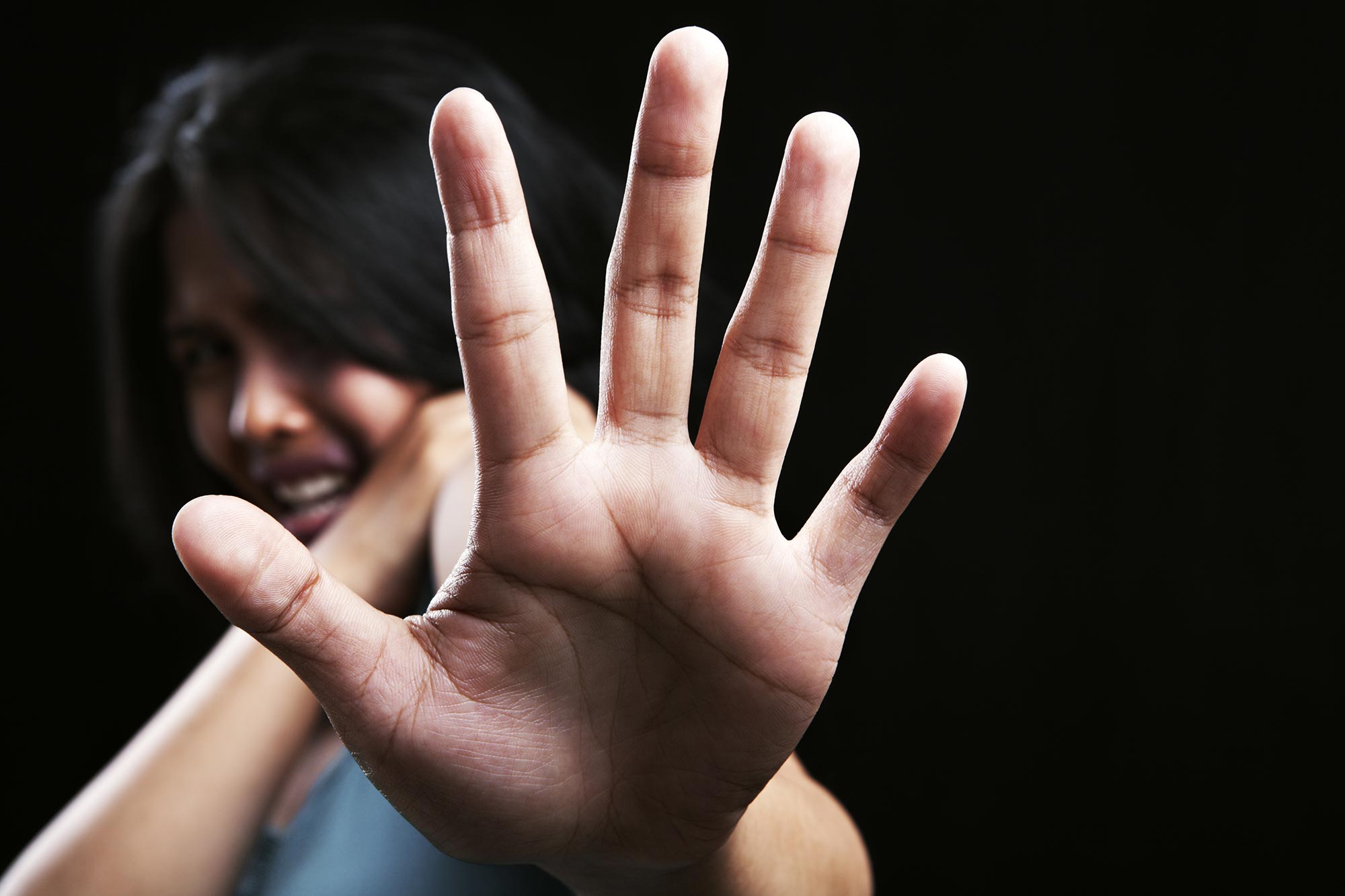
A large review links cannabis use with higher rates of both committing and experiencing violence, although it cannot establish that cannabis itself is the cause.
As cannabis becomes more commercialized and legalized around the world, discussion of its risks has largely focused on what happens to the person using it. Violence adds another dimension because any connection could affect not only cannabis users themselves, but also the people around them.
A large review led by researchers at King’s College London found that people who used cannabis were more likely both to commit violent acts and to experience violence themselves. The analysis brought together 63 studies involving more than 265,000 people, making it one of the most comprehensive examinations of the relationship to date. The findings were published in Psychological Medicine.
Violence rises across both groups
“In the general population, people who used cannabis were around twice as likely to have committed a violent act as those who didn’t; for those in psychiatric care, cannabis users were around two and a half times as likely to be violent as other psychiatric patients who didn’t use cannabis. The link held in studies that followed people over time, though it was smaller than in studies that looked at a single point in time. For violence that led to a criminal conviction, people who used cannabis were three to four times as likely to have been convicted.
“As cannabis becomes more commercialized and legalized around the world, the conversation about its risks has focused mostly on the person using it. This review shows that violence, both committing it and experiencing it, needs to be part of that conversation too,” said Professor Sir Robin Murray, senior author of the study from the Institute of Psychiatry, Psychology & Neuroscience at King’s College London.
Different measures point the same way
The researchers analyzed the general population separately from people receiving psychiatric care because the relationship between cannabis use and violence could differ between those groups. They also distinguished violence reported by participants themselves from acts that resulted in criminal convictions.
Violence was defined broadly using the World Health Organization’s criteria, which include physical, sexual, and psychological violence against another person, whether it occurs within a relationship or outside one. When an individual study measured several forms of violence, the researchers used the most serious form reported.
That approach allowed the team to examine whether the association appeared across different definitions and settings rather than depending on a single measure. Studies that followed people over time continued to show a relationship between cannabis use and violence, although the association was weaker than in studies that measured both at a single point in time.
Cannabis users also faced more violence
The relationship was not limited to people carrying out violent acts, since cannabis users were also about one and a half times as likely to become victims of violence. The association with victimization was stronger among women than among men.
Dr. Marta Di Forti, a co-author from the Institute of Psychiatry, Psychology & Neuroscience at King’s College London and South London and Maudsley NHS Foundation Trust, said the scale of the evidence allowed researchers to characterize the relationship more confidently without treating cannabis use itself as proof that someone will become violent.
“As a clinician, I’ve seen how heavy cannabis use can be a factor in violence. We’ve been cautious for a long time about how far we could go in describing this link, but a review of this size lets us speak with more confidence about the risks, while being careful not to stigmatize people who use cannabis more broadly.”
The researchers say the results support routinely asking about cannabis use when mental health services assess a person’s risk of violence. They also argue that the possibility of violence should be included in public health messaging about cannabis.
The evidence cannot establish causation
Although the association appeared across multiple kinds of studies, the evidence cannot establish that cannabis itself causes violence because cannabis use often occurs alongside other circumstances that may also increase risk. These include alcohol and other drug use, as well as difficult social conditions, making it difficult to determine how much of the observed relationship can be attributed specifically to cannabis.
Several limitations also make it difficult to determine how the relationship changes with different patterns of cannabis use. Few of the studies measured how much cannabis people used or how often they used it, and the estimates involving criminal convictions came from a relatively small number of studies. Most of the research was also conducted before high-potency cannabis became widespread. The researchers suggest that daily use of today’s more potent forms may produce greater effects, but the studies included in the review could not establish that.
Reference: “Cannabis use is associated with increased risk of violence: A systematic review and meta-analysis” by Giulia Trotta, Victoria Rodriguez, Paolo Marino, Meklit Gurmesa, Edoardo Spinazzola, Zhikun Li, Luis Alameda, Marta Di Forti, Robin Murray and Evangelos Vassos, 24 September 2026, Psychological Medicine.
DOI: 10.1017/S0033291726105856
The study was supported by the National Institute for Health and Care Research (NIHR) Biomedical Research Centre: Maudsley and the Medical Research Council (MR/T007818/1).
Never miss a breakthrough: Join the SciTechDaily newsletter.
Follow us on Google and Google News.
7 Comments
balonie
Compared to ALCOHOL???? Another study by the great alcohol producer consortium.
Baloney.
And I don’t use ANYTHING.
It shouldn’t really be a surprise that the use of something that is illicit leads to association with individuals and organizations that live on the edge of civil society. Denying that MJ users are the fringe of society rather than the core suggests that you are unwilling to confront reality. Prohibition was responsible for the rise of organized crime and an increase in the homicide rate in the country. Why should it be any different with MJ?
I really find this hard to believe. I say that as a long-time user surrounded by long-time users. I feel there had to be another drug(s) taken with MJ.
Lie !
Had a situation with a long time pot smoker that became very dangerous. He got more and more paranoid, started tracking people’s habits, would see you and point to his watch: I know what time you x, y, z. Let on the he had fantasies about poisoning people. Holy shit. Came very close to police intervention.
On the other hand, the most organized and efficient construction manager I know (always ahead of schedule, which is almost impossible, him and Trump) is a recreational pot smoker, so it definitely doesn’t mess up everybody.
But some people, it messes with them big time.
Consider it possible that more violent people use cannabis (as self-medication) than cannabis users are more violent. Perhaps the cause and effect assumption is reversed.