
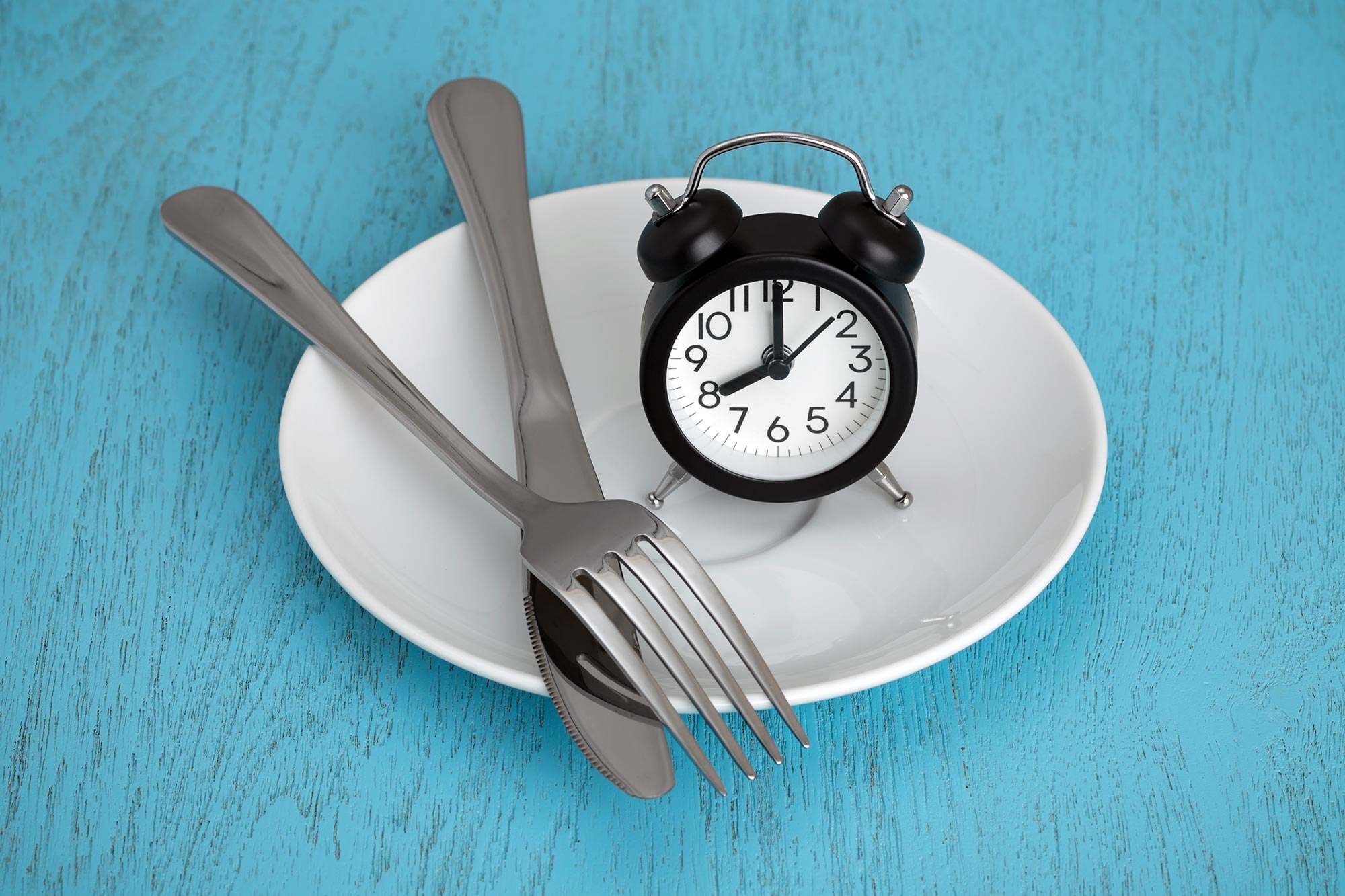
A shorter daily eating window was linked to improved eating habits, with no clear advantage in measured appetite hormones or inflammation markers.
Time-restricted eating asks people to fit their meals into the same eight- to 10-hour window each day. Because people may also eat less on that schedule, researchers at Johns Hopkins Medicine set out to test what happens when calorie intake stays consistent.
In their 12-week study, adults with obesity and either prediabetes or type 2 diabetes controlled through diet lost a modest amount of weight on a 10-hour eating schedule. Their median weight loss was 2.7%, nearly the same as the 2.5% among participants assigned a usual eating pattern spread over 16 hours. Both groups received meals with calorie amounts personalized to maintain their starting weights.
“We saw that people who followed a 10-hour time-restricted eating schedule lost weight and positively changed their eating habits without calorie restriction,” says Daisy Duan, M.D., an assistant professor of medicine at Johns Hopkins and the study’s primary author. “But we did not identify any unique, body-wide health benefits linked to the dietary strategy beyond that.”
Separating meal timing from calorie cuts
Other studies of time-restricted eating have involved participants cutting calories, either intentionally or unintentionally, according to Duan. By keeping calorie intake consistent, her team could examine whether meal timing affected eating behavior, appetite hormones, or inflammation. The researchers wanted to understand whether benefits associated with time-based eating plans come from weight loss alone or also involve other biological mechanisms.
More than 100 million U.S. adults have obesity, and 115 million have prediabetes, in which blood sugar is elevated but remains below the diabetes range.
These conditions increase the risk of complications such as high blood pressure, heart attack, and stroke, and the number of people affected is expected to grow. Intermittent fasting, which includes time-restricted eating, has broadly been linked to weight loss and may benefit people with either or both conditions. Its structured patterns of fasting and eating focus on when people eat rather than requiring calorie cuts or the avoidance of particular foods.
For the trial, researchers randomly assigned 19 adults to the 10-hour eating window and 20 to the 16-hour window. Participants were 18 to 69 years old, and the group was predominantly female (92%) and Black (92%).
Research dietitians supervised the preparation and provision of every meal at the Johns Hopkins ProHealth Clinical Research Unit in Baltimore, Maryland. Everyone received the same adapted Dietary Approaches to Stop Hypertension, or DASH, diet, a heart-healthy eating plan that emphasizes limiting red meat, high-fat foods, sugar, and salt.
Shorter eating windows, similar hormone levels
To look for changes beyond weight, the team collected fasting blood samples before and after the study. They measured the appetite hormones ghrelin and leptin, along with markers related to inflammation, including C-reactive protein, cortisol, and sRAGE. The results were comparable between the two groups, showing no distinct advantage for the shorter eating window in these measures.
Both groups also reported greater restraint around food, less tendency to eat when stressed, and lower overall susceptibility to hunger by the end of the study. Researchers tracked these changes using the Three-Factor Eating Questionnaire, which participants completed before and after the intervention to assess how they thought about and interacted with food.
Published in Obesity, the study received support from the National Institutes of Health and the American Heart Association. It is part of Duan’s ongoing research into how time-restricted eating without calorie restriction affects weight and other bodily functions.
The team plans to explore whether time-restricted eating can help people maintain weight loss achieved through other interventions, including medications known as GLP-1 receptor agonists.
Reference: “Time-Restricted Eating on Appetite and Inflammation in Adults With Obesity and Prediabetes: A Randomized Feeding Study” by Daisy Duan, Susan Carnell, Scott J. Pilla, Stephanie T. Chung, Jeanne M. Clark and Nisa M. Maruthur, 27 July 2026, Obesity.
DOI: 10.1002/oby.70270
The study was supported by the National Institutes of Health (R03DK144349, R01DK126825, R01DK139324 and K23DK133690) and the American Heart Association (17SFRN33590069).
Disclosure: The study authors have the following conflict-of-interest disclosures to share: Duan serves as a consultant for Rhythm Pharmaceuticals and receives honoraria from the American Diabetes Association. Carnell receives grant funding from Eli Lilly and Company. Clark participates on a Data Safety Monitoring Board for Eli Lilly and Company and serves on the advisory board of Novo Nordisk. Maruthur receives royalties from UpToDate. The other authors declare no conflicts of interest.
Never miss a breakthrough: Join the SciTechDaily newsletter.
Follow us on Google and Google News.
1 Comment
Commonally known as intermittent fasting which I got from Dr Berg , I found this 4 years ago & tried it for three months.I was 60 at the time, over weight & working as a decorator on a busy refurb job.using the 8hr window for eating I had a coffee at 0730 & began eating at 1000 until 1800 obviously.I lost 1 1/2 stone.Im veggie & made no significant changes to my diet.I felt good the entire time.