
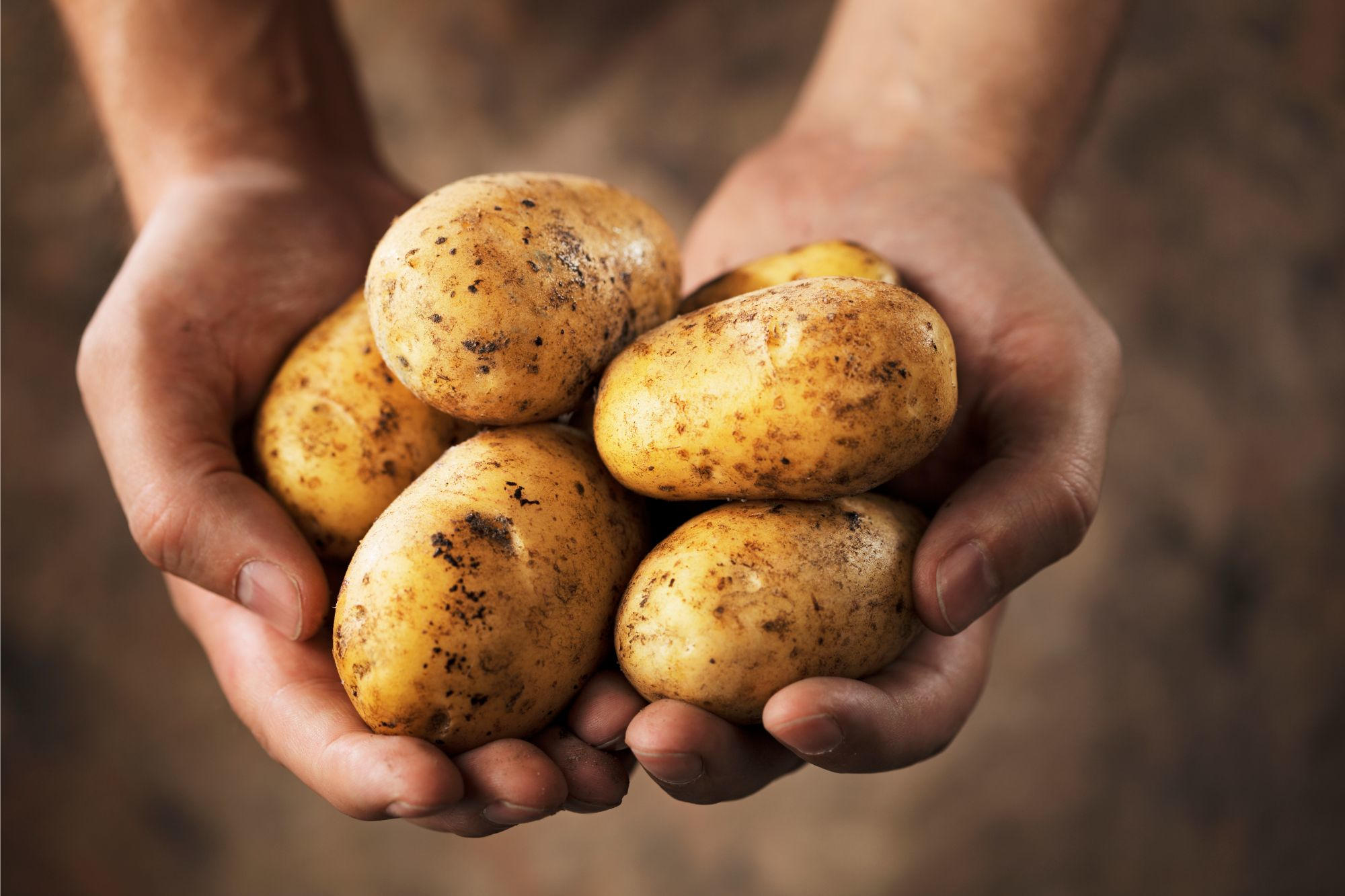
Potatoes can aid weight loss and blood sugar control when prepared properly, offering a satisfying, nutrient-rich addition to a healthy diet.
Potatoes are one of the world’s most popular and most misunderstood foods. Although they often get a bad rap, new research shows they can actually support weight loss and improve insulin resistance, especially for individuals with impaired glucose metabolism.
In this Q&A, we speak with Candida J. Rebello, assistant professor and director of the Nutrition and Chronic Disease Program at Pennington Biomedical Research Center, to explore how simple dietary changes, like preparing potatoes the right way, can help people enjoy satisfying meals while better managing their health.
We’ll also debunk common myths about potatoes and highlight their surprising nutritional benefits. If you’ve ever doubted whether potatoes belong in a healthy diet, this research might change your perspective!
What is the problem your research is trying to solve?
A common disease that accompanies obesity is type 2 diabetes. The impaired ability to maintain blood glucose levels starts with insulin resistance. Therefore, my research aims to modulate body weight and the blood glucose response in people with obesity and insulin resistance.
Can you share an overview of your research on potatoes?
Potatoes are low in energy density. The table shows a comparison of potatoes with other cooked starchy foods.
In our study, we substituted 40% of meat or fish in the original recipes for the main entrée with potatoes to reduce the energy content while maintaining satisfying portion sizes. The potatoes were prepared to enhance their dietary fiber content (for example, boiled and cooled for 24 hours before adding to the dish and cooked with their skins). The meal plan for the day included fruits, vegetables, whole grains, dairy products, and the occasional dessert. We found that the average weight loss was 5.6% of body weight or 5.8kg in eight weeks and their insulin resistance improved. Participants reported feeling full in spite of the inadvertent reduction in energy (calories) intake.
What is the impact of this research?
Behavior change is hard for most people. The most promising pathway does not challenge existing formats and hierarchies but makes strategic and incremental changes.
Energy density refers to the amount of energy in a particular weight of food or the kcal/g of food. Therefore, components such as water (0 kcal/g) and dietary fiber, which is not metabolized, add to the volume of food without contributing energy or calories. (Just drinking extra water as a beverage along with food is not effective in reducing energy intake. It must be incorporated in the food.) We know that people tend to eat a consistent weight of food. 1-3 Therefore, maintaining the portion sizes that people are accustomed to consuming while reducing energy content has applicability to a wide range of eating patterns. Calorie restriction reduces food intake, but powerful internal and external signals influence the regulation of energy balance below our conscious level, and simple messages to eat less are ineffective for sustained weight loss. With a diet low in energy density, people eat less without conscious calorie restriction. The portion sizes are large and satisfying (foods high in volume), and the diet is more likely to be sustainable over the long term.
How does this affect people with type 2 diabetes?
Approximately 80% of people with obesity have type 2 diabetes. The diet reduced body weight and moderated the blood glucose response. Excess body weight and elevated blood glucose are key components of type 2 diabetes.
Were there any misconceptions about potatoes that your research helped to debunk?
Potatoes are one of the world’s most popular foods, providing important nutrients without too many calories. Therefore, using potatoes to expand the concept of meat and encompass non-animal-based substitutes without affecting the meal portion size appeals to consumers.4 Nevertheless, epidemiologic studies have grouped potatoes in the “less healthy plant food” category and associated their intake with weight gain.5-8 Potato intake is also associated with an elevated risk for type 2 diabetes.9 Our study showed that a healthy eating pattern, including potatoes, reduces body weight and moderates the blood glucose response.
Many think of potatoes as just carbs. What essential nutrients do they provide? How does the fiber content in potatoes impact digestion and overall health?
Potatoes have negligible fat and are low in energy density while providing critical nutrients, especially dietary fiber and potassium, designated by the 2020-2025 Dietary Guidelines as being “nutrients of public health concern.”10 Potatoes are an inexpensive food that comprises approximately 30% of the total vegetable intake in the United States (US).11 Although primarily defined by their starch content, potatoes are a rich source of nutrients and phytochemicals, and their starch has unique functionality for food applications such as thickening, bulking, and stabilizing.12 Moreover, cooling of gelatinized potatoes generates appreciable levels of slowly digested starch (increases perceptions of fullness) and resistant starch type 3 (passes undigested through the gastrointestinal tract, so does not contribute any calories).
What is the value of this research for Louisiana residents and around the world?
High energy density and large portion sizes are drivers of excess energy intake. The key to a low energy-dense diet is that it inadvertently reduces calories. Lifestyle strategies that result in inadvertent behavior change have a chance of success because the regulation occurs below the conscious level. Obesity and type 2 diabetes are highly prevalent in Louisiana, but they exist around the world, and “simple messages to eat less do not seem to work.”13
What is next for the research?
Weight loss results in loss of fat mass as well as lean mass. Preservation of lean mass is important for maintaining muscle function and insulin sensitivity. We are now exploring the effect of the diet on muscle mass and function.
References:
- Stubbs RJ, Whybrow S. Energy density, diet composition and palatability: influences on overall food energy intake in humans. Physiol Behav 2004; 81(5): 755-64.
- Rebello CJ, Johnson WD, Martin CK, Han H, Chu Y, Bordenave N et al. Instant oatmeal increases satiety and reduces energy intake compared to a ready-to-eat oat based breakfast cereal: A randomized crossover trial. J Am Coll Nutr 2016; 35(1): 41-9.
- Stubbs RJ, Ritz P, Coward WA, Prentice AM. Covert manipulation of the ratio of dietary fat to carbohydrate and energy density: effect on food intake and energy balance in free-living men eating ad libitum. Am J Clin Nutr 1995; 62(2): 330-7.
- Rebello CJ, Beyl R, Greenway FL, Atteberry KC, Hoddy KK, Kirwan JP. Low-Energy Dense Potato- and Bean-Based Diets Reduce Body Weight and Insulin Resistance: A Randomized, Feeding, Equivalence Trial. J Med Food 2022; 25(12): 1155-1163.
- Satija A, Bhupathiraju SN, Spiegelman D, Chiuve SE, Manson JE, Willett W et al. Healthful and Unhealthful Plant-Based Diets and the Risk of Coronary Heart Disease in U.S. Adults. J Am Coll Cardiol 2017; 70(4): 411-422.
- Satija A, Bhupathiraju SN, Rimm EB, Spiegelman D, Chiuve SE, Borgi L et al. Plant-Based Dietary Patterns and Incidence of Type 2 Diabetes in US Men and Women: Results from Three Prospective Cohort Studies. PLoS Med 2016; 13(6): e1002039.
- Schulze MB, Fung TT, Manson JE, Willett WC, Hu FB. Dietary patterns and changes in body weight in women. Obesity (Silver Spring) 2006; 14(8): 1444-53.
- Mozaffarian D, Hao T, Rimm EB, Willett WC, Hu FB. Changes in diet and lifestyle and long-term weight gain in women and men. N Engl J Med 2011; 364(25): 2392-404.
- Muraki I, Rimm EB, Willett WC, Manson JE, Hu FB, Sun Q. Potato Consumption and Risk of Type 2 Diabetes: Results From Three Prospective Cohort Studies. Diabetes Care 2016; 39(3): 376-84.
- USDA. Dietary Guidelines for Americans 2020 -2025. In, 2020
- Storey ML, Anderson PA. Contributions of white vegetables to nutrient intake: NHANES 2009-2010. Adv Nutr 2013; 4(3): 335S-44S.
- Furrer AN, Chegeni M, Ferruzzi MG. Impact of potato processing on nutrients, phytochemicals, and human health. Crit Rev Food Sci Nutr 2018; 58(1): 146-168.
- Hall KD, Farooqi IS, Friedman JM, Klein S, Loos RJF, Mangelsdorf DJ et al. The energy balance model of obesity: beyond calories in, calories out. Am J Clin Nutr 2022; 115(5): 1243-1254.
Never miss a breakthrough: Join the SciTechDaily newsletter.
Follow us on Google and Google News.
3 Comments
I gained weight when I was eating potatoes regularly.
A sample of one is a poor guide for anything. What else were you doing or not doing during the time when you were eating potatoes regularly?
Where do I find recipes for plant based small meals that are focused on potatoes, and other ingredients for elderly men with ED, and plants that will take away belly fat and arthritis pain. These are my main problems. I want some fast results also as I am well over 71 already.