
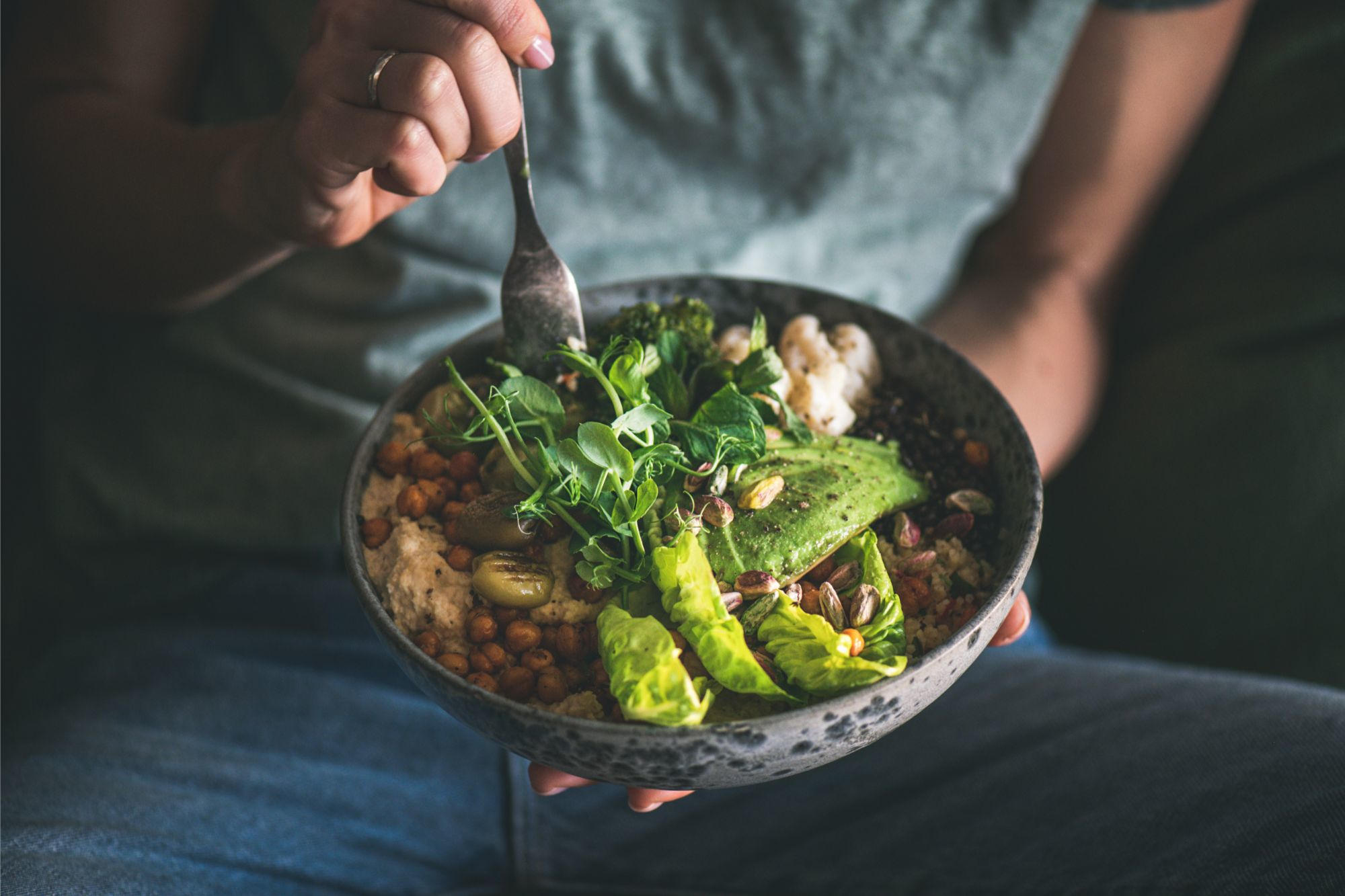
Healthy eating can significantly improve metabolic health even without weight loss.
New research from Harvard T.H. Chan School of Public Health and Ben Gurion University in Israel reveals that nearly one-third of people who stuck to a healthy diet didn’t lose any weight, but still saw impressive health improvements.
Even without shedding pounds, participants experienced key benefits to their cardiometabolic health. These included higher levels of HDL cholesterol (often called the “good” cholesterol), reduced levels of leptin (a hormone that drives hunger), and less visceral fat, which is the deep belly fat that can surround vital organs.
“We have been conditioned to equate weight loss with health, and weight loss-resistant individuals are often labeled as failures,” said lead author Anat Yaskolka Meir, postdoctoral research fellow in the Department of Epidemiology at Harvard Chan School. “Our findings reframe how we define clinical success. People who do not lose weight can improve their metabolism and reduce their long-term risk for disease. That’s a message of hope, not failure.”
The study was recently published in the European Journal of Preventive Cardiology.
Diverse Diets and Participants
To conduct the study, researchers tracked 761 people in Israel who had abdominal obesity and participated in three large-scale, workplace-based nutrition trials: DIRECT, CENTRAL, and DIRECT-PLUS. These participants followed healthy diets with strong commitment and received detailed metabolic assessments throughout.
Each participant was randomly assigned to one of several diet plans, including low-fat, low-carb, Mediterranean, or green-Mediterranean diets. They followed these plans for 18 to 24 months, allowing scientists to observe long-term changes in weight and metabolic health.
The study revealed that across all of the clinical trials and all of the diets:
- 36% of participants lost more than 5% of their initial body weight (considered clinically significant weight loss),
- 36% lost up to 5% of their body weight,
- 28% lost no weight or even gained some weight, and were considered weight loss-resistant.
Weight loss was associated with a variety of health improvements: The researchers calculated that each kilogram lost was associated with a 1.44% increase in HDL cholesterol, a 1.37% decrease in triglycerides, a 2.46% drop in insulin, a 2.79% drop in leptin, and a 0.49-unit reduction in liver fat, along with reductions in blood pressure and liver enzymes.
Weight-Resistant Participants Also Improved
The study also found, however, that participants who were resistant to weight change—who tended to be older and/or women—showed many of the same improvements. They had more good cholesterol; lower levels of leptin, leading to less hunger; and less harmful visceral fat.
“These are deep metabolic shifts with real cardiometabolic consequences,” said Yaskolka Meir. “Our study showed that a healthy diet works, even when weight doesn’t shift.”
The researchers also utilized cutting-edge omics tools and discovered 12 specific DNA methylation sites that strongly predict long-term weight loss.
“This novel finding shows that some people may be biologically wired to respond differently to the same diet,” said corresponding author Iris Shai, principal investigator of the nutrition trials and adjunct professor of nutrition at Harvard Chan School. “This isn’t just about willpower or discipline—it’s about biology. And now we’re getting close to understanding it.”
The study had some limitations, namely that the majority of participants were men. The researchers noted that future similar studies should focus on women.
Reference: “Individual response to lifestyle interventions: a pooled analysis of three long-term weight loss trials” by Anat Yaskolka Meir, Gal Tsaban, Ehud Rinott, Hila Zelicha, Dan Schwarzfuchs, Yftach Gepner, Assaf Rudich, Ilan Shelef, Matthias Blüher, Michael Stumvoll, Uta Ceglarek, Berend Isermann, Nora Klöting, Maria Keller, Peter Kovacs, Lu Qi, Dong D Wang, Liming Liang, Frank B Hu, Meir J Stampfer and Iris Shai, 5 June 2025, European Journal of Preventive Cardiology.
DOI: 10.1093/eurjpc/zwaf308
Other Harvard Chan co-authors included Lu Qi, Dong Wang, Liming Liang, Frank Hu, and Meir Stampfer.
The study was funded by the German Research Foundation (project 209933838).
Never miss a breakthrough: Join the SciTechDaily newsletter.
Follow us on Google and Google News.
1 Comment
Quelling me about amino acids doesn’t help me filter out whether or not I should buy the steak at the store.