
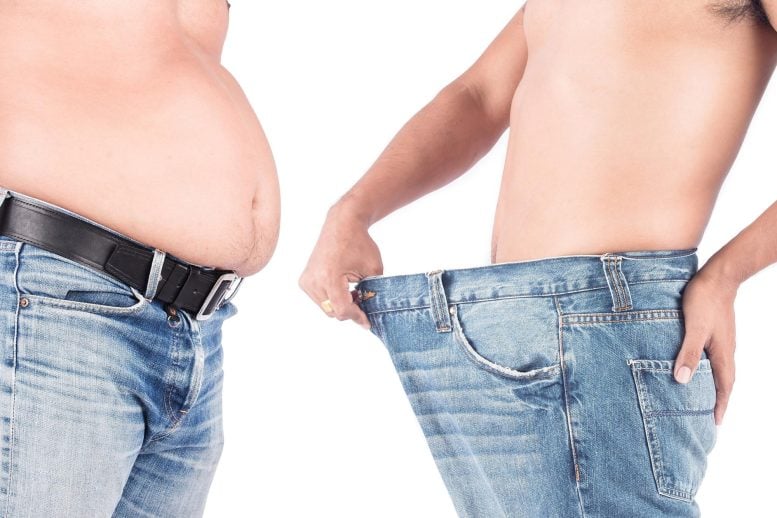
Weight Loss Is Beneficial for Obese Individuals but Not for Lean People
According to a study of over 200,000 people, intentionally losing weight can bring long-term health benefits for individuals with obesity regardless of the approach or strategy used. Those who dropped more than 4.5kg (10 pounds) gained less weight long-term and had a reduced risk of type 2 diabetes than those who did not lose weight. However, lean people did not benefit, with weight loss attempts linked to longer-term weight gain and greater risks of type 2 diabetes. The study was recently published in the journal PLOS Medicine.
Obesity may increase the risk of diseases such as type 2 diabetes. Although long-term weight change and the likelihood of acquiring type 2 diabetes are not fully understood, controlling weight may be a useful strategy for preventing and managing obesity and associated disorders.
Weight Loss Techniques and Their Effectiveness
Qi Sun and colleagues from the TH Chan Harvard School of Public Health in the United States analyzed healthy individuals from three prospective cohort studies conducted between 1988 and 2017. They ranged in age from 24 to 78, with 11.6% and 14.2% of the cohorts’ members being male. They classified weight reduction techniques that resulted in a loss of more than 4.5 kg into seven groups: low-calorie diet, exercise, low-calorie diet + exercise, fasting, commercial weight loss program, diet pills, and a combination of fasting, commercial, and diet pills (FCP).
Exercise was most effective for long-term weight control and prevention in individuals with obesity and associated with the least weight gain after four years — 4.2% overall average less weight than at the start in individuals with obesity, 2.5% weight loss in overweight, and 0.4% in lean people. This was inverted for FCP, which saw individuals with obesity sustaining 0.3% weight loss, overweight people sustaining 2% more weight gain, and lean individuals with 3.7% more weight gain.
Impact on Type 2 Diabetes Risk
24 years later, the risk of diabetes was reduced for individuals with obesity irrespective of weight loss strategy – ranging from a 21% reduction for exercise to a 13% reduction for diet pills. For overweight individuals, the researchers saw a range of 9% reduction in type 2 diabetes risk for exercise to an increase of 42% risk for those who took pills, and in lean individuals, all weight loss was associated with an increased risk of type 2 diabetes — ranging from a 9% increase for exercise and a 54% increase for pills or FCP.
The authors conclude that while weight loss can be beneficial for those who are overweight and obese, weight loss strategies do not bring the same gains for lean individuals and weight loss strategies should be used only by those who medically need them.
“We were a bit surprised when we first saw the positive associations of weight loss attempts with faster weight gain and higher type 2 diabetes risk among lean individuals,” Sun adds. “However, we now know that such observations are supported by biology that unfortunately entails adverse health outcomes when lean individuals try to lose weight intentionally. The good news is that individuals with obesity will clearly benefit from losing a few pounds and the health benefits last even when the weight loss is temporary.”
Reference: “Weight loss strategies, weight change, and type 2 diabetes in US health professionals: A cohort study” by Keyi Si, Yang Hu, Molin Wang, Caroline M. Apovian, Jorge E. Chavarro and Qi Sun, 27 September 2022, PLOS Medicine.
DOI: 10.1371/journal.pmed.1004094
Never miss a breakthrough: Join the SciTechDaily newsletter.
Follow us on Google and Google News.
8 Comments
I would say that the data suggest that everyone has an optimal weight range and being over or under can be problematic.
Exactly correct.
This is what were studying?? This is the most obvious, common sense “study” I think I’ve ever seen. We can all count on Harvard for a monumental waste of resources damn near every time..
Go back to flipping burgers, and let scientists do science.
Skinny People shouldn’t lose weight.
No freakin duh. You needed a study to tell you that?
Thanks captain obvious, and obviously you are missing the point. It is showing how our appearance obsessed culture can have a negative effect on those that are already healthy. I know several people like this, mostly younger women, who go to great lengths to lose weight they don’t need to. All so they can emulate sickly thin models on popular magazines/social media/TV.
Spot on..!
Hey, I think you are proving the point of the entire article perfectly! I’m so glad for all the information.