
Close Menu
    Facebook X (Twitter) Instagram
    SciTechDaily
    • Biology
    • Chemistry
    • Earth
    • Health
    • Physics
    • Science
    • Space
    • Technology
    Facebook X (Twitter) Pinterest YouTube RSS
    SciTechDaily
    Home»Technology»Can’t Find Your Phone? Scientists Have Created a Robot To Help
    Technology

    Can’t Find Your Phone? Scientists Have Created a Robot To Help

    By University of WaterlooMay 25, 2023No Comments3 Mins Read
    Facebook Twitter Pinterest Telegram LinkedIn WhatsApp Email Reddit
    Share
    Facebook Twitter LinkedIn Pinterest Telegram Email Reddit
    Lost Phone Couch
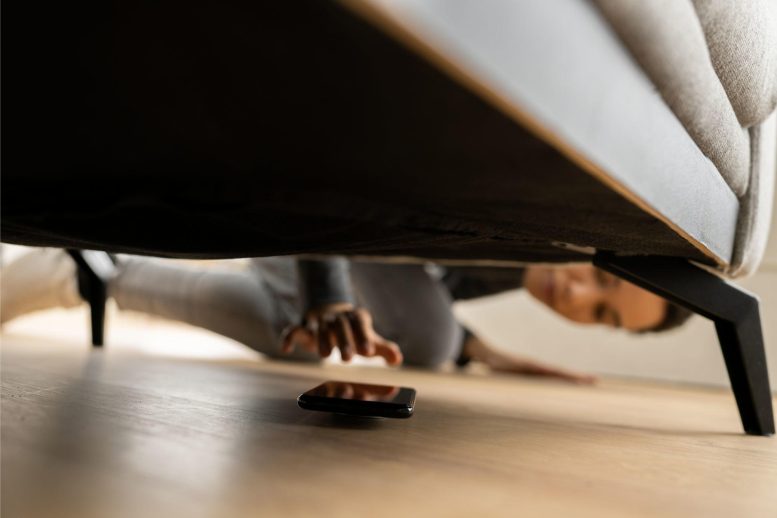
    Everyone has experienced the frustration of misplacing their phone at some point. Fortunately, a new robot is here to lend a hand.

    New “Artificial Memory” Enables Robots To Help Find Misplaced Items

    Engineers from the University of Waterloo have developed an innovative method for programming robots to aid individuals with dementia in finding lost items such as medicine, glasses, or phones.

    Although the primary aim is to support this particular demographic, the technology holds the potential to benefit anyone who has experienced the frustration of misplacing an object and searching tirelessly for it.

    “The long-term impact of this is really exciting,” said Dr. Ali Ayub, a post-doctoral fellow in electrical and computer engineering. “A user can be involved not just with a companion robot but a personalized companion robot that can give them more independence.”
    Fetch Robot
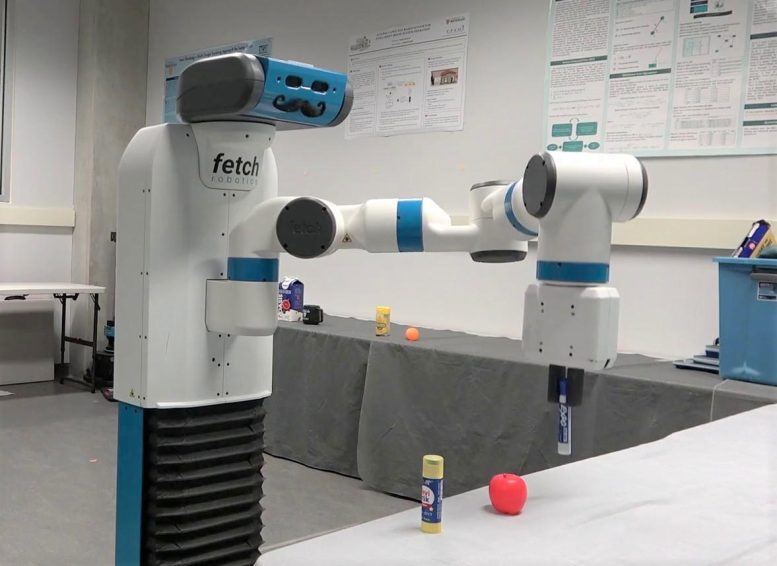
    Fetch, the robot used in the research. Credit: University of Waterloo

    Addressing the Challenges of Dementia

    Ayub and three colleagues were struck by the rapidly rising number of people coping with dementia, a condition that restricts brain function, causing confusion, memory loss, and disability. Many of these individuals repeatedly forget the location of everyday objects, which diminishes their quality of life and places additional burdens on caregivers.

    Engineers believed a companion robot with an episodic memory of its own could be a game-changer in such situations. And they succeeded in using artificial intelligence to create a new kind of artificial memory.

    The research team began with a Fetch mobile manipulator robot, which has a camera for perceiving the world around it.

    Next, using an object-detection algorithm, they programmed the robot to detect, track and keep a memory log of specific objects in its camera view through stored video. With the robot capable of distinguishing one object from another, it can record the time and date objects enter or leave its view.

    Researchers then developed a graphical interface to enable users to choose objects they want to be tracked and, after typing the objects’ names, search for them on a smartphone app or computer. Once that happens, the robot can indicate when and where it last observed the specific object.

    Tests have shown the system is highly accurate. And while some individuals with dementia might find the technology daunting, Ayub said caregivers could readily use it.

    Moving forward, researchers will conduct user studies with people without disabilities, then people with dementia.

    Reference: “Where is My Phone?: Towards Developing an Episodic Memory Model for Companion Robots to Track Users’ Salient Objects” by Juhi Shah, Ali Ayub, Chrystopher L. Nehaniv and Kerstin Dautenhahn, 13 March 2023, ACM/IEEE International Conference on Human-Robot Interaction 2023.
    DOI: 10.1145/3568294.3580160

    Never miss a breakthrough: Join the SciTechDaily newsletter.
    Follow us on Google and Google News.

    Artificial Intelligence Dementia Electrical Engineering Robotics University of Waterloo
    Share. Facebook Twitter Pinterest LinkedIn Email Reddit

    Related Articles

    MIT SoftZoo: Open-Source Platform Simulates Wildlife for Soft Robotics Designers

    Mastering Uncertainty: An Effective Approach to Training Machines for Real-World Situations

    New Machine-Learning System Gives Robots Social Skills

    AI-Powered Recycling Robot Could Help Solve Plastic Waste Crisis

    Robot That Senses Hidden Objects – “We’re Trying to Give Robots Superhuman Perception”

    Artificial Intelligence Helps Track Mysterious Cosmic Radio Bursts

    Machine-Learning Models Capture Subtle Variations in Facial Expressions

    “Cheetah-Cub Robot” Runs Like a Cat

    Algorithm Enables Robots to Learn and Adapt to Help Complete Tasks

    Leave A Reply Cancel Reply

    • Facebook
    • Twitter
    • Pinterest
    • YouTube

    Don't Miss a Discovery

    Subscribe for the Latest in Science & Tech!

    Trending News

    Scientists May Have Discovered How To Heal Damaged Kidneys

    Interstellar Visitor 3I/ATLAS Is Bursting With an Unexpected Chemical

    Scientists Just Found All 5 Genetic “Letters” of DNA and RNA on an Asteroid

    The 4,000-Year-Old City That Defied History’s Rules on Wealth and Power

    The World’s Biggest Population Fear Has Flipped – and It Could Change Everything

    This “Fake” Pill Improved Memory and Physical Performance in Just 3 Weeks

    Scientists Say Frequent Ejaculation May Improve Sperm Quality and Fertility

    Scientists Have Found “The Heaven Sword” After Years of Looking

    Follow SciTechDaily
    • Facebook
    • Twitter
    • YouTube
    • Pinterest
    • Newsletter
    • RSS
    SciTech News
    • Biology News
    • Chemistry News
    • Earth News
    • Health News
    • Physics News
    • Science News
    • Space News
    • Technology News
    Recent Posts
    • Scientists Create Tiny “Mini Livers” That Could One Day Replace Liver Transplants
    • This Surprising Factor May Predict Heart Disease Decades Before It Strikes
    • New Nonsurgical Knee Treatment Delivers Lasting Pain Relief
    • Scientists Discover Hidden Rule That Could Make Fuel Cells Cheaper and More Powerful
    • New Water-Harvesting Jacket Pulls up to 30 Ounces of Drinking Water From the Air Daily
    Copyright © 1998 - 2026 SciTechDaily. All Rights Reserved.
    • Science News
    • About
    • Contact
    • Editorial Board
    • Privacy Policy
    • Terms of Use

    Type above and press Enter to search. Press Esc to cancel.