
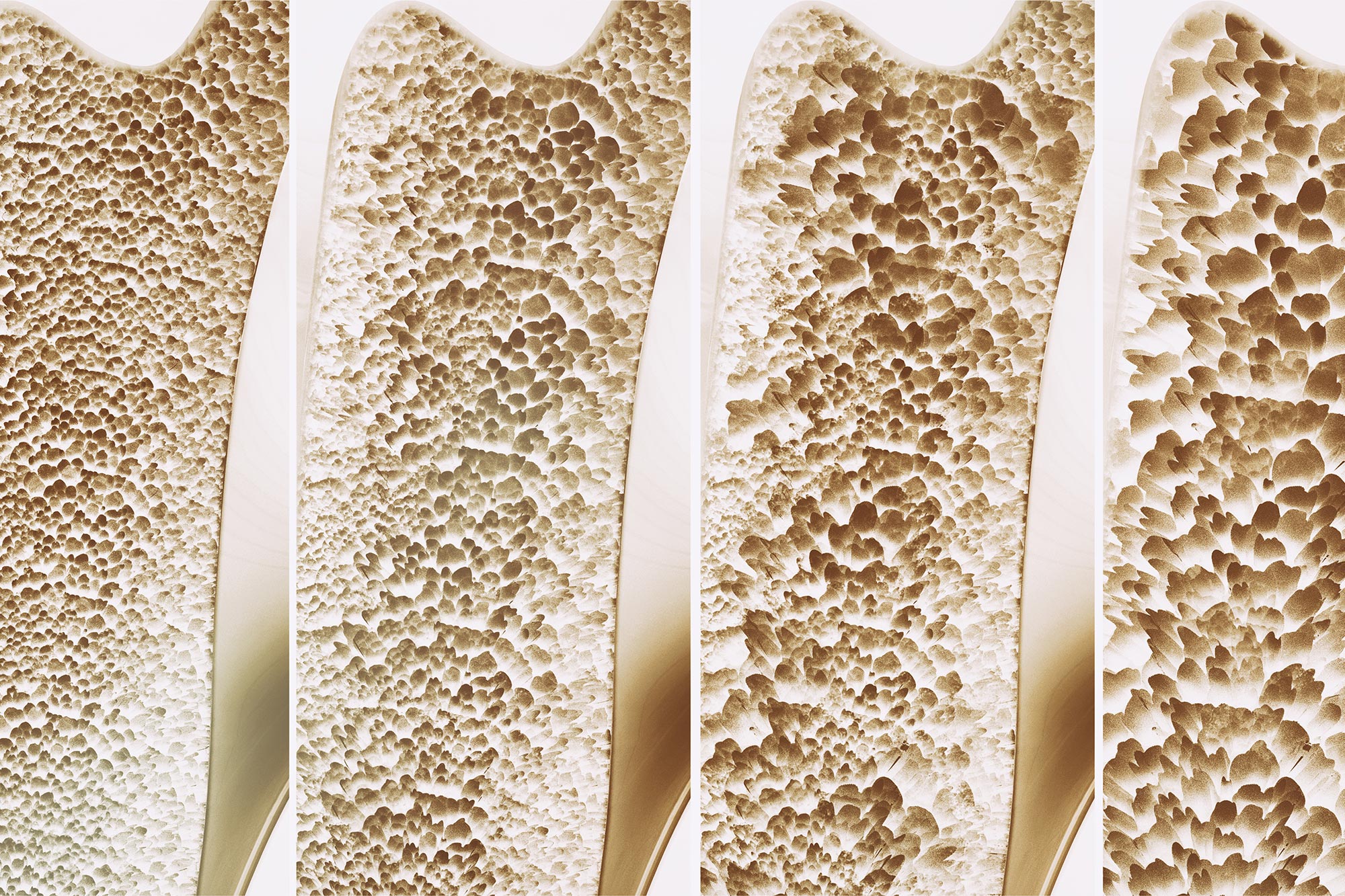
Researchers in Germany have uncovered a hidden receptor, GPR133, that plays a vital role in bone strength.
By activating it with a new compound called AP503, they boosted bone density in mice and even reversed osteoporosis-like symptoms.
Rising Need for Osteoporosis Treatments
There is a strong need for medications that can safely and effectively prevent bone loss over the long term. Osteoporosis, the medical term for this condition, affects roughly six million people in Germany, the majority of them women. To develop better treatments with fewer side effects, scientists are working to identify new biological targets. One promising candidate is the adhesion G protein-coupled receptor GPR133, which belongs to a largely underexplored family of receptors. In a recent investigation, researchers at Leipzig University showed that GPR133 is essential for the formation and maintenance of strong bones.
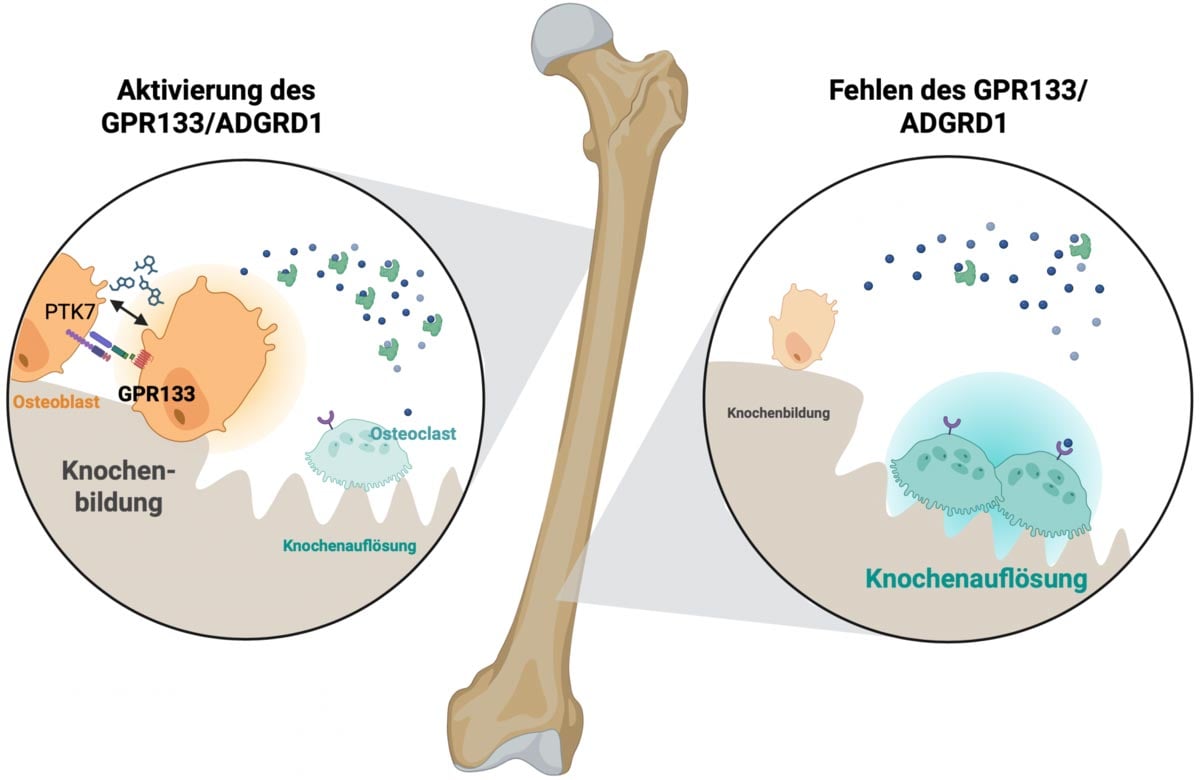
“If this receptor is impaired by genetic changes, mice show signs of loss of bone density at an early age – similar to osteoporosis in humans. Using the substance AP503, which was only recently identified via a computer-assisted screen as a stimulator of GPR133, we were able to significantly increase bone strength in both healthy and osteoporotic mice,” explains Professor Ines Liebscher, lead investigator of the study from the Rudolf Schönheimer Institute of Biochemistry at the Faculty of Medicine.
How Bone Strengthening Signals Work
Within bone tissue, GPR133 is switched on through both interactions between neighboring bone cells and mechanical strain. This activation launches a signal that boosts the activity of bone-building cells (osteoblasts) while suppressing bone-breaking cells (osteoclasts). The outcome is stronger, more durable bones. AP503 has the ability to replicate this natural signaling process. Looking ahead, it may be used to enhance bone health in individuals with no disease and to rebuild bone in those with osteoporosis, particularly women after menopause.
Great Potential for an Aging Population
In an earlier study, researchers at Leipzig University had already found that activation with AP503 also strengthens skeletal muscle. “The newly demonstrated parallel strengthening of bone once again highlights the great potential this receptor holds for medical applications in an ageing population,” says Dr Juliane Lehmann, lead author of the study and a researcher at the Rudolf Schönheimer Institute of Biochemistry. The Leipzig research team is already working on several follow-up projects to explore the use of AP503 in various diseases and to further investigate the role of GPR133 in the body.
Background: A Decade of GPCR Research
For more than ten years, the study of adhesion G protein-coupled receptors has been a key focus at Leipzig University within Collaborative Research Centre 1423, Structural Dynamics of GPCR Activation and Signaling. Internationally, Leipzig is regarded as a leading center in this field of research.
Reference: “The mechanosensitive adhesion G protein-coupled receptor 133 (GPR133/ADGRD1) enhances bone formation” by Juliane Lehmann, Hui Lin, Zihao Zhang, Maren Wiermann, Albert M. Ricken, Franziska Brinkmann, Jana Brendler, Christian Ullmann, Luisa Bayer, Sandra Berndt, Anja Penk, Nadine Winkler, Franz Wolfgang Hirsch, Thomas Fuhs, Josef Käs, Peng Xiao, Torsten Schöneberg, Martina Rauner, Jin-Peng Sun and Ines Liebscher, 30 June 2025, Signal Transduction and Targeted Therapy.
DOI: 10.1038/s41392-025-02291-y
Never miss a breakthrough: Join the SciTechDaily newsletter.
Follow us on Google and Google News.