
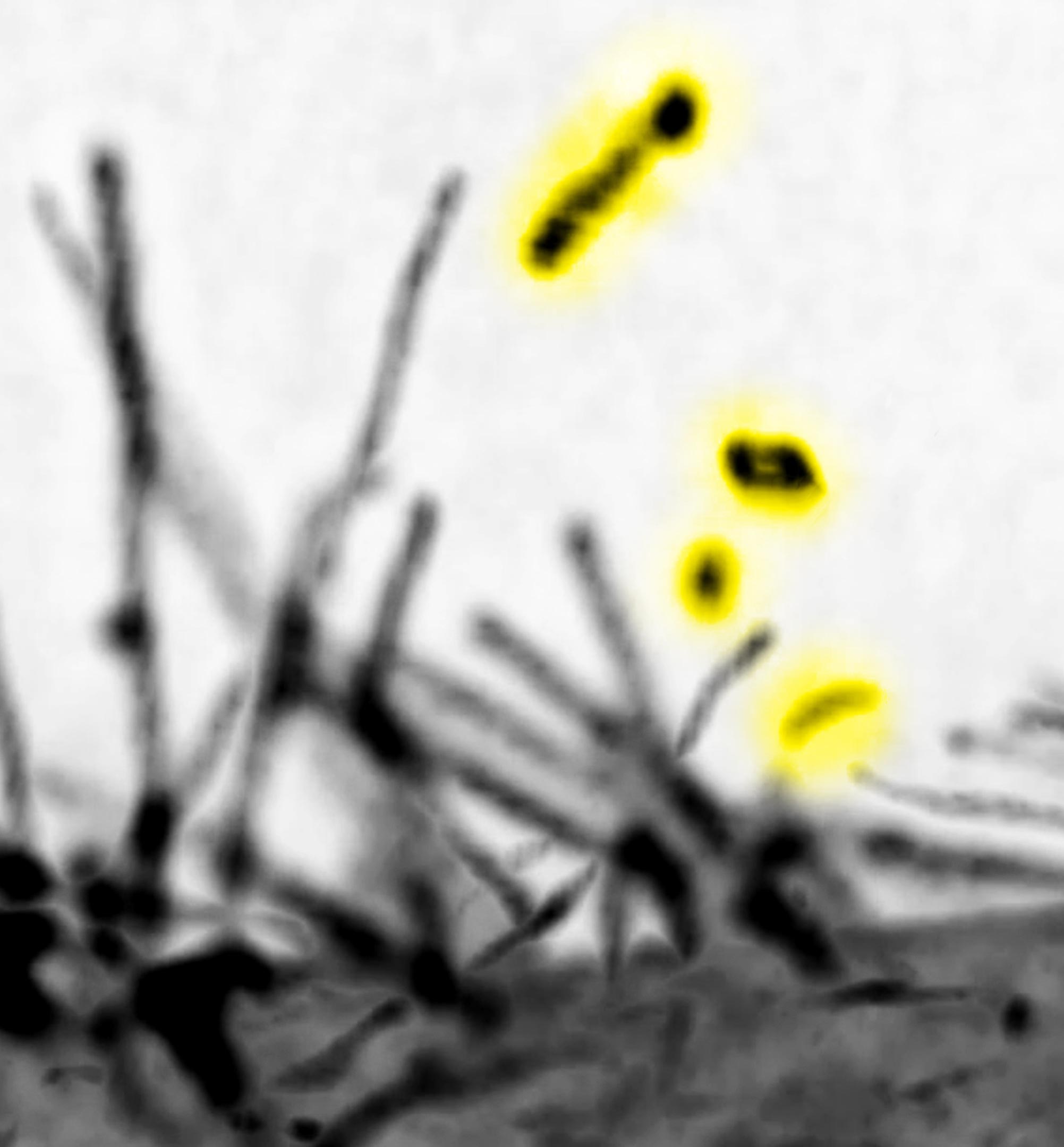
Researchers from Nara Institute of Science and Technology have broadened the known functions of an under-appreciated cell structure, with possible applications in wound closure and cancer therapy.
What if you found out that you could heal using only a finger? It sounds like science fiction, reminiscent of the 1982 movie E.T. Well, it turns out that your body’s own cells can do something similarly unexpected. Researchers at Nara Institute of Science and Technology (NAIST) report in a new study seen in Developmental Cell a means by which cells may use “fingers” to communicate instructions for wound closure.
NAIST project leader Shiro Suetsugu has devoted his career to studying how cells shape themselves, initiate and accept communication among one other. An under-appreciated means of doing so is through filopodia, small finger-like cellular projections that are more commonly known to help certain cells crawl in the body.
“Filopodia are well-recognized as cellular locomotion machinery. Less understood is how filopodia help cells communicate, and the molecular details of how this is done,” says Suetsugu.
The Power of I-BAR Proteins
A focus of this line of research should be the proteins known by the acronym I-BAR. I-BAR proteins are well-known to help bend the plasma membrane, the “skin” of many cells, for filopodia formation and thus facilitate movement.
“We identified an I-BAR protein that severs filopodia,” says Suetsugu. An important element of this scission may be mechanical force, a stimulus that your body commonly applies to cells.
“Laser experiments showed that the force required for scission is approximately 8-20 kilopascals. These forces are similar to the 4-13 kilopascals, experienced by cells in blood capillaries,” Suetsugu says.
Severed filopodia go on to form structures called extracellular vesicles, a popular research topic in biology. Extracellular vesicles were used to basically be considered the trash bags of cells, used for disposing cellular waste. However, the vesicles are now considered to be communication packets rather than waste bags. “The pertinence of these vesicles to cancer metastasis has piqued researchers’ and clinicians’ interest,” notes Suetsugu.
Accelerating Wound Healing with Vesicles
What does this have to do with cell-cell communication? A simulated cell-scale wound healed faster when it was treated with filopodia-derived extracellular vesicles than if untreated. In other words, an I-BAR protein first induced filopodia scission and vesicle production. These vesicles then sent cellular signals that promoted cell migration toward one another, in a way that may promote wound closure.
By understanding how cells fully use their molecular machinery to send instructions to other cells, Suetsugu is optimistic that medical practitioners will develop new means to safely treat cancer and other diseases.
“Certain BAR proteins are pertinent to cancer cell biology. BAR proteins are also pertinent to cell locomotion. By learning more about how these proteins aid cell-cell communication, we may find better ways to stop cancer cells from spreading,” he says.
Reference: “Filopodium-derived vesicles produced by MIM enhance the migration of recipient cells” by Tamako Nishimura, Takuya Oyama, Hooi Ting Hu, Toshifumi Fujioka, Kyoko Hanawa-Suetsugu, Kazutaka Ikeda, Sohei Yamada, Hiroki Kawana, Daisuke Saigusa, Hiroki Ikeda, Rie Kurata, Kayoko Oono-Yakura, Manabu Kitamata, Kazuki Kida, Tomoya Hikita, Kiyohito Mizutani, Kazuma Yasuhara, Yuko Mimori-Kiyosue, Chitose Oneyama, Kazuki Kurimoto, Yoichiroh Hosokawa, Junken Aoki, Yoshimi Takai, Makoto Arita and Shiro Suetsugu, 22 March 2021, Developmental Cell.
DOI: 10.1016/j.devcel.2021.02.029
Never miss a breakthrough: Join the SciTechDaily newsletter.
Follow us on Google and Google News.