
Close Menu
    Facebook X (Twitter) Instagram
    SciTechDaily
    • Biology
    • Chemistry
    • Earth
    • Health
    • Physics
    • Science
    • Space
    • Technology
    Facebook X (Twitter) Pinterest YouTube RSS
    SciTechDaily
    Home»Biology»Chimps and Humans Harbor Similar Gut Enterotypes
    Biology

    Chimps and Humans Harbor Similar Gut Enterotypes

    By Bill Hathaway, Yale UniversityNovember 13, 2012No Comments3 Mins Read
    Facebook Twitter Pinterest Telegram LinkedIn WhatsApp Email Reddit
    Share
    Facebook Twitter LinkedIn Pinterest Telegram Email Reddit
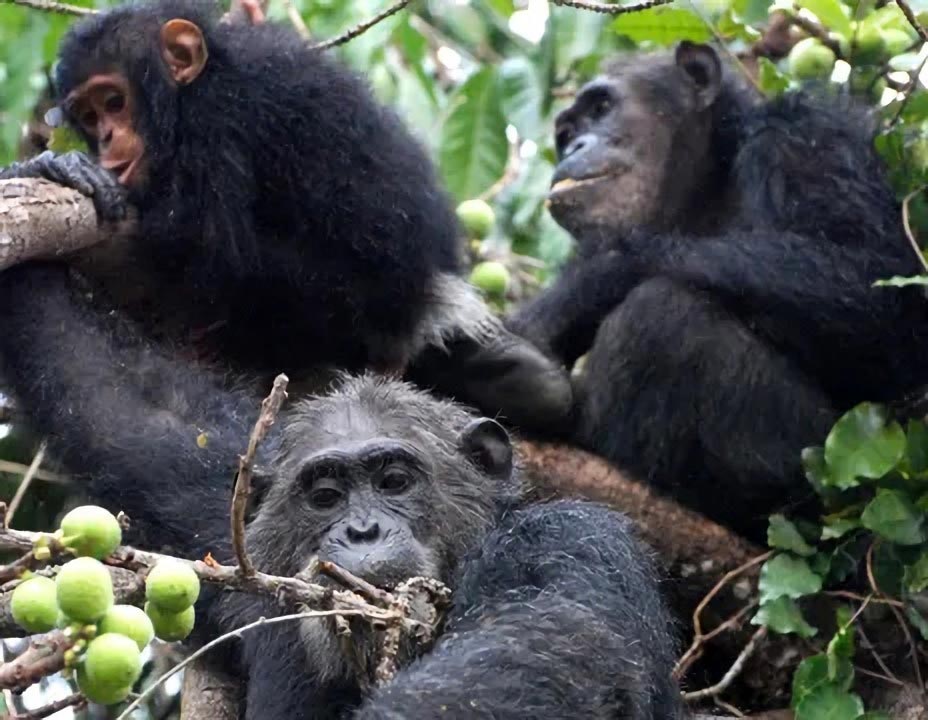
    Chimpanzees in Gombe National Park
    Chimpanzees in Gombe National Park. Credit: Ian Gilby, Duke University

    A team of scientists has discovered that humans and chimpanzees share the same three distinct communities of bacteria in their guts.

    In the last few years, scientists have made great inroads in understanding the crucial interactive role gut bacteria play in harvesting nutrients, assisting immune systems, and protecting the host against pathogens.

    Now Yale University researchers have discovered that humans and chimpanzees, our closest evolutionary relatives, share the same three distinct communities, or ecosystems, of bacteria in their guts.

    “This shared organization of the gut microbial community is millions of years old and the findings attest to their functional importance,” said Howard Ochman, director of the Microbial Diversity Institute on West Campus and an author of the study, which appears in the November 13 issue of the journal Nature Communications.

    These huge colonies of bacteria, which greatly outnumber the cells in a human body, have adapted to live in human gut and colon, and in turn interact with the host in a wide variety of functional ways. For instance, the colonies help synthesize vitamins and renew cells in the stomach.

    Ochman and colleagues have been investigating why bacteria seemed to organize themselves into distinct communities called enterotypes. Each individual seems to harbor one of the three of these enterotypes in their gut, but the role of specific bacteria that make up each group is unknown. Some scientists have dismissed their importance, arguing they are merely the product of a diversity of diets.

    However, the new paper shows that the chimpanzees from Gombe National Park studied by Jane Goodall have the same three groupings of bacteria. The findings suggest the enterotypes have played a crucial role in the evolution of great apes. Researchers were able to study samples from chimps at different periods of their lives and found individual chimpanzees change enterotypes over their lifetimes.

    “Now that we know enterotypes have been maintained over evolutionary timescales, our goal is to determine their functions and how they might be important to the health of their hosts,” Ochman said.

    Reference: “Chimpanzees and humans harbour compositionally similar gut enterotypes” by Andrew H. Moeller, Patrick H. Degnan, Anne E. Pusey, Michael L. Wilson, Beatrice H. Hahn and Howard Ochman, 13 November 2012, Nature Communications.
    DOI: 10.1038/ncomms2159

    Other Yale authors of the paper are Andrew H. Moeller and Patrick H. Degnan. Researchers at the University of North Carolina, University of Minnesota, and Perelman School of Medicine at the University of Pennsylvania contributed to the research.

    The study was funded the National Institutes of Health and the National Science Foundation.

    Never miss a breakthrough: Join the SciTechDaily newsletter.
    Follow us on Google and Google News.

    Bacteria Enterotypes Yale University
    Share. Facebook Twitter Pinterest LinkedIn Email Reddit

    Related Articles

    Revolutionizing Clean Energy? Yale Scientists Discover How Bacteria “Breathe” Minerals

    Nanowire Made by Bacteria Provides Important Clues to Combating Climate Change

    Sugar Targets Microbe Linked to Lean and Healthy People

    Natural Sorting Mechanism Allows Bacteria to Preserve Diversity

    New Study Reveals How Gut Bacteria Drive Autoimmune Disease

    Yale Study Shows Gut Bacteria Aggressively Protect Their Territory

    Yale Study Explains How We Live in Harmony With Gut Bacteria

    Human Presence Increases Indoor Bacteria

    Autistic Children Have Different Gastrointestinal Bacteria

    Leave A Reply Cancel Reply

    • Facebook
    • Twitter
    • Pinterest
    • YouTube

    Don't Miss a Discovery

    Subscribe for the Latest in Science & Tech!

    Trending News

    Monster Storms on Jupiter Unleash Lightning Beyond Anything on Earth

    Scientists Create “Liquid Gears” That Spin Without Touching

    The Simple Habit That Could Help Prevent Cancer

    Millions Take These IBS Drugs, But a New Study Finds Serious Risks

    Scientists Unlock Hidden Secrets of 2,300-Year-Old Mummies Using Cutting-Edge CT Scanner

    Bread Might Be Making You Gain Weight Even Without Eating More Calories

    Scientists Discover Massive Magma Reservoir Beneath Tuscany

    Europe’s Most Active Volcano Just Got Stranger – Here’s Why Scientists Are Rethinking It

    Follow SciTechDaily
    • Facebook
    • Twitter
    • YouTube
    • Pinterest
    • Newsletter
    • RSS
    SciTech News
    • Biology News
    • Chemistry News
    • Earth News
    • Health News
    • Physics News
    • Science News
    • Space News
    • Technology News
    Recent Posts
    • Scientists Were Wrong About This Strange “Rule-Breaking” Particle
    • Webb Space Telescope Uncovers Unexpected Ice Clouds on a Jupiter-Like World
    • 289-Million-Year-Old Reptile Mummy Reveals Origin of Human Breathing System
    • New Brain Discovery Challenges Long-Held Theory of Teenage Brain Development
    • Sharks Are Overheating as Warming Oceans Push Them to the Edge
    Copyright © 1998 - 2026 SciTechDaily. All Rights Reserved.
    • Science News
    • About
    • Contact
    • Editorial Board
    • Privacy Policy
    • Terms of Use

    Type above and press Enter to search. Press Esc to cancel.