
Close Menu
    Facebook X (Twitter) Instagram
    SciTechDaily
    • Biology
    • Chemistry
    • Earth
    • Health
    • Physics
    • Science
    • Space
    • Technology
    Facebook X (Twitter) Pinterest YouTube RSS
    SciTechDaily
    Home»Health»COVID-19 Genetic Risk Variant Inherited From Neanderthals Protects Against HIV
    Health

    COVID-19 Genetic Risk Variant Inherited From Neanderthals Protects Against HIV

    By Max Planck Institute for Evolutionary AnthropologyFebruary 21, 2022No Comments3 Mins Read
    Facebook Twitter Pinterest Telegram LinkedIn WhatsApp Email Reddit
    Share
    Facebook Twitter LinkedIn Pinterest Telegram Email Reddit
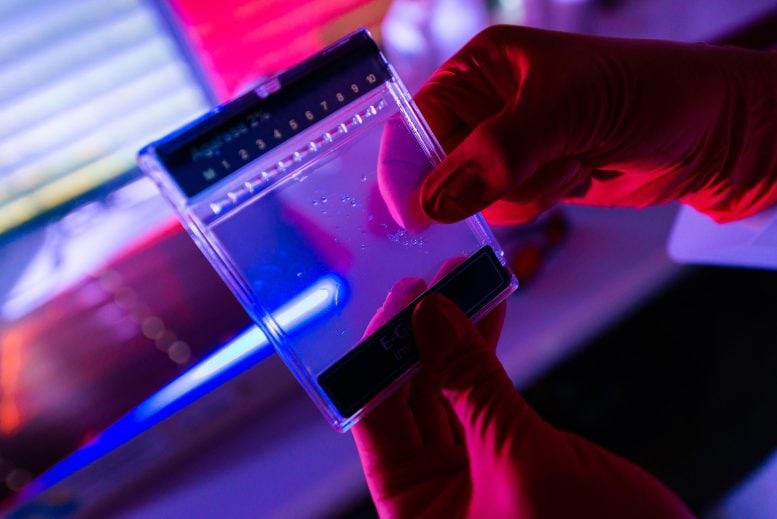
    DNA Analytics in Lab
    DNA analytics in the lab. Credit: Max Planck Institute for Evolutionary Anthropology

    A COVID-19 risk variant inherited from Neanderthals reduces a person’s risk of contracting HIV by 27 percent.

    Some people become seriously ill when infected with SARS-CoV-2 while others have only mild symptoms or no symptoms at all. In addition to risk factors such as advanced age and chronic diseases, like diabetes, our genetic heritage also contributes to our individual COVID-19 severity risk.

    Neanderthal DNA and Modern Human Health

    In the autumn of 2020, Hugo Zeberg at Karolinska Institutet and MPI-EVA and Svante Pääbo at MPI-EVA showed that we inherited the major genetic risk factor for severe COVID-19 from Neanderthals. In the spring of 2021, the same researcher duo studied this variant in ancient human DNA and observed that its frequency has increased significantly since the last ice age. In fact, it has become unexpectedly common for a genetic variant inherited from Neanderthals. Hence, it may have had a favorable impact on its carriers in the past. “This major genetic risk factor for COVID-19 is so common that I started wondering whether it might actually be good for something, such as providing protection against another infectious disease,” says Hugo Zeberg, who is the sole author of the new study in PNAS.

    The genetic risk factor is located in a region on chromosome 3 that consists of many genes. There are several genes in its vicinity that encode receptors in the immune system. One of these receptors – CCR5 – is used by the HIV virus to infect white blood cells. Zeberg found that people who carried the risk factor for COVID-19 had fewer CCR5 receptors. This led him to test whether they also had a lower risk of becoming infected with HIV. By analyzing patient data from three major biobanks (FinnGen, UK Biobank and Michigan Genomic Initiative) he found that carriers of the risk variant for COVID-19 had a 27 percent lower risk of contracting HIV. “This shows how a genetic variant can be both good and bad news: Bad news if a person contracts COVID-19, good news because it offers protection against getting infected with HIV,” says Zeberg.

    However, since HIV only arose during the 20th century, protection against this infectious disease cannot explain why the genetic risk variant for COVID-19 became so common among humans as early as 10,000 years ago. “Now we know that this risk variant for COVID-19 provides protection against HIV. But it was probably protection against yet another disease that increased its frequency after the last ice age,” Zeberg concludes.

    Reference: “The major genetic risk factor for severe COVID-19 is associated with protection against HIV” by Hugo Zeberg, 22 February 2022, Proceedings of the National Academy of Sciences.
    DOI: 10.1073/pnas.2116435119

    Funding: Jeansson Foundations, Magnus Bergvall Foundation, Swedish Research Council

    Never miss a breakthrough: Join the SciTechDaily newsletter.
    Follow us on Google and Google News.

    COVID-19 Evolution Genetics HIV Infectious Diseases Max Planck Institute Neanderthals
    Share. Facebook Twitter Pinterest LinkedIn Email Reddit

    Related Articles

    COVID-19 Case Estimations From SARS-CoV-2 Genome Mutations

    What Is Causing All These New Coronavirus Variants? Is It the COVID–19 Vaccines?

    A Genetic Variant You May Have Inherited From Neanderthals Reduces the Risk of Severe COVID-19

    SARS-CoV-2 Could Evolve Resistance, Rendering COVID-19 Vaccines Ineffective

    Coronavirus Mutation Concern Verified by Largest COVID-19 Viral Sequence Analysis in U.S.

    New Genetic Identification of COVID-19 Susceptibility Will Aid Treatment

    COVID-19 Treatment May Lie in Pangolin Genetics – May Possess Evolutionary Advantage Against Coronavirus

    Progress on AAVCOVID, A Gene-Based Experimental COVID-19 Vaccine

    No Evidence COVID-19 Coronavirus Was Genetically Engineered in a Lab – Epidemic Has a Natural Origin

    Leave A Reply Cancel Reply

    • Facebook
    • Twitter
    • Pinterest
    • YouTube

    Don't Miss a Discovery

    Subscribe for the Latest in Science & Tech!

    Trending News

    Millions Take These IBS Drugs, But a New Study Finds Serious Risks

    Scientists Unlock Hidden Secrets of 2,300-Year-Old Mummies Using Cutting-Edge CT Scanner

    Bread Might Be Making You Gain Weight Even Without Eating More Calories

    Scientists Discover Massive Magma Reservoir Beneath Tuscany

    Europe’s Most Active Volcano Just Got Stranger – Here’s Why Scientists Are Rethinking It

    Alzheimer’s Symptoms May Start Outside the Brain, Study Finds

    Millions Take This Popular Supplement – Scientists Discover a Concerning Link to Heart Failure

    The Universe Is Expanding Too Fast and Scientists Can’t Explain Why

    Follow SciTechDaily
    • Facebook
    • Twitter
    • YouTube
    • Pinterest
    • Newsletter
    • RSS
    SciTech News
    • Biology News
    • Chemistry News
    • Earth News
    • Health News
    • Physics News
    • Science News
    • Space News
    • Technology News
    Recent Posts
    • Simple Blood Test May Predict Alzheimer’s Years Before Brain Scans Show Signs
    • Scientists Say Adding This Unusual Seafood to Your Diet Could Reverse Signs of Aging
    • U.S. Waste Holds $5.7 Billion Worth of Crop Nutrients
    • Scientists Say a Hidden Structure May Exist Inside Earth’s Core
    • Doctors Surprised by the Power of a Simple Drug Against Colon Cancer
    Copyright © 1998 - 2026 SciTechDaily. All Rights Reserved.
    • Science News
    • About
    • Contact
    • Editorial Board
    • Privacy Policy
    • Terms of Use

    Type above and press Enter to search. Press Esc to cancel.