
Close Menu
    Facebook X (Twitter) Instagram
    SciTechDaily
    • Biology
    • Chemistry
    • Earth
    • Health
    • Physics
    • Science
    • Space
    • Technology
    Facebook X (Twitter) Pinterest YouTube RSS
    SciTechDaily
    Home»Space»Exploring the Ever-Changing Nature of R Aquarii
    Space

    Exploring the Ever-Changing Nature of R Aquarii

    By T. Liimets et al./European Southern ObservatoryDecember 13, 2018No Comments3 Mins Read
    Facebook Twitter Pinterest Telegram LinkedIn WhatsApp Email Reddit
    Share
    Facebook Twitter LinkedIn Pinterest Telegram Email Reddit
    Exploring the Ever Changing Nature of R Aquarii
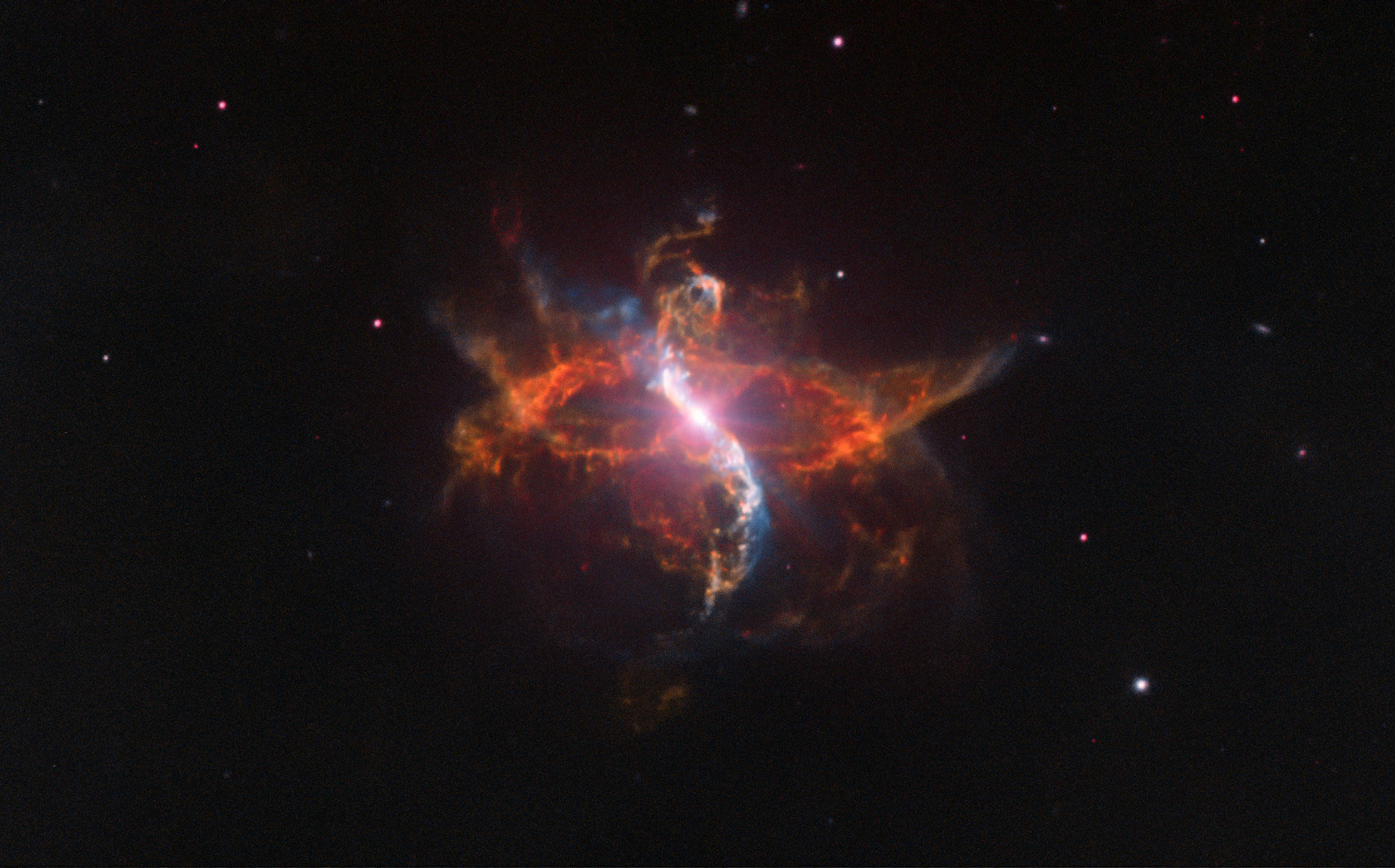
    This image reveals a dramatic binary star system named R Aquarii, located 700 light-years from Earth, as seen in 2012 by ESO’s Very Large Telescope (VLT). Credit: ESO

    The R Aquarii system is a symbiotic binary star surrounded by a large, dynamic nebula. Such binaries contain two stars in an unequal and complex relationship — a white dwarf and a red giant. In a disquieting act of stellar cannibalism, the white dwarf is stripping matter from its larger companion. The tormented red giant and the unstable white dwarf occasionally eject matter in weird spurts, loops, and trails — forming the curious shapes seen in these images.

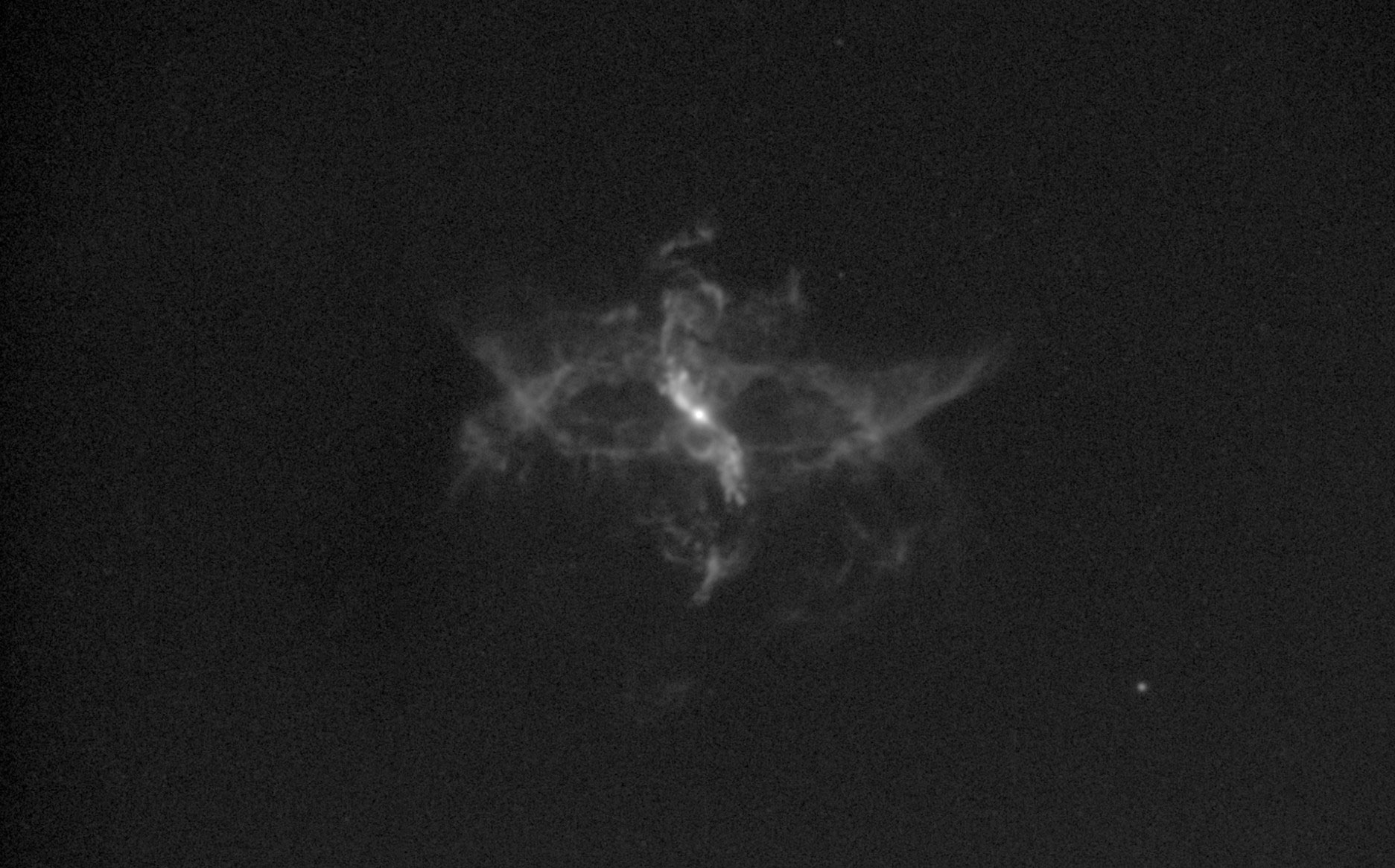
    In this unusual comparison image — a rare case of dynamic evolution captured with ground-based telescopes — we see the difference 15 years can make. It may be the mere blink of an eye on a cosmic timescale, but it provides us with a wonderful opportunity to observe a truly dynamic system as it changes shape in our skies.
    R Aquarii as Seen in 1997
    This image shows a chaotic and fascinating binary star system named R Aquarii, as seen in 1997 by the Nordic Optical Telescope on the island of La Palma, Spain. In the 15 years since this image was taken the system has been observed many more times by other telescopes, including ESO’s Very Large Telescope, and has been seen to be expanding and evolving in shape. Credit: T. Liimets et al./ESO

    These images show the evolution not only of R Aquarii, but also of our observational capabilities. The earlier view was captured by the Nordic Optical Telescope on the island of La Palma, Spain — a 2.5-meter (8.2-foot) telescope. The image from 2012, on the other hand, was captured by ESO’s 8-meter (26-foot) Very Large Telescope (VLT), and reveals far more intricate details of this fascinating symbiotic star.

    This comparison image is the first installment in ESO’s R Aquarii Week, during which we will explore this intriguing object and its evolution. We will reveal the dramatic and ever-changing nature of R Aquarii, showing how it has evolved and expanded over years of observations.


    This video shows the evolution of a chaotic and fascinating binary star system named R Aquarii. The time lapse begins with observations from the Nordic Optical Telescope taken in 1997. In the 15 years since that image was taken the system has been observed by many other telescopes, including ESO’s Very Large Telescope. This video lapses between a selection of these images, showing the expansion and evolution of the material surrounding R Aquarii.

    Never miss a breakthrough: Join the SciTechDaily newsletter.
    Follow us on Google and Google News.

    Astronomy
    Share. Facebook Twitter Pinterest LinkedIn Email Reddit

    Related Articles

    We Just Had the Super Flower Blood Moon and an Eclipse – Here’s What’s Next!

    Unprecedented New Panorama of the Center of Our Milky Way – Reveals Magnetized Threads Weaving Spectacular Galactic Tapestry

    Spinning Neutron Stars Reveal New Insights Into Elusive Continuous Gravitational Waves

    NASA’s Roman Mission: Using Exploding Stars to Solve the Biggest Cosmic Mysteries

    Why the Sun’s Atmosphere Is Hundreds of Times Hotter Than Its Surface – 80 Year-Old Theory Finally Confirmed

    Deciphering the Lives of Double Neutron Stars Using the Ripples in the Fabric of Space and Time

    Scientists Catch Exciting Magnetic Waves in Action in the Sun’s Photosphere

    Star Formation Is Triggered by Collisions of Gas Clouds in Space

    New Dark Matter Map Reveals Hidden Bridges Between Galaxies

    Leave A Reply Cancel Reply

    • Facebook
    • Twitter
    • Pinterest
    • YouTube

    Don't Miss a Discovery

    Subscribe for the Latest in Science & Tech!

    Trending News

    Scientists May Have Found the Key to Jupiter and Saturn’s Moon Mystery

    Scientists Uncover Brain Changes That Link Pain to Depression

    Saunas May Do More Than Raise Body Temperature – They Activate Your Immune System

    Exercise in a Pill? Metformin Shows Surprising Effects in Cancer Patients

    Hidden Oceans of Magma Could Be Protecting Alien Life

    New Study Challenges Alzheimer’s Theories: It’s Not Just About Plaques

    Artificial Sweeteners May Harm Future Generations, Study Suggests

    Splashdown! NASA Artemis II Returns From Record-Breaking Moon Mission

    Follow SciTechDaily
    • Facebook
    • Twitter
    • YouTube
    • Pinterest
    • Newsletter
    • RSS
    SciTech News
    • Biology News
    • Chemistry News
    • Earth News
    • Health News
    • Physics News
    • Science News
    • Space News
    • Technology News
    Recent Posts
    • “A Plague Is Upon Us”: The Mass Death That Changed an Ancient City Forever
    • This Strange Material Can Turn Superconductivity on and off Like a Switch
    • Scientists Discover Game-Changing New Way To Treat High Cholesterol
    • Breakthrough Drug Delays Rheumatoid Arthritis for Years After Treatment Ends
    • This Small Change to Your Exercise Routine Could Be the Secret to Living Longer
    Copyright © 1998 - 2026 SciTechDaily. All Rights Reserved.
    • Science News
    • About
    • Contact
    • Editorial Board
    • Privacy Policy
    • Terms of Use

    Type above and press Enter to search. Press Esc to cancel.