
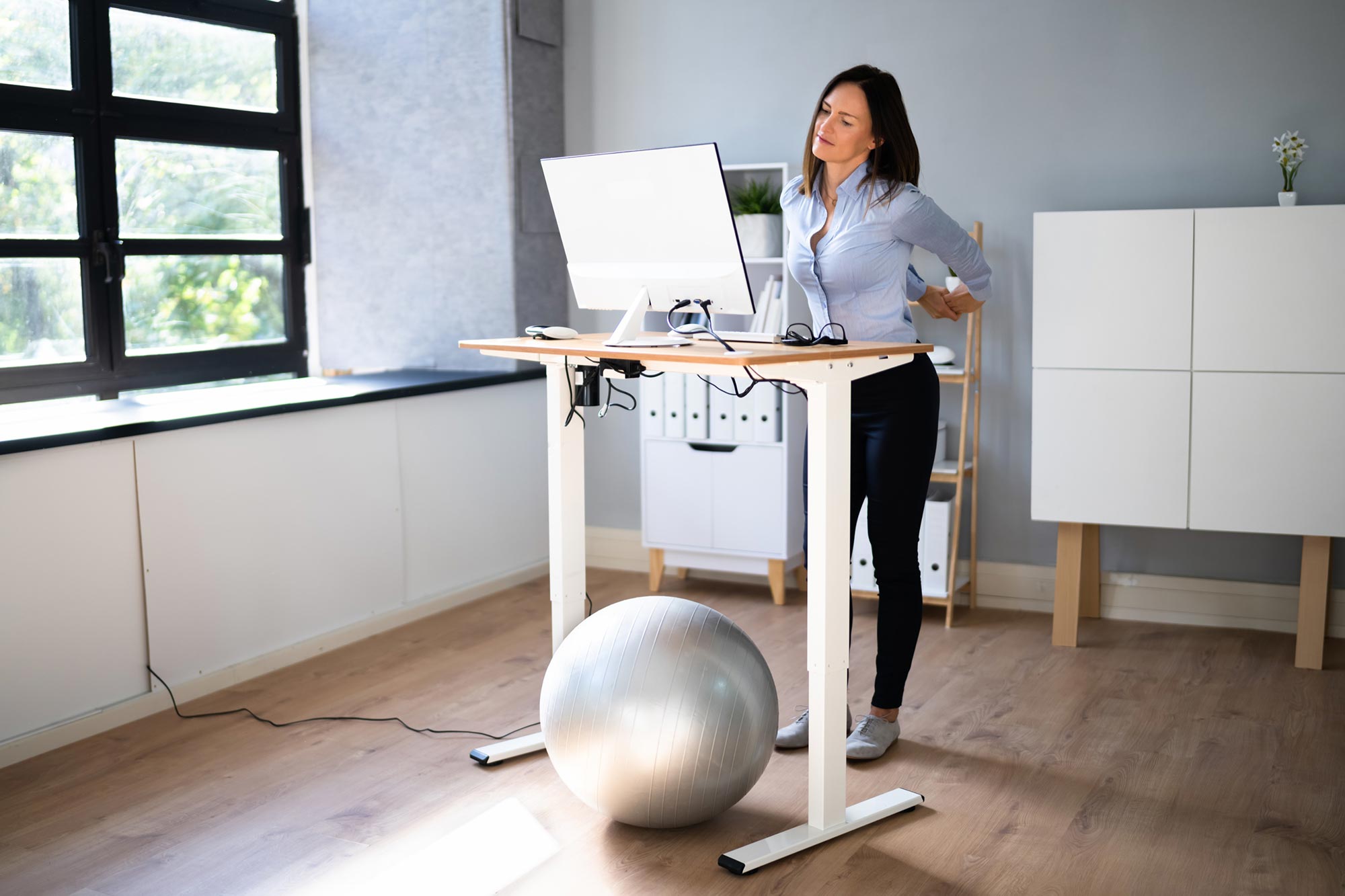
Standing more often, despite its popularity, does not boost cardiovascular health and may raise the risk of circulatory problems, according to a study from the University of Sydney.
It suggests that regular movement and exercise are more beneficial for reducing heart disease risk, especially for those who are predominantly sedentary. The research also found sitting for over 10 hours a day increased both cardiovascular disease and orthostatic incidence risk.
Research Challenges Standing Desk Benefits
Standing desks have become increasingly popular as a way to counteract the negative effects of a sedentary lifestyle, which often results from prolonged periods of sitting at workstations, in front of TVs, or behind the wheel. These desks are widely used in offices, and workers in industries such as retail sometimes choose to stand rather than sit during their shifts.
However, new research from the University of Sydney suggests that this trend might not yield the health benefits people expect. The study indicates that standing more often does not enhance cardiovascular health or protect against conditions like coronary heart disease, stroke, or heart failure. In fact, it might increase the risk of circulatory problems, such as varicose veins and deep vein thrombosis.
Published today (October 16) in the International Journal of Epidemiology, the study also reveals that sitting for more than 10 hours a day can heighten the risk of cardiovascular disease and orthostatic complications, emphasizing the importance of incorporating more physical activity into our daily routines. Despite these findings, the research clarifies that increased standing alone does not contribute to a higher risk of cardiovascular diseases.
Exploring Alternatives to Standing
Lead author from the Faculty of Medicine and Health and Deputy Director of the Charles Perkins Centre’s Mackenzie Wearables Research Hub, Dr. Matthew Ahmadi, said there were other ways for those with a sedentary lifestyle to improve their cardiovascular health.
“The key takeaway is that standing for too long will not offset an otherwise sedentary lifestyle and could be risky for some people in terms of circulatory health. We found that standing more does not improve cardiovascular health over the long term and increases the risk of circulatory issues,” Dr. Ahmadi said.
Recommendations for a Healthier Routine
While the researchers found that there were no health benefits gained from standing more, they cautioned against sitting for extended periods, recommending that people who are regularly sedentary or find themselves standing for long periods schedule regular movement throughout the day.
“For people who sit for long periods on a regular basis, including plenty of incidental movement throughout the day and structured exercise may be a better way to reduce the risk of cardiovascular disease,” said Professor Emmanuel Stamatakis, Director of the Mackenzie Wearables Research Hub.
“Take regular breaks, walk around, go for a walking meeting, use the stairs, take regular breaks when driving long distances, or use that lunch hour to get away from the desk and do some movement. In Australia, we are now coming into the warmer months, so the weather is perfect for sun-safe exercise that helps you get moving,” he said.
Professor Stamatakis and Dr. Ahmadi’s research published earlier this year found that about 6 minutes of vigorous exercise or 30 minutes of moderate-to-vigorous exercise per day could help lower the risk of heart disease even in people who were highly sedentary for more than 11 hours a day.
The study was conducted using incident heart condition and circulatory disease data taken over a period of seven to eight years from 83,013 UK adults who were free of heart disease at baseline, measured using research-grade wrist-worn wearables similar to a smartwatch.
Reference: “Device-measured stationary behaviour and cardiovascular and orthostatic circulatory disease incidence” by Matthew N Ahmadi, Pieter Coenen, Leon Straker and Emmanuel Stamatakis, 16 October 2024, International Journal of Epidemiology.
DOI: 10.1093/ije/dyae136
Never miss a breakthrough: Join the SciTechDaily newsletter.
Follow us on Google and Google News.
9 Comments
Surely it’s not the vaxx and boosters, it’s just, let me check the running list…. standing desks!
And how does your genius mind distinguish between harm that you “believe” (i.e. imagine) is caused by the vaccines and harm that is caused by COVID?
At this point you have to be willfully blind to ask this question.
I thought that the whole theory of standing desks is that it allowed even those stuck at a desk to move. Sometimes you’re sitting in front of your desk, when you need to move around a bit, you stand up and so does your desk. After you stretch out, you can sit back down and so does your desk.
So “sitting for over 10 hours a day increased both cardiovascular disease and orthostatic incidence risk” but standing desks “might increase the risk of circulatory problems, such as varicose veins and deep vein thrombosis”. So I guess we’re all doomed!
Many folks I know, stsrted using the standing desks for orthopedic reasons. Better back and nerve health.
And how does your genius mind distinguish between harm that you “believe” (i.e. imagine) is caused by the vaccines and harm that is caused by COVID?
This is one of those faux science “studies” designed to keep you profitably sick and stop you from taking control of your health. It’s going right in the garbage can along with the “studies” telling you to avoid vegetables and vitamins.
I used a standing desk at work for 30 years. It forced me to move around TWICE or TRICE as much as I now do from sitting.
Maybe, just maybe, the true culprit is the Desktop, cellphones, and messaging. No need NOW to walk 10 paces to Bob’s desk to as a simple question. WE HAVE ALL BECOME SITDOWN TYPISTS.
Slugs staring at a screen.