
Close Menu
    Facebook X (Twitter) Instagram
    SciTechDaily
    • Biology
    • Chemistry
    • Earth
    • Health
    • Physics
    • Science
    • Space
    • Technology
    Facebook X (Twitter) Pinterest YouTube RSS
    SciTechDaily
    Home»Space»How To Follow the Next Steps of NASA’s Webb Space Telescope
    Space

    How To Follow the Next Steps of NASA’s Webb Space Telescope

    By Elizabeth Landau, NASAAugust 7, 2022No Comments3 Mins Read
    Facebook Twitter Pinterest Telegram LinkedIn WhatsApp Email Reddit
    Share
    Facebook Twitter LinkedIn Pinterest Telegram Email Reddit
    Webb Telescope L2 Flyby
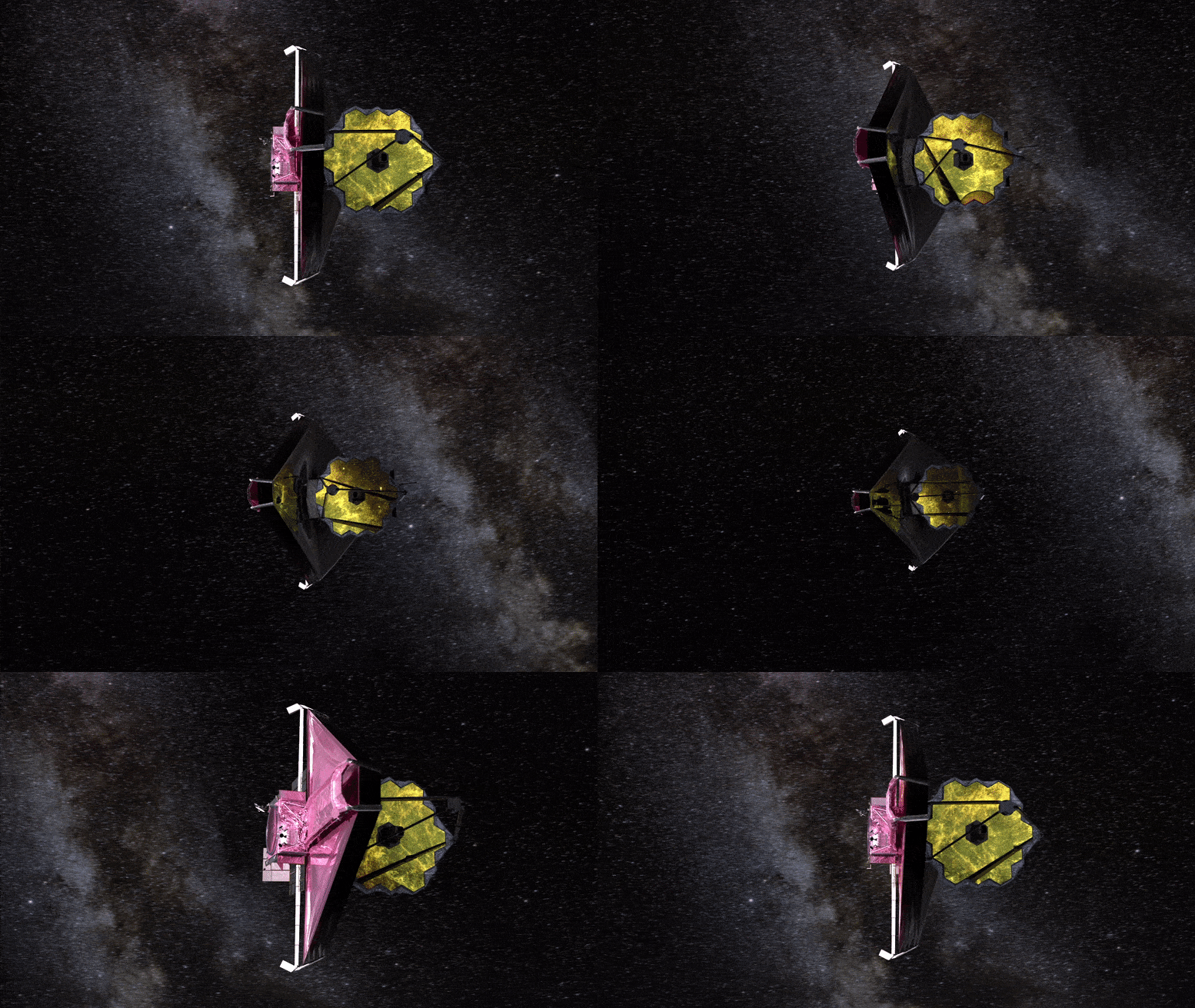
    The James Webb Space Telescope (JWST) is the next of NASA’s Great Observatories; following in the line of the Hubble Space Telescope, the Compton Gamma-ray Observatory, the Chandra X-ray Observatory, and the Spitzer Space Telescope. JWST combines qualities of two of its predecessors, observing in infrared light, like Spitzer, with fine resolution, like Hubble. Credit: NASA, SkyWorks Digital, Northrop Grumman, STScI

    Now that NASA’s James Webb Space Telescope’s first images and data have been released, you might be wondering: What comes next?

    There is a packed schedule of science programs already slated for the World’s preeminent observatory. This includes looking at all kinds of cosmic phenomena, like planets, stars, galaxies, black holes, and more. Webb will revolutionize our understanding of the universe — but first, scientists need time to analyze data and make sure that they understand what they’re seeing. Here are four key things to know about Webb’s next steps:

    More images are coming. Webb has already captured more images beyond the ones you saw on July 12, and the Cartwheel Galaxy is just one example. Hold onto your intergalactic hats — NASA will be rolling those out in the coming weeks at nasa.gov/webb and on the NASAWebb social media channels. Some of those images give a first look at Webb’simpressive  capabilities, but are not part of science programs. In the meantime, you can revisit the first images at nasa.gov/webbfirstimages. NASA also has this page where you can find the full assortment of images and data at full resolution.

    News releases on results will be coming, too, once they have been reviewed. You may have seen researchers on social media posting their preliminary findings from Webb data. But before NASA publicizes results in news materials, they wait for the findings to be peer-reviewed — meaning, the science community has assessed the results. Science is a collaborative process of asking questions, testing out ideas, discussing with colleagues, and doing it all over. The peer-review process generally happens when researchers submit their findings to a journal or conference. It may take a little while, but it’s worth it to root out as many errors as possible.

    There is other publicly available data you can check out. Anyone can take a deep dive into what Webb saw during the commissioning period, such as images of Jupiter and some of its moons. Check out the Barbara A. Mikulski Archive for Space Telescopes, which scientists call “MAST,” for what’s out there right now.

    The current Webb observing schedule is set and available. If you want to find out what the Webb Space Telescope is looking at this week, visit the Space Telescope Science Institute’s weekly schedule to find out which cosmic objects the observatory is examining. The full buffet of Webb observations for the next year, known as Cycle 1, is available here.

    Thanks for being part of this historic journey!

    Never miss a breakthrough: Join the SciTechDaily newsletter.
    Follow us on Google and Google News.

    Astronomy James Webb Space Telescope NASA
    Share. Facebook Twitter Pinterest LinkedIn Email Reddit

    Related Articles

    The Secret Science Behind Webb’s Mirror Mastery

    Legendary Star’s Smooth Disk Mystifies Astronomers, Challenges Planet Formation Theories

    Cosmic Horror Unveiled: NASA Reveals “Blood-Soaked Eyes” Staring From Deep Space [Video]

    Webb’s “Weird” Discovery: Meet the Galaxy Where Gas Outshines the Stars

    Webb Space Telescope Unveils the Hidden Winds That Forge Stars and Craft Planets

    Webb Telescope Captures Mysterious Gas Jets From Speeding Object in the Outer Solar System

    James Webb Uncovers the Whirling Origins of Planetary Systems

    Webb Telescope’s Encounter With a Time-Bending Supernova: Rewriting Cosmic Rules

    Webb’s Unprecedented Discovery: Potential Missing Link to First Stars in the Universe

    Leave A Reply Cancel Reply

    • Facebook
    • Twitter
    • Pinterest
    • YouTube

    Don't Miss a Discovery

    Subscribe for the Latest in Science & Tech!

    Trending News

    Scientists Uncover Potential Brain Risks of Popular Fish Oil Supplements

    Scientists Discover a Surprising Way To Make Bread Healthier and More Nutritious

    After 60 Years, Scientists Uncover Unexpected Brain Effects of Popular Diabetes Drug Metformin

    New Research Uncovers Hidden Side Effects of Popular Weight-Loss Drugs

    Scientists Rethink Extreme Warming After Surprising Ocean Discovery

    Landmark Study Links Never Marrying to Significantly Higher Cancer Risk

    Researchers Discover Unknown Beetle Species Just Steps From Their Lab

    Largest-Ever Study Finds Medicinal Cannabis Ineffective for Anxiety, Depression, PTSD

    Follow SciTechDaily
    • Facebook
    • Twitter
    • YouTube
    • Pinterest
    • Newsletter
    • RSS
    SciTech News
    • Biology News
    • Chemistry News
    • Earth News
    • Health News
    • Physics News
    • Science News
    • Space News
    • Technology News
    Recent Posts
    • Early Warning Signals of Esophageal Cancer May Be Hiding in Plain Sight
    • Researchers Have Discovered a THC-Free Cannabis Compound That May Replace Opioids
    • Common Blood Pressure Drug Shows Surprising Power Against Deadly Antibiotic-Resistant Superbug
    • Students Build Dark Matter Detector and Set New Experimental Limits
    • Scientists Discover Caffeine Can Repair Key Memory Circuits After Sleep Loss
    Copyright © 1998 - 2026 SciTechDaily. All Rights Reserved.
    • Science News
    • About
    • Contact
    • Editorial Board
    • Privacy Policy
    • Terms of Use

    Type above and press Enter to search. Press Esc to cancel.