
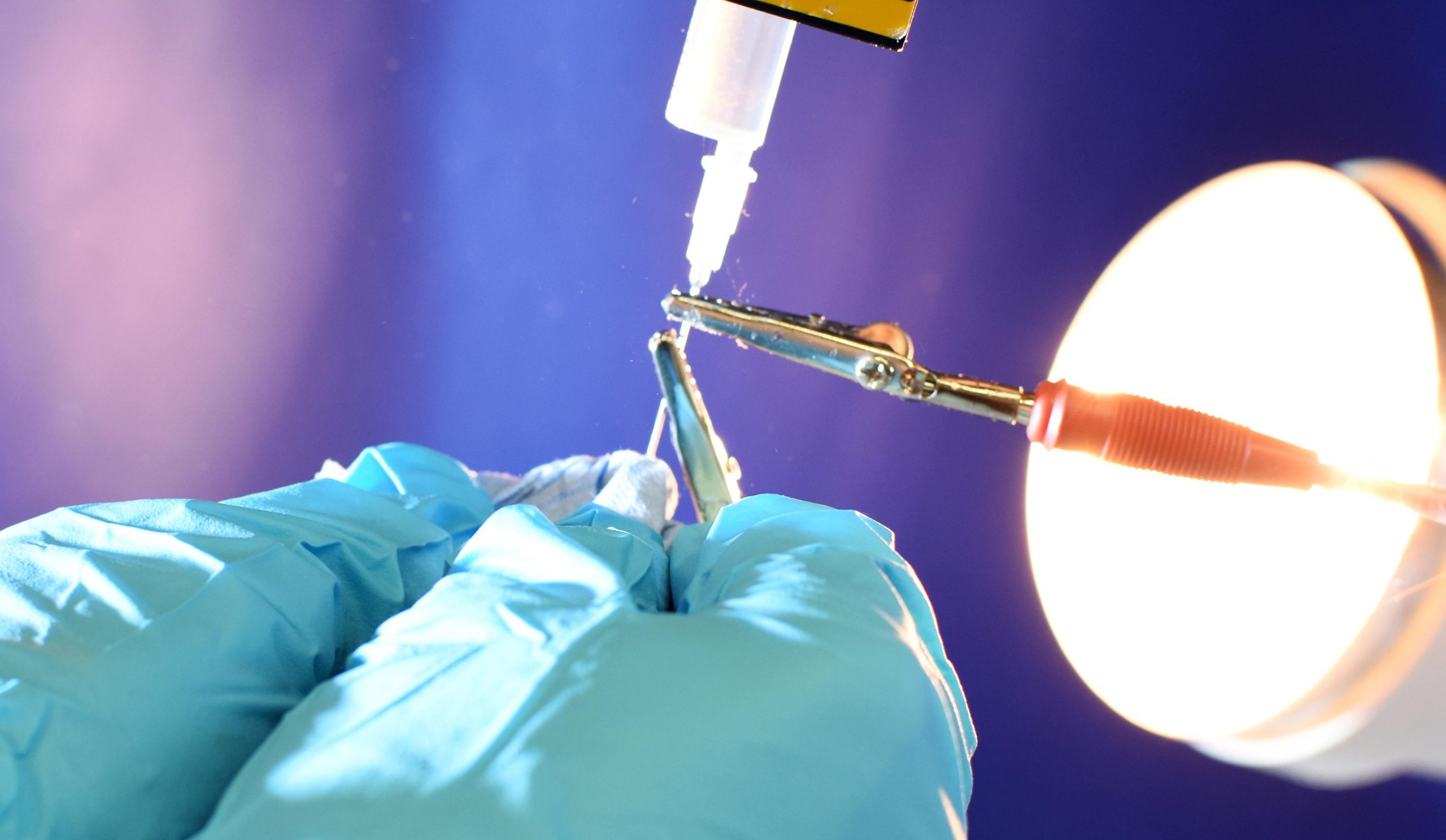
Researchers at the University of Bayreuth develop unique multifibrillar fibers.
Strong and tough yet as light as a feather – materials with this exceptional combination of properties are urgently needed in many industrial sectors and in medicine, as well as being of great interest for scientific research. A research team from the University of Bayreuth has now developed polymer fibers with precisely these properties. Together with partners in Germany, China, and Switzerland, the polymer fibers were characterized. The scientists have published their results in the journal Science.
“The fibers we discovered can be produced easily using high-tech processes that are already established in the industry – and on the basis of polymers that are readily available worldwide. One individual fiber is as thin as a human hair, weighs less than a fruit fly, and yet is very strong: It can lift a weight of 30 grams without tearing. This corresponds to about 150,000 times the weight of a fruit fly. Experiments on the high tensile strength of these fibers have furthermore revealed their high toughness. This means that each individual fiber can absorb a lot of energy,” explains Prof. Dr. Andreas Greiner, who is the head of the research group Macromolecular Chemistry II at the University of Bayreuth, and who guided the research work. Also involved were researchers at the Forschungszentrum Jülich, the Martin Luther University Halle-Wittenberg, the Fraunhofer-Institute for Microstructure of Materials and Systems (IMWS), the Rheinisch-Westfälische Technische Hochschule Aachen University, the Jiangxi Normal University, Nanchang, and the ETH Zürich.
Due to their unique properties, the polymer fibers are ideally suited for technical components that are exposed to high loads. They enable innovative applications in a wide variety of fields, for example in the textile industry or medical technology, in automotive engineering, or in the aerospace industry. In addition, the polymer fibers can be recycled well.
“We are certain that our research results have opened the door to a new, forward-looking class of materials. Practical applications on the part of industry can be expected in the near future. In polymer science, our fibers will be able to provide valuable services in the further research and development of high-performance functional materials,” says Greiner.
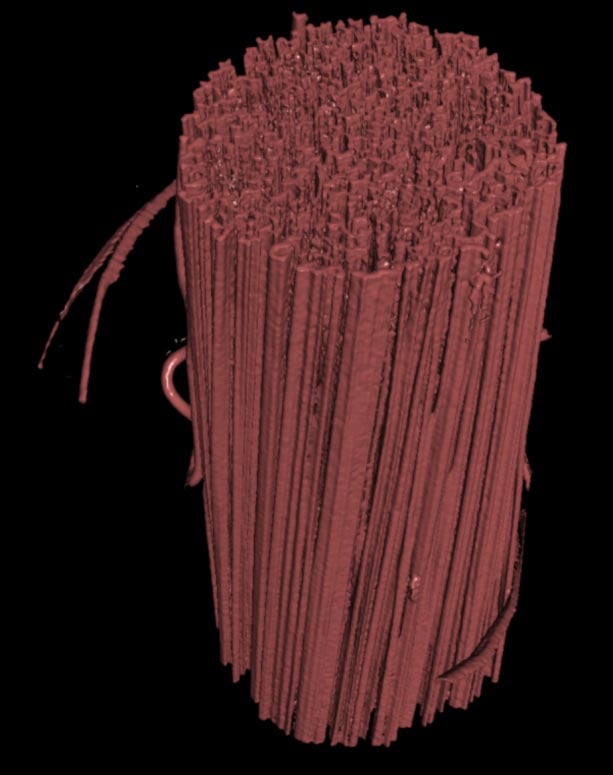
The chemical basis of these promising fibers is polyacrylonitrile. A single fiber with a diameter of about 40,000 nanometers consists of up to 4,000 ultra-thin fibrils. These fibrils are linked by small amounts of an additive. Three-dimensional X-ray images show that the fibrils within the fiber are almost always arranged in the same longitudinal direction.
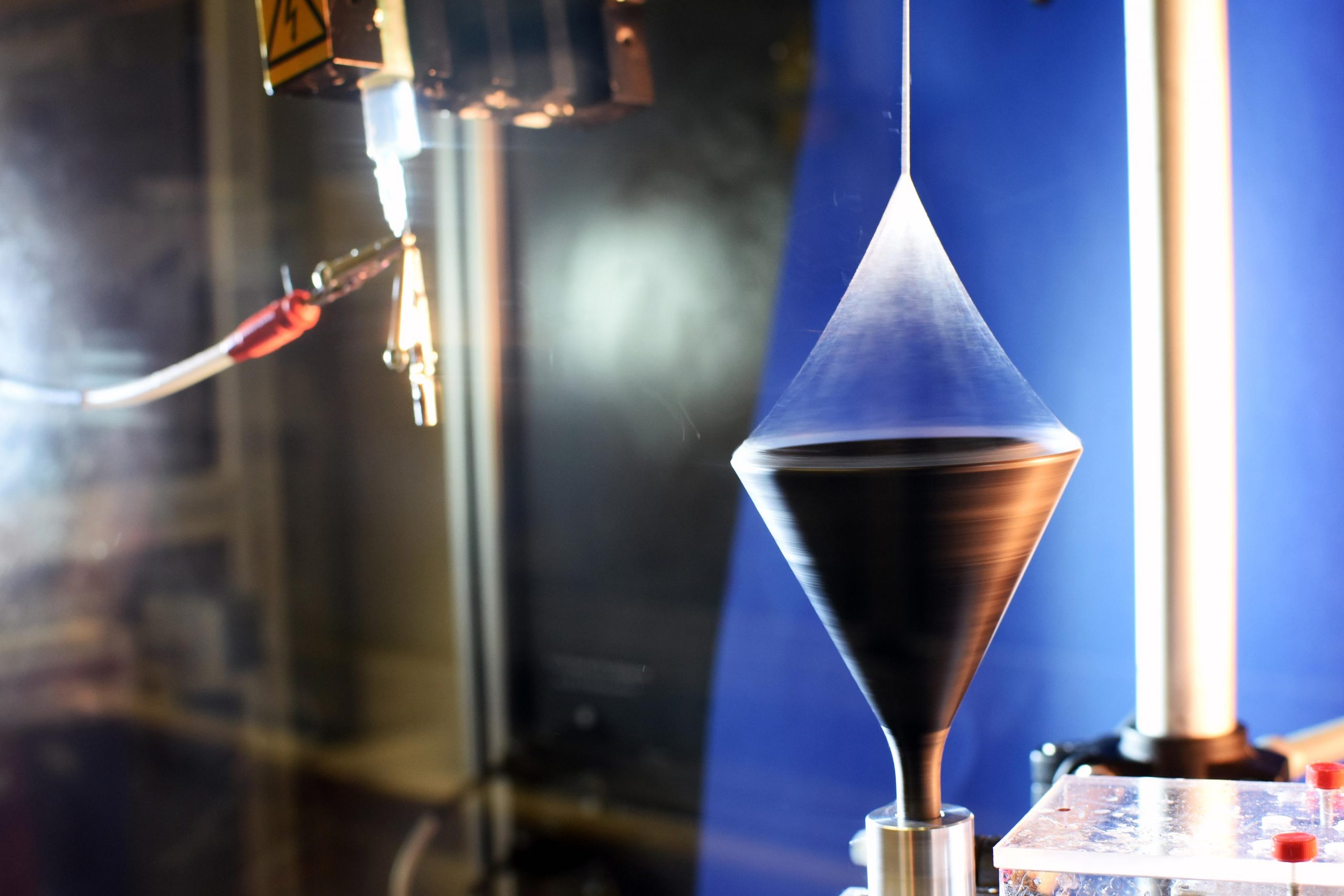
“We prepared these multifibrillar polyacrylonitrile fibers in a laboratory for electrospinning at the University of Bayreuth and extensively tested them for their properties and behavior. Their unique strength in combination with high toughness never ceased to fascinate us,” reports the Bayreuth polymer scientist Prof. Dr. Seema Agarwal. The lead author of the study published in Science is Xiaojian Liao, a doctoral researcher in chemistry in Bayreuth. “I am very pleased that I was able to contribute to this research success in materials science as part of my doctoral thesis. The intensive interdisciplinary contact between chemistry, physics, and material sciences on the Bayreuth campus has provided some critical impetus in recent years,” says Liao.

Reference: “High strength in combination with high toughness in robust and sustainable polymeric materials” by Xiaojian Liao, Martin Dulle, Juliana Martins de Souza e Silva, Ralf B. Wehrspohn, Seema Agarwal, Stephan Förster, Haoqing Hou, Paul Smith and Andreas Greiner, 13 December 2019, Science.
DOI: 10.1126/science.aay9033
Never miss a breakthrough: Join the SciTechDaily newsletter.
Follow us on Google and Google News.