
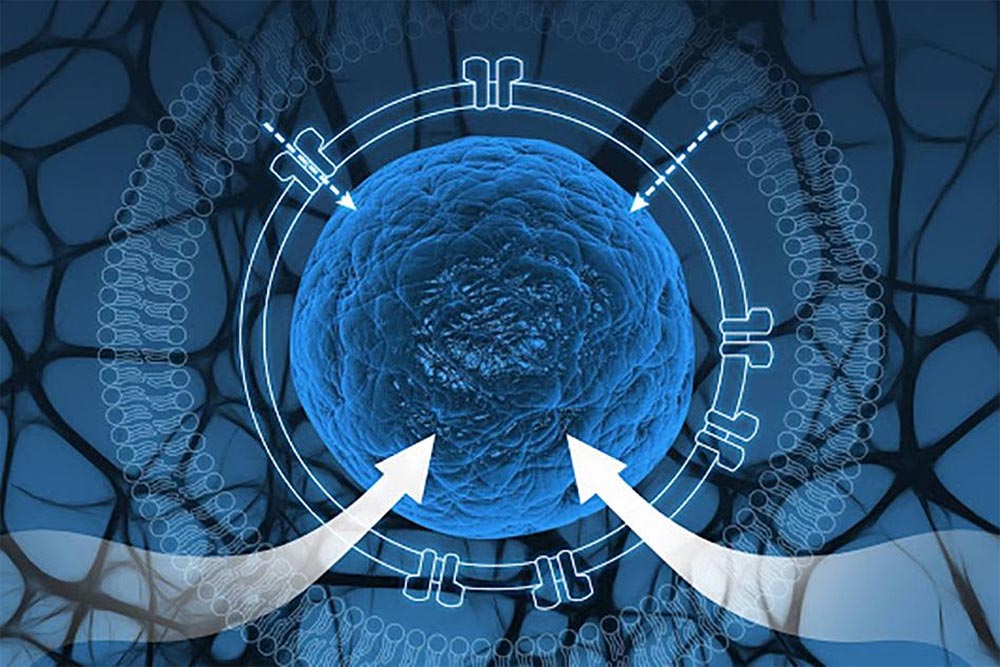
Engineers from MIT have developed a way to isolate genetic circuits within individual synthetic “cells,” preventing the circuits from disrupting each other.
Synthetic biology allows scientists to design genetic circuits that can be placed in cells, giving them new functions such as producing drugs or other useful molecules. However, as these circuits become more complex, the genetic components can interfere with each other, making it difficult to achieve more complicated functions.
MIT researchers have now demonstrated that these circuits can be isolated within individual synthetic “cells,” preventing them from disrupting each other. The researchers can also control communication between these cells, allowing for circuits or their products to be combined at specific times.
“It’s a way of having the power of multicomponent genetic cascades, along with the ability to build walls between them so they won’t have cross-talk. They won’t interfere with each other in the way they would if they were all put into a single cell or into a beaker,” says Edward Boyden, an associate professor of biological engineering and brain and cognitive sciences at MIT. Boyden is also a member of MIT’s Media Lab and McGovern Institute for Brain Research, and an HHMI-Simons Faculty Scholar.
This approach could allow researchers to design circuits that manufacture complex products or act as sensors that respond to changes in their environment, among other applications.
Boyden is the senior author of a paper describing this technique in the November 14 issue of Nature Chemistry. The paper’s lead authors are former MIT postdoc Kate Adamala, who is now an assistant professor at the University of Minnesota, and former MIT grad student Daniel Martin-Alarcon. Katriona Guthrie-Honea, a former MIT research assistant, is also an author of the paper.
Circuit control
The MIT team encapsulated their genetic circuits in droplets known as liposomes, which have a fatty membrane similar to cell membranes. These synthetic cells are not alive but are equipped with much of the cellular machinery necessary to read DNA and manufacture proteins.
By segregating circuits within their own liposomes, the researchers are able to create separate circuit subroutines that cannot run in the same container at the same time, but can run in parallel to each other, communicating in controlled ways. This approach also allows scientists to repurpose the same genetic tools, including genes and transcription factors (proteins that turn genes on or off), to do different tasks within a network.
“If you separate circuits into two different liposomes, you could have one tool doing one job in one liposome, and the same tool doing a different job in the other liposome,” Martin-Alarcon says. “It expands the number of things that you can do with the same building blocks.”
This approach also enables communication between circuits from different types of organisms, such as bacteria and mammals.
As a demonstration, the researchers created a circuit that uses bacterial genetic parts to respond to a molecule known as theophylline, a drug similar to caffeine. When this molecule is present, it triggers another molecule known as doxycycline to leave the liposome and enter another set of liposomes containing a mammalian genetic circuit. In those liposomes, doxycycline activates a genetic cascade that produces luciferase, a protein that generates light.
Using a modified version of this approach, scientists could create circuits that work together to produce biological therapeutics such as antibodies, after sensing a particular molecule emitted by a brain cell or other cell.
“If you think of the bacterial circuit as encoding a computer program, and the mammalian circuit is encoding the factory, you could combine the computer code of the bacterial circuit and the factory of the mammalian circuit into a unique hybrid system,” Boyden says.
The researchers also designed liposomes that can fuse with each other in a controlled way. To do that, they programmed the cells with proteins called SNAREs, which insert themselves into the cell membrane. There, they bind to corresponding SNAREs found on surfaces of other liposomes, causing the synthetic cells to fuse. The timing of this fusion can be controlled to bring together liposomes that produce different molecules. When the cells fuse, these molecules are combined to generate a final product.
More modularity
The researchers believe this approach could be used for nearly any application that synthetic biologists are already working on. It could also allow scientists to pursue potentially useful applications that have been tried before but abandoned because the genetic circuits interfered with each other too much.
“The way that we wrote this paper was not oriented toward just one application,” Boyden says. “The basic question is: Can you make these circuits more modular? If you have everything mish-mashed together in the cell, but you find out that the circuits are incompatible or toxic, then putting walls between those reactions and giving them the ability to communicate with each other could be very useful.”
Vincent Noireaux, an associate professor of physics at the University of Minnesota, described the MIT approach as “a rather novel method to learn how biological systems work.”
“Using cell-free expression has several advantages: Technically the work is reduced to cloning (nowadays fast and easy), we can link information processing to biological function like living cells do, and we work in isolation with no other gene expression occurring in the background,” says Noireaux, who was not involved in the research.
Another possible application for this approach is to help scientists explore how the earliest cells may have evolved billions of years ago. By engineering simple circuits into liposomes, researchers could study how cells might have evolved the ability to sense their environment, respond to stimuli, and reproduce.
“This system can be used to model the behavior and properties of the earliest organisms on Earth, as well as help establish the physical boundaries of Earth-type life for the search of life elsewhere in the solar system and beyond,” Adamala says.
Reference: “Engineering genetic circuit interactions within and between synthetic minimal cells” by Katarzyna P. Adamala, Daniel A. Martin-Alarcon, Katriona R. Guthrie-Honea and Edward S. Boyden, 14 November 2016, Nature Chemistry.
DOI: 10.1038/nchem.2644
Never miss a breakthrough: Join the SciTechDaily newsletter.
Follow us on Google and Google News.