
Close Menu
    Facebook X (Twitter) Instagram
    SciTechDaily
    • Biology
    • Chemistry
    • Earth
    • Health
    • Physics
    • Science
    • Space
    • Technology
    Facebook X (Twitter) Pinterest YouTube RSS
    SciTechDaily
    Home»Space»NASA Certifies New Launch Control System for Artemis I Mission
    Space

    NASA Certifies New Launch Control System for Artemis I Mission

    By Anna Heiney, NASA's John F. Kennedy Space CenterApril 9, 2021No Comments5 Mins Read
    Facebook Twitter Pinterest Telegram LinkedIn WhatsApp Email Reddit
    Share
    Facebook Twitter LinkedIn Pinterest Telegram Email Reddit
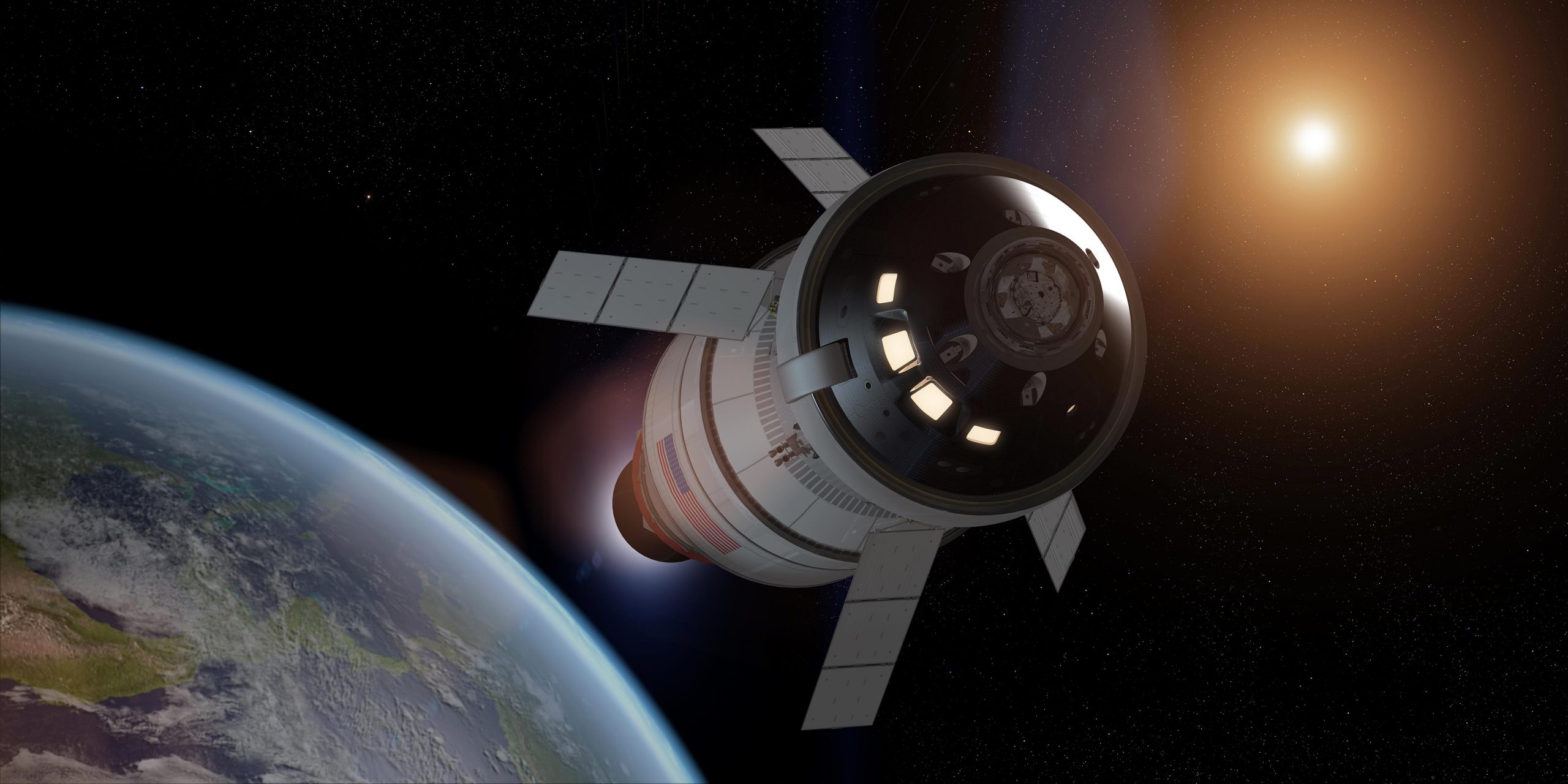
    NASA Orion Spacecraft Trans lunar Injection Burn
    Illustration of Orion spacecraft performing a trans-lunar injection burn. Credit: NASA

    NASA’s SCCS system has been certified to manage the complex data flow and communications for the Artemis I launch.

    When NASA’s Space Launch System (SLS) rocket and Orion spacecraft lift off from the agency’s Kennedy Space Center in Florida on the Artemis I mission, the amount of data generated by the rocket, spacecraft, and ground support equipment will be about 100 megabytes per second. The volume and speed of this information demands an equally complex and robust computer system to process and deliver that data to the launch team and corresponding mission systems in real time.

    That computer software and hardware – called the spacecraft command and control system (SCCS) – is now certified for use on Artemis I. Shawn Quinn, director of NASA Engineering at Kennedy, and the KSC Engineering Design Certification Review Board signed off on the system at the conclusion of a recent design certification review for SCCS.

    Artemis I Launch Team Countdown Simulation Inside Launch Control Center Firing Room 1
    Members of the Artemis I launch team participate in a countdown simulation inside the Launch Control Center’s Firing Room 1 at NASA’s Kennedy Space Center in Florida on February 3, 2020. A team of nearly 100 engineers from Orion, Space Launch System and Exploration Ground Systems came together to work through a series of simulated challenges, as well as a final countdown procedure. Artemis I will be the first integrated tet flight of the Orion spacecraft and SLS rocket – the system that will ultimately land the first woman and the next man on the Moon. Credit: NASA/Kim Shiflett

    Real-Time Communication with Space and Ground Systems

    The system is the electronic hub where information traveling to and from the SLS core stage, the rocket’s Interim Cryogenic Propulsion Stage (ICPS), Orion, ground systems, and the operators inside the firing room intersect. During loading and launch, the software will process up to 575,000 changes per second.

    “We’re flying three vehicles in parallel – Orion spacecraft, ICPS, and SLS core stage – and SCCS needs to be able to communicate with all three simultaneously,” said Mike Van Houten, the Launch Control System project manager in the Command, Control and Communications organization within EGS. “While we’re ‘talking’ with the spacecraft and vehicles, we’re also receiving data from Kennedy’s ground systems – programmable logic controllers, subsystems in the field, and equipment on the mobile launcher.”

    Making sense of that much data is as complex as efficiently managing the real time movements of hundreds of thousands of people within a large metropolitan area, Van Houten said.

    NASA Launch Director Charlie Blackwell-Thompson
    NASA Launch Director Charlie Blackwell-Thompson follows operations at her console in Firing Room 1 at the Kennedy Space Center’s Launch Control Center during a countdown simulation for Artemis I. It was the agency’s first simulation of a portion of the countdown for the first launch of a Space Launch System rocket and Orion spacecraft that will eventually take astronauts beyond low-Earth orbit to destinations such as the Moon and Mars. Credit: NASA/Cory Huston

    “Each bit of telemetry data coming from a different interface is like a person arriving into the city via a plane, train, automobile, bus, or ferry,” he explained. “Just like each person, each bit of data needs to arrive at a unique destination, whether that’s a display, application, or recording. And all the movements have to be synchronized so data arrives exactly where it should be in the quickest timeframe possible.”

    All this information is integrated into the displays shown on consoles throughout Firing Room 1 and Firing Room 2 inside Kennedy’s Launch Control Center, enabling Operators to make informed decisions on how to continue the activity in progress.

    Custom Software Built for Artemis Missions
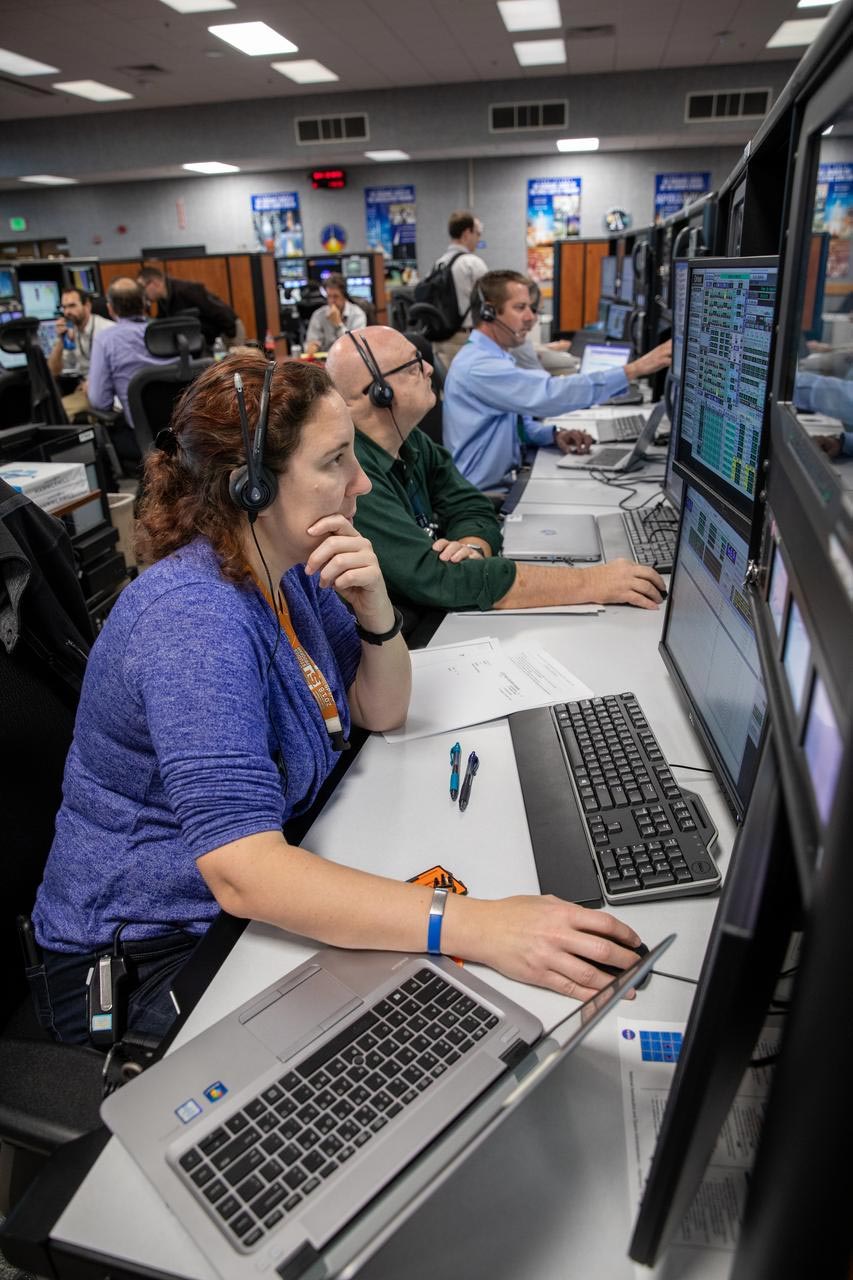
    Launch Control Center Firing Room 1
    Members of the Artemis I launch team participate in a countdown simulation inside the Launch Control Center’s Firing Room 1 at NASA’s Kennedy Space Center in Florida on February 3, 2020. Credit: NASA/Kim Shiflett

    Comprising a mix of custom-built software and off-the-shelf products, the SCCS was developed specifically to manage processing and launch operations for Artemis missions. As Artemis began to take shape, NASA’s Exploration Ground Systems (EGS) team and its lead contractor, Jacobs, advanced the effort to develop a robust, updated system.

    The certification marks the end of the system’s development and signals the start of the “sustaining” phase of the project for Artemis I. Moving forward, countdown and launch simulations performed by the EGS-Jacobs team will help train the launch team and fine-tune the SCCS.

    During these simulations, Operators step through prelaunch checklists to practice the procedures for liftoff and ascent. Some simulations focus on specific operations while others walk the team through critical portions of the countdown. Each rehearsal allows the team to gather useful data to refine the system.

    “The SCCS system engineering and performance teams evaluate the data after each simulation to ensure the system is performing per specifications and no unexpected errors were triggered,” Van Houten said. “It gives the SCCS team an indication of where we need to tackle problems before the next sim or operational event.”

    Lessons learned from launching the uncrewed Artemis I will help SCCS developers identify process, performance, and technical changes needed for future missions. The developers will focus on capturing new requirements and the expectations of stakeholders such as the Artemis I launch director, firing room operators, the ground support equipment team, the ground to flight application software team, the model and simulation team, and the launch training team. This information will help the SCCS developers make system upgrades to support the crewed Artemis II flight test and future missions.

    Under the Artemis program, NASA is leading the way in human exploration of deep space with increasingly complex missions to explore the Moon and prepare for future missions to send astronauts to Mars.

    Never miss a breakthrough: Join the SciTechDaily newsletter.
    Follow us on Google and Google News.

    ARTEMIS Mission Kennedy Space Center NASA
    Share. Facebook Twitter Pinterest LinkedIn Email Reddit

    Related Articles

    A Massive Rocket Is Rolling and NASA’s Return to the Moon Is Getting Real

    Artemis I Progress Continues in NASA’s Vehicle Assembly Building

    NASA Apollo to Artemis: Drilling on the Moon

    NASA’s Artemis I SLS Rocket Core Stage Transported to Its New Home

    Barging In: Mighty SLS Core Stage for Artemis I Mission Arrives at Kennedy Space Center

    Space Launch System Core Stage Heads to NASA’s Kennedy Space Center

    Orion Spacecraft Ready to Fuel Up for NASA’s Artemis I Mission Beyond the Moon

    Searching With Sasquatch: Recovering NASA’s Orion Spacecraft

    Orion Spacecraft Returns to Kennedy Space Center for Final Preparations Before Artemis I Launch

    Leave A Reply Cancel Reply

    • Facebook
    • Twitter
    • Pinterest
    • YouTube

    Don't Miss a Discovery

    Subscribe for the Latest in Science & Tech!

    Trending News

    Scientists Discover Game-Changing New Way To Treat High Cholesterol

    This Small Change to Your Exercise Routine Could Be the Secret to Living Longer

    Scientists Discover 430,000-Year-Old Wooden Tools, Rewriting Human History

    AI Could Detect Early Signs of Alzheimer’s in Under a Minute – Far Before Traditional Tests

    What if Dark Matter Has Two Forms? Bold New Hypothesis Could Explain a Cosmic Mystery

    This Metal Melts in Your Hand – and Scientists Just Discovered Something Strange

    Beef vs. Chicken: Surprising Results From New Prediabetes Study

    Alzheimer’s Breakthrough: Scientists Discover Key Protein May Prevent Toxic Protein Clumps in the Brain

    Follow SciTechDaily
    • Facebook
    • Twitter
    • YouTube
    • Pinterest
    • Newsletter
    • RSS
    SciTech News
    • Biology News
    • Chemistry News
    • Earth News
    • Health News
    • Physics News
    • Science News
    • Space News
    • Technology News
    Recent Posts
    • Milk Nanoparticles Could Revolutionize Treatment for Deadly Bile Duct Cancer
    • Largest-Ever Study Finds Medicinal Cannabis Ineffective for Anxiety, Depression, PTSD
    • Scientists Reveal Why a Common Drug Causes Birth Defects and Autism
    • A Medieval Japanese Diary Just Helped Scientists Detect a Dangerous Solar Event
    • Humans Returned to Britain 500 Years Earlier Than Scientists Thought
    Copyright © 1998 - 2026 SciTechDaily. All Rights Reserved.
    • Science News
    • About
    • Contact
    • Editorial Board
    • Privacy Policy
    • Terms of Use

    Type above and press Enter to search. Press Esc to cancel.