
Close Menu
    Facebook X (Twitter) Instagram
    SciTechDaily
    • Biology
    • Chemistry
    • Earth
    • Health
    • Physics
    • Science
    • Space
    • Technology
    Facebook X (Twitter) Pinterest YouTube RSS
    SciTechDaily
    Home»Space»NASA Conducts 2nd RS-25 Engine Hot Fire Test for World’s Most Powerful Rocket
    Space

    NASA Conducts 2nd RS-25 Engine Hot Fire Test for World’s Most Powerful Rocket

    By NASA’s Stennis Space CenterApril 7, 20214 Comments3 Mins Read
    Facebook Twitter Pinterest Telegram LinkedIn WhatsApp Email Reddit
    Share
    Facebook Twitter LinkedIn Pinterest Telegram Email Reddit
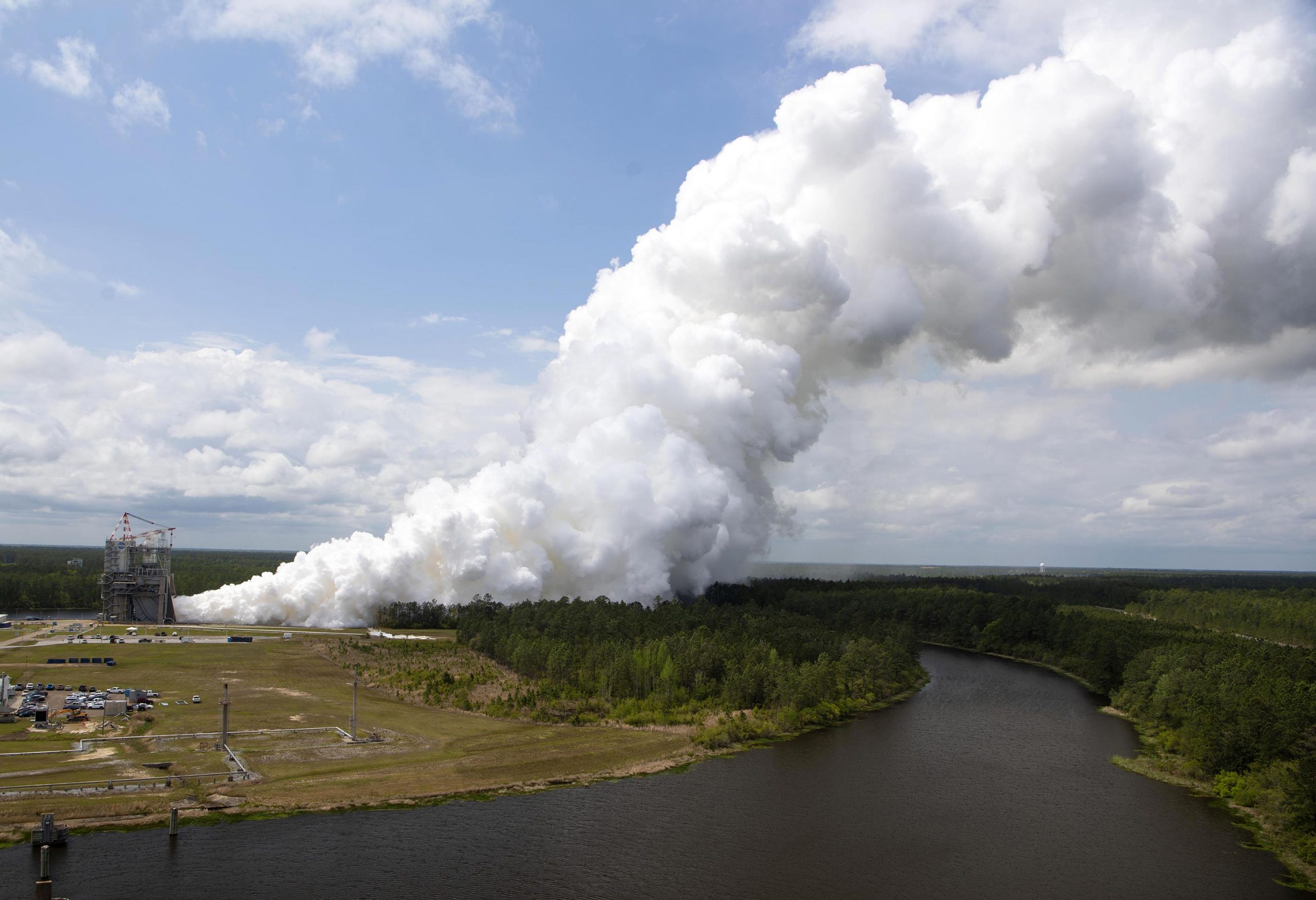
    Second RS-25 Engine Hot Test
    Second RS-25 engine hot test. Credit: NASA/SSC

    NASA Conducts Second Hot Fire Test for Future Moon Missions

    NASA conducted a second RS-25 single engine hot fire test on April 6, 2021, as part of a new series to support the development and production of engines for the agency’s Space Launch System (SLS) rocket on future missions to the Moon.

    The full-duration hot fire of more than eight minutes (500 seconds) was conducted on the A-1 Test Stand at NASA’s Stennis Space Center near Bay St. Louis. It is part of a scheduled seven-test series designed to provide valuable data for Aerojet Rocketdyne, lead contractor for the SLS engines, as it begins production of new RS-25 engines for use after the first four SLS flights.

    Four RS-25 engines help power SLS at launch, firing simultaneously to generate a combined 1.6 million pounds of thrust at launch and 2 million pounds of thrust during ascent. The RS-25 engines for the first four SLS flights are upgraded space shuttle main engines and have completed certification testing.
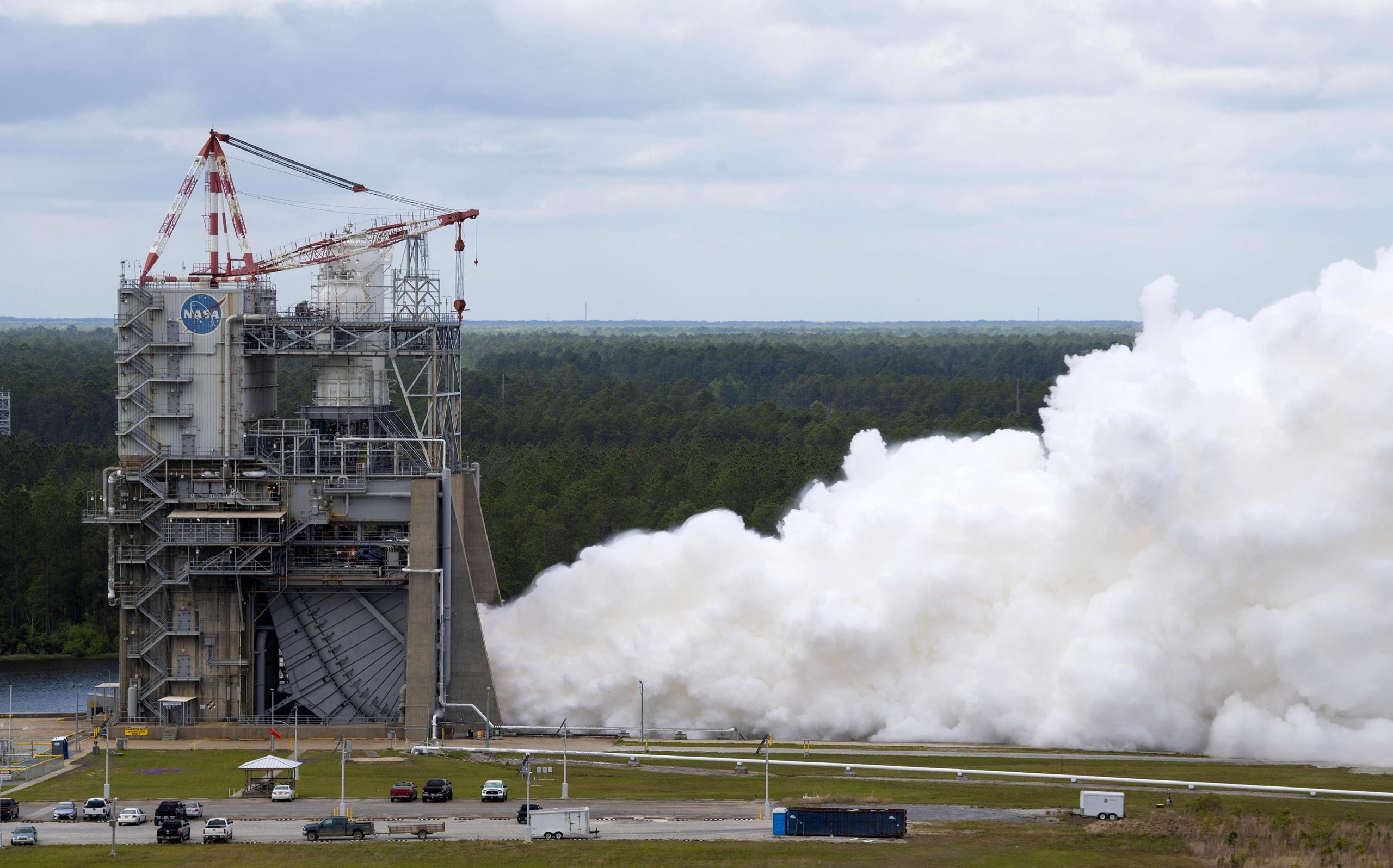
    Second RS-25 Engine Test
    Credit: NASA/SSC

    During the new test series, operators will focus on evaluating new engine components and reducing risk in engine operation. They will fire the engine through a range of operating conditions to demonstrate and verify its capabilities and to provide data to enhance production of new engines being manufactured with cutting-edge and cost-saving technologies.

    The initial test of the new series was conducted on January 28 for 500 seconds as well, the same amount of time the engines must fire during a launch to power the SLS rocket to orbit. During the subsequent full-duration hot fire on April 6, operators also gimbaled the RS-25 engine, using a new NASA-designed vector control system for the first time since it was installed. “Gimbaling” refers to how the engine must move on a tight circular axis in order to ensure proper flight trajectory.

    NASA is building SLS as the world’s most powerful rocket. SLS will fly to the Moon as part of NASA’s Artemis program, including the Artemis I uncrewed test flight this year that will pave the way for future flights with astronauts to explore the lunar surface and prepare for missions to Mars. RS-25 tests at Stennis are conducted by a combined team of NASA, Aerojet Rocketdyne and Syncom Space Services operators. Syncom Space Services is the prime contractor for Stennis facilities and operations.

    Never miss a breakthrough: Join the SciTechDaily newsletter.
    Follow us on Google and Google News.

    ARTEMIS Mission NASA NASA's Stennis Space Center Popular Space Launch System
    Share. Facebook Twitter Pinterest LinkedIn Email Reddit

    Related Articles

    To the Moon and Beyond: NASA’s Artemis Engine Roars in Latest Test

    Moonbound Majesty: Astronauts’ Inside Look at SLS, the Engine of Artemis Dreams

    Blasting Beyond: NASA Ignites New RS-25 Engine Test for Moon Missions

    NASA Upgrades Powerful SLS Rocket Engines – Production Restarted for Next Era of Space Exploration

    NASA Conducts Long Duration Hot Fire Test of Redesigned RS-25 Moon Rocket Engine

    NASA Tests Upgraded Artemis Moon Rocket Engines at 113% Power Level

    NASA’s Artemis I Moon Rocket Ready To Launch – How To Watch Live

    NASA Completes Artemis I Moon Rocket Test, Moves Forward Toward Launch

    NASA Artemis I Moon Rocket Test: SLS Fully Fueled for First Time Despite Leak

    4 Comments

    1. The 10th Man on April 7, 2021 7:16 am

      If you want to trust NASA with your life and climb into that thing…well….Just remember that NASA and their, “Good Old Boy” network that murdered over 20 American Astronauts with their corruption, has not changed one bit. Your going to die if you launch on that rocket. Period.

      Reply
    2. Smokey on April 8, 2021 6:26 am

      Not one to understate your case , are you ?

      Reply
    3. Aaron M Kirk on April 8, 2021 10:25 am

      Send it!

      Reply
    4. spark on April 8, 2021 6:05 pm

      Nasa is the most corrupt agency in U.S.

      Reply
    Leave A Reply Cancel Reply

    • Facebook
    • Twitter
    • Pinterest
    • YouTube

    Don't Miss a Discovery

    Subscribe for the Latest in Science & Tech!

    Trending News

    Bone-Strengthening Discovery Could Reverse Osteoporosis

    Scientists Uncover Hidden Trigger Behind Stem Cell Aging

    Scientists Find Way to Reverse Fatty Liver Disease Without Changing Diet

    Could Humans Regrow Limbs? New Study Reveals Promising Genetic Pathway

    Scientists Reveal Eating Fruits and Vegetables May Increase Your Risk of Lung Cancer

    Scientists Reverse Brain Aging With Simple Nasal Spray

    Scientists Uncover Potential Brain Risks of Popular Fish Oil Supplements

    Scientists Discover a Surprising Way To Make Bread Healthier and More Nutritious

    Follow SciTechDaily
    • Facebook
    • Twitter
    • YouTube
    • Pinterest
    • Newsletter
    • RSS
    SciTech News
    • Biology News
    • Chemistry News
    • Earth News
    • Health News
    • Physics News
    • Science News
    • Space News
    • Technology News
    Recent Posts
    • This Student Recreated the Universe in a Bottle. What She Discovered Could Help Reveal How Life Started on Earth
    • Alzheimer’s Symptoms May Start Outside the Brain, Study Finds
    • Cancer’s Secret Weapon? Scientists Reveal How Tumors “Learn” To Survive Treatment
    • Millions Take This Popular Supplement – Scientists Discover a Concerning Link to Heart Failure
    • What Makes Rubber So Strong? Scientists Finally Solve 100-Year-Old Mystery
    Copyright © 1998 - 2026 SciTechDaily. All Rights Reserved.
    • Science News
    • About
    • Contact
    • Editorial Board
    • Privacy Policy
    • Terms of Use

    Type above and press Enter to search. Press Esc to cancel.