
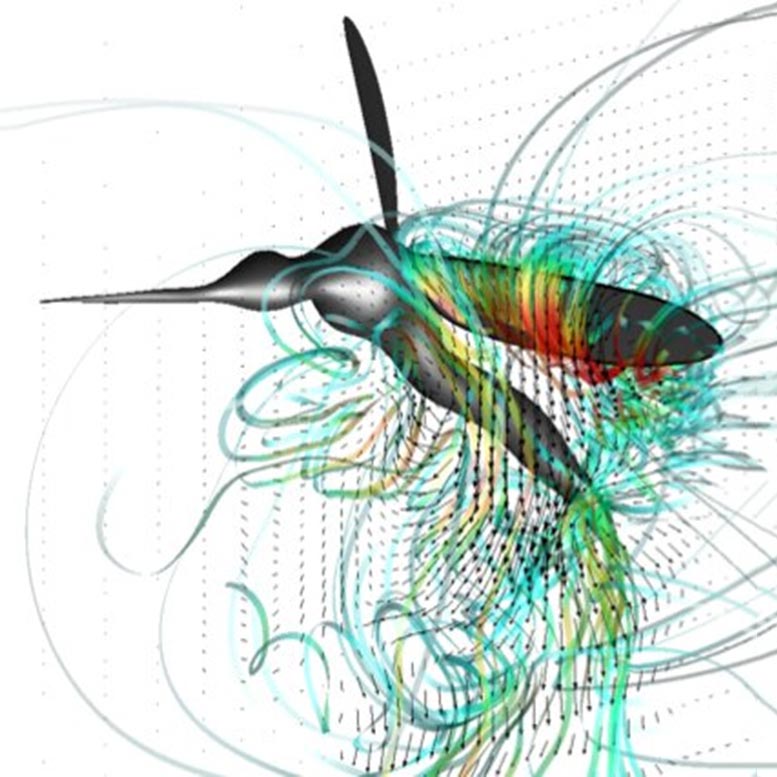
Research could also lead to nontoxic method using sound to diminish mosquito breeding.
Mosquitoes flap their wings not just to stay aloft but for two other critical purposes: to generate sound and to point that buzz in the direction of a potential mate, researchers at Johns Hopkins University have discovered.
Their findings about the aerodynamics of mosquito wings could have implications for building quieter drones and for devising nontoxic methods to trap and exterminate the pests.
In a research paper published in Bioinspiration and Biomimetics, a team from the university’s Whiting School of Engineering, Rajat Mittal, a mechanical engineering professor, and Jung-Hee Seo, an associate research professor, explain the aerodynamics and acoustics of the mosquito mating ritual through computer modeling.
The speedy flapping and truncated range, or amplitude, is far faster and shorter than similarly-sized winged insects such as fruit flies. That’s why mosquitoes, unlike fruit flies, possess a “wing tone buzz” that is “particularly annoying to humans.”
“The same wings that are producing sound are also essential for them to fly,” said Mittal, an expert in computational fluid dynamics. “They somehow have to do both at the same time. And they’re effective at it. That’s why we have so much malaria and other mosquito-borne diseases.”
His team’s research shows that “everything about mosquitoes seems perfectly adapted for accomplishing this sound-based communication.”
“Thus,” the paper states, “understanding the strategies and adaptations employed by insects such as mosquitoes to control their aeroacoustic noise could eventually provide insights into the development of quiet drones and other bioinspired micro-aerial vehicles.”
In addition to devising quieter rotors for drones, Mittal said the findings will likely inform research into how sound can be used to interrupt the mating ritual. That could result in non-toxic methods to disrupt breeding and diminish mosquito populations.
“We continue to pursue that side of the research,” he said. “At the right frequency, the mosquitoes have a hard time flying and can’t complete their mating ritual.”
With a high-frequency buzzing sound, the male mosquito attempts to connect with the low-frequency hum of a female. To do so, the team found the mosquito must flap its long, slender wings at high frequencies while also rotating them rapidly at the end of each stroke.
Yes, that annoying drill-like shrill that precedes a female’s bite is also a vibrating serenade to a male mosquito’s antennae.
Unlike other flying insects their size, Mittal said mosquitoes have adapted their anatomy and flight physiology to solve the “complex multifactorial problem” of trying to fly and flirt at the same time.
“Understanding the strategies and adaptations employed by insects such as mosquitoes to control their aeroacoustic noise could eventually provide insights into the development of quiet drones and other bioinspired micro-aerial vehicles.”
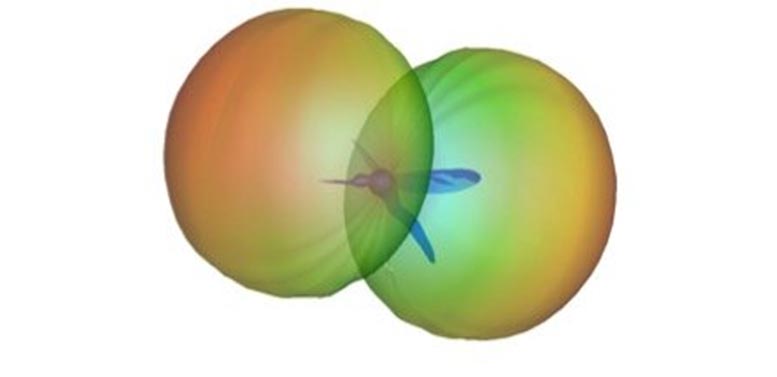
“The wing tones, as well as the aerodynamic forces for flight, are highly directional and mosquitoes need to simultaneously control both for the successful completion of a mate-chase,” the paper reports.
The quick rotation of the wings “generate additional lift force” to keep them aloft, according to the research. But this same rotation also aids in directing the “wing tone” in a forward direction, which is important for chasing potential mates.
“If I’m talking to you and I turn my back, you’ll have a hard time hearing me,” Mittal explained. “They have to be able to direct their sounds properly.”
The speedy flapping and truncated range, or amplitude, is far faster and shorter than similarly-sized winged insects such as fruit flies. That’s why mosquitoes, unlike fruit flies, possess a “wing tone buzz” that is “particularly annoying to humans,” according to the paper.
The “long and slender wing is perfect for making sounds,” Mittal said. “Fruit flies, which are similar in size to mosquitoes, have short and stubby wings. Furthermore, mosquitoes are flapping at much higher frequencies than fruit flies. There is a reason for this. Higher frequencies are better at producing sounds.”
Reference: “Mechanism and scaling of wing tone generation in mosquitoes” by Jung-Hee Seo, Tyson L Hedrick and Rajat Mittal, 6 November 2019, Bioinspiration & Biomimetics.
DOI: 10.1088/1748-3190/ab54fc
The paper was co-authored with Tyson L. Hedrick, a biology professor at the University of North Carolina at Chapel Hill.
The work was funded in part by a $750,000 grant (RGP0038/2019) announced in July from the Human Frontier Science Program.
Never miss a breakthrough: Join the SciTechDaily newsletter.
Follow us on Google and Google News.