
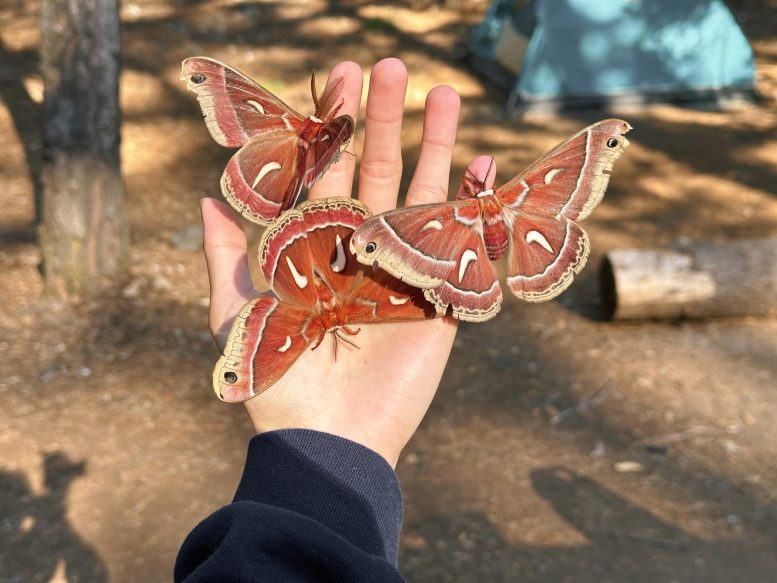
California is teeming with thousands of insect species science has yet to name, and its wild places hold more distinct worlds of tiny creatures than researchers realized.
California is home to an astonishing variety of insects, from the deserts of the Mojave to the forests of the Sierra Nevada. But scientists are discovering that the state’s insect diversity is far greater than previously believed.
A new study in Ecography estimates that California supports more than 60,000 insect species, far exceeding earlier estimates. Scientists have formally described only about two-thirds of them. Led by researchers at the Natural History Museum of Los Angeles County, the study also found that nearly every location sampled had its own distinct insect community.
The findings suggest that conserving California’s insect life will require protecting a wide range of habitats. Even places with similar climates and landscapes can harbor different species, making it difficult for any single protected area to represent the state’s extraordinary diversity.
Building California’s Insect DNA Library
The research is the first publication from the California Insect Barcode Initiative (CIBI), a $6 million project with an ambitious goal: collect and identify every insect species in California. Although insects are the most diverse group of animals on land, they remain underrepresented in large-scale conservation assessments.
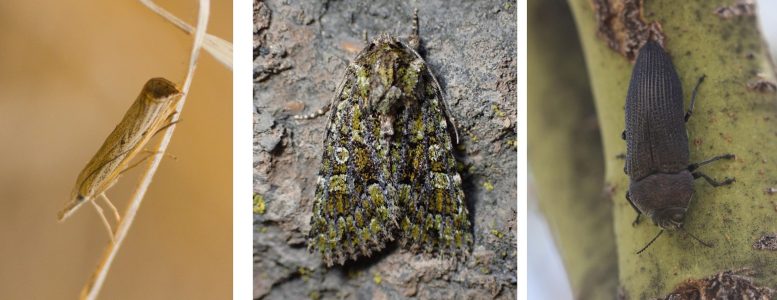
Researchers used DNA barcoding on more than one million insect specimens. The technique compares short sections of DNA to help distinguish species, giving scientists a way to investigate diversity that can be difficult to recognize from appearance alone.
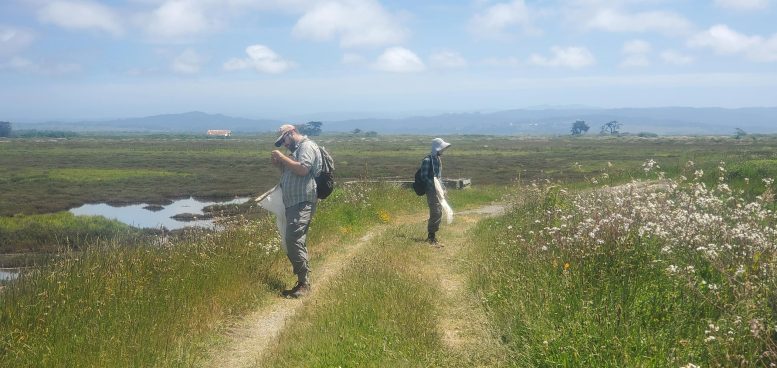
The effort brought together the Natural History Museum of Los Angeles County, California Department of Food and Agriculture, UC Berkeley, UC Riverside, San Diego Natural History Museum, and California Academy of Sciences in San Francisco. Researchers gathered tissue samples from museum collections, deployed Malaise traps across 72 ecoregions, and made collecting expeditions to 454 additional locations statewide.
Museum specimens extended the project’s reach beyond what researchers could collect in the field. Fresh sampling added another essential piece, with volunteers helping keep traps operating week after week. Although Malaise traps capture insects passively, collecting their contents and maintaining them takes sustained effort.
Volunteers Kept The Traps Running
“This is an example of community science. Volunteers stepped forward to help with sampling by managing traps, which we would not have been able to do for continuous weekly sampling,” says study co-author Giar-Ann Kung, the museum’s entomology collections manager.
Kung joined researchers and volunteers across California in setting traps and collecting insects. Some participants maintained sampling sites for years, providing a continuity that the research team could not have achieved alone.
“There are people like Sara Fairchild and Michael Nance who managed a Malaise trap for over three years at a site in the high desert, which is the longest continuous site for the project. That could not have been accomplished without them.”
Distinct Insect Communities Across California
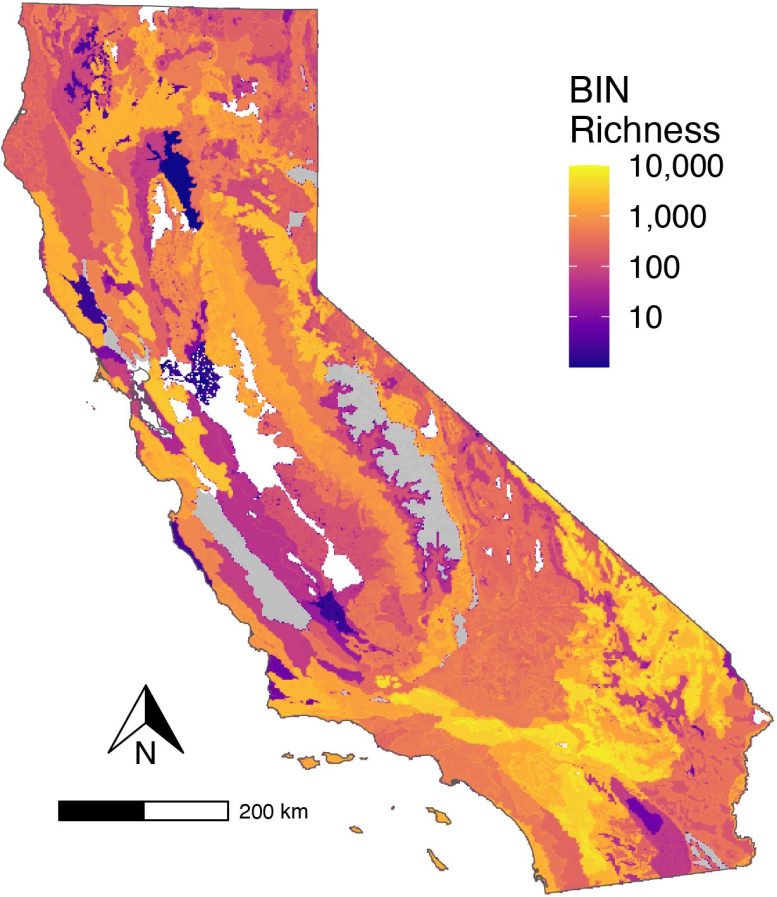
To explore how insect diversity varies across California, the researchers compared ecoregions, areas grouped by the Environmental Protection Agency according to shared ecosystem characteristics. They used Level 3 classifications, including the Mojave Basin and Range, Southern California Mountains, and Sierra Nevada. Of these regions, the Mojave Basin and Range had the greatest number of insect species.
Although similar environments shared some patterns, each region had its own mix of insects. “The deserts are kind of more similar to each other, and the mountains in northern California are a little bit more similar to each other, but every part of the state hosts a really different insect fauna,” says Dr. Barkdull.
Those differences also appeared at a smaller scale, with individual collecting sites within the same ecoregion harboring distinct insect communities. Together, the findings highlight the need to protect a wide range of California’s wild places.
Reference: “DNA barcoding of more than one million insect specimens indicates that at least one third of California’s insect biodiversity remains undiscovered” by Austin J. Baker, Brad Balukjian, Hilary Bayer, Jen Bayer, Daniel Gluesenkamp, Christopher C. Grinter, John M. Heraty, Amanda K. Hodson, Eva Sofia Horna Lowell, Colleen Kamoroff, Severyn Korneyev, Giar-Ann Kung, Peter Oboyski, Leslie Saul-Gershenz, Jayme E. Sones, Rebecca Stiling, Christiane Weirauch, Shayda Abidi, Elliott Allen, Rachel Allingham, Edeline Anthoniraj, John S. Ascher, Kelsey Bares, Julia G. Betz, J. R. Blair, Christina L. Boser, Christina M. Buck, Franklyn Cala-Riquelme, Stephanie Castillo, Ellie Deer, Shahan Derkarabetian, Natalia von Ellenrieder, Lauren Esposito, Sara Fairchild, Glenn Fine, Brian L. Fisher, Glen W. Forister, Lorenzo Fraysse, Juan Grados-Arauco, Laura Gaudette, Michael Gengo, Jacob Gorneau, Scott Hardage, Martin Hauser, Paul D. N. Hebert, Elizabeth H.T. Hiroyasu, Pam Horsley, Camille Hymes, Jacob Jones, Kevin L. Keegan, Peter H. Kerr, Emma Mathilde Kurstjens, Jesse Laine, Bethany Leach, Socrates Letana, Valerie Levesque-Beaudin, Benjamin K. Maples, Martin Melia, Joe Miller, Christiana Mojica, Spencer K. Monckton, Denise C. Montelongo, Michael Nance, Michael W. Nee, Sarah Nguyen, Avas Pakrashi, Mikko Pentinsaari, Julia Perez, Diana Phan, S. Kennedy Pike, Kipp Pow, Nomena F. Rasoarimalala, Sujeevan Ratnasingham, Sylvia Reyes, Samantha Richey, Orlando M. Romeo, Cristina P. Sandoval, Ken R. Schneider, Michael Schweiker, Katja C. Seltmann, Michael J. Sharkey, Stevie L. Steele, Nathan Tang, Lauren Tham, Wil Valtakis, Matthew Van Dam, Elise Vasquez, Vanessa Verdecia, David L. Wagner, Michael A. Wall, P. Signe White, Jakob Woodall, Doug Yanega, Evgeny V. Zakharov, Megan Barkdull, Brian V. Brown and Laura Melissa Guzman, 4 November 2026, Ecography.
DOI: 10.1002/ecog.08572
Never miss a breakthrough: Join the SciTechDaily newsletter.
Follow us on Google and Google News.