
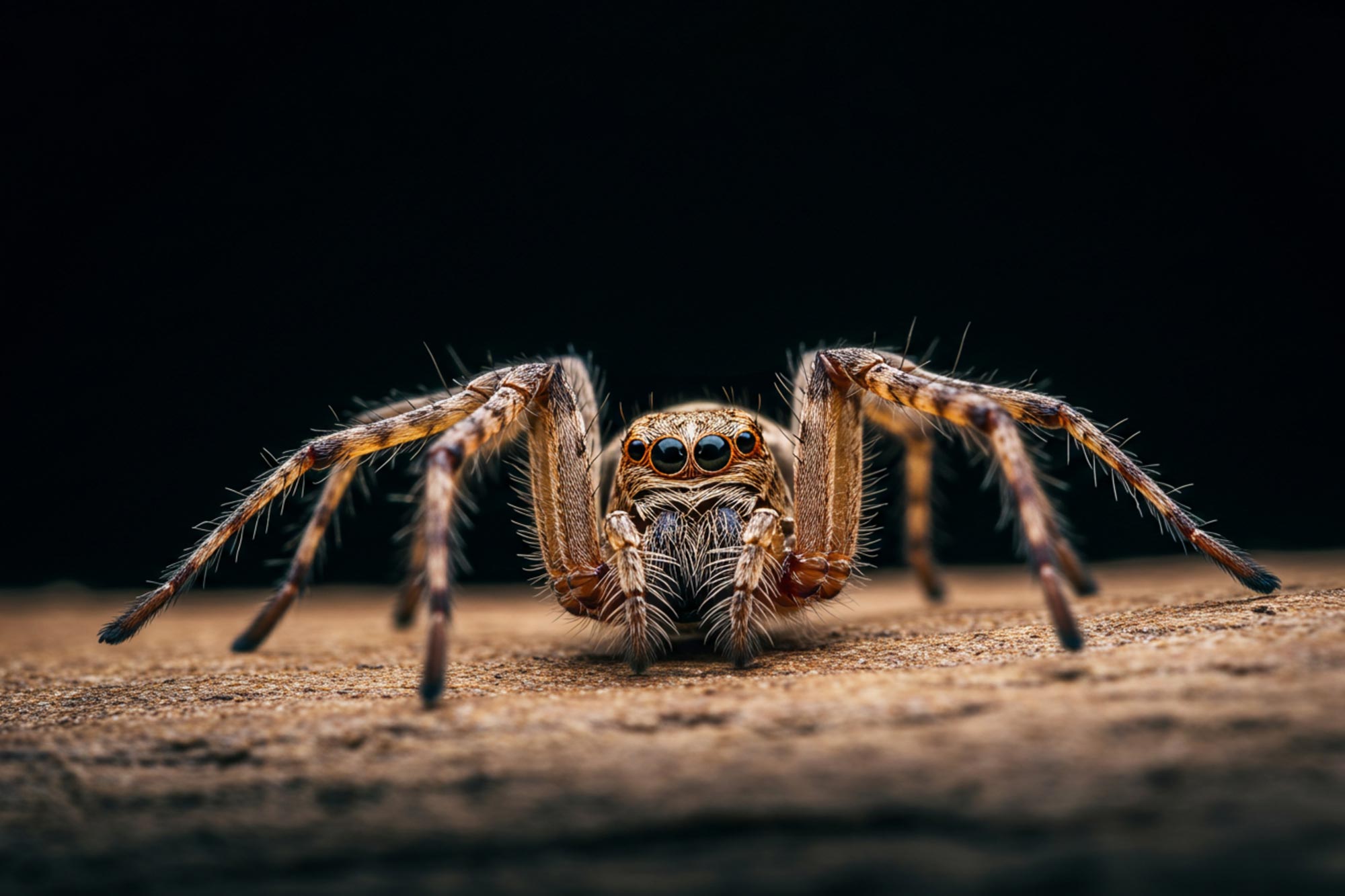
A new study finds that almost 90% of North America’s insects and arachnids have no conservation status at all.
Arachnids, including spiders, scorpions, and harvestmen (daddy long-legs), often inspire fear or disgust. Despite their reputation, these animals play an essential role in keeping ecosystems functioning. As global biodiversity declines in what some researchers call the “insect apocalypse,” two ecologists at the University of Massachusetts Amherst set out to evaluate how insects and arachnids are faring across the United States. What they found was not reassurance, but a striking lack of basic information.
Their study, recently published in PNAS, underscores the urgent need to better measure, safeguard, and recognize the value of insects and arachnids as a foundation of planetary health.
“Insects and arachnids are fundamental for human society,” says Laura Figueroa, assistant professor of environmental conservation at UMass Amherst and the paper’s senior author. “They help with pollination and biological control of pests; they can serve as monitors of air and water quality, and they have worked their way deeply into many cultures throughout the world”— think of Aragog in the Harry Potter book series, for example. “Many people care about popular charismatic animals on the planet, like lions and pandas, which, justly, have received international conservation attention. Given that insects and arachnids don’t usually get the same attention, we wanted to know how they were doing.”
A Startling Data Gap
To get a clearer picture, Figueroa and her graduate student, Wes Walsh, who led the study, compiled conservation assessments for 99,312 known species of insects and arachnids found in North America, north of Mexico. The scale of what they uncovered surprised them.
“Almost 90%—88.5% to be precise—of insect and arachnid species have no conservation status,” says Figueroa. “We simply have no idea how they are doing. Almost nothing is known about the conservation needs of most insects and arachnids in North America.”
In practical terms, that means the vast majority of these species have never been formally evaluated for risk, leaving scientists and policymakers without the information needed to guide protection efforts.
Bias in Protection Efforts
The limited data that do exist are unevenly distributed. Aquatic insects used to gauge water quality, including mayflies, stoneflies and caddisflies (mayflies, stoneflies, and caddisflies), are far more likely to be studied. More visually appealing groups, such as butterflies and dragonflies, also receive a disproportionate share of conservation attention.
“Arachnids, in particular, are really missing from conservation; most states don’t even protect a single species. We need more data and protection for insects, but also arachnids,” says Walsh.
The researchers also identified political and economic patterns. States that depend heavily on extractive industries such as mining, quarrying and oil and gas extraction were less likely to offer protections to insects or arachnids. In contrast, states where public attitudes are more eco centric tended to safeguard a greater number of species.
Lessons from Bird Conservation
By way of comparison, Figueroa points to bird conservation, which has been far more successful in protecting and preserving species. “The research shows that you get the best conservation efforts when broad, diverse coalitions come together,” she says. “In the case of birds, it was hunters, bird watchers, nonprofit organizations and many other constituencies who banded together to reach a common goal.”
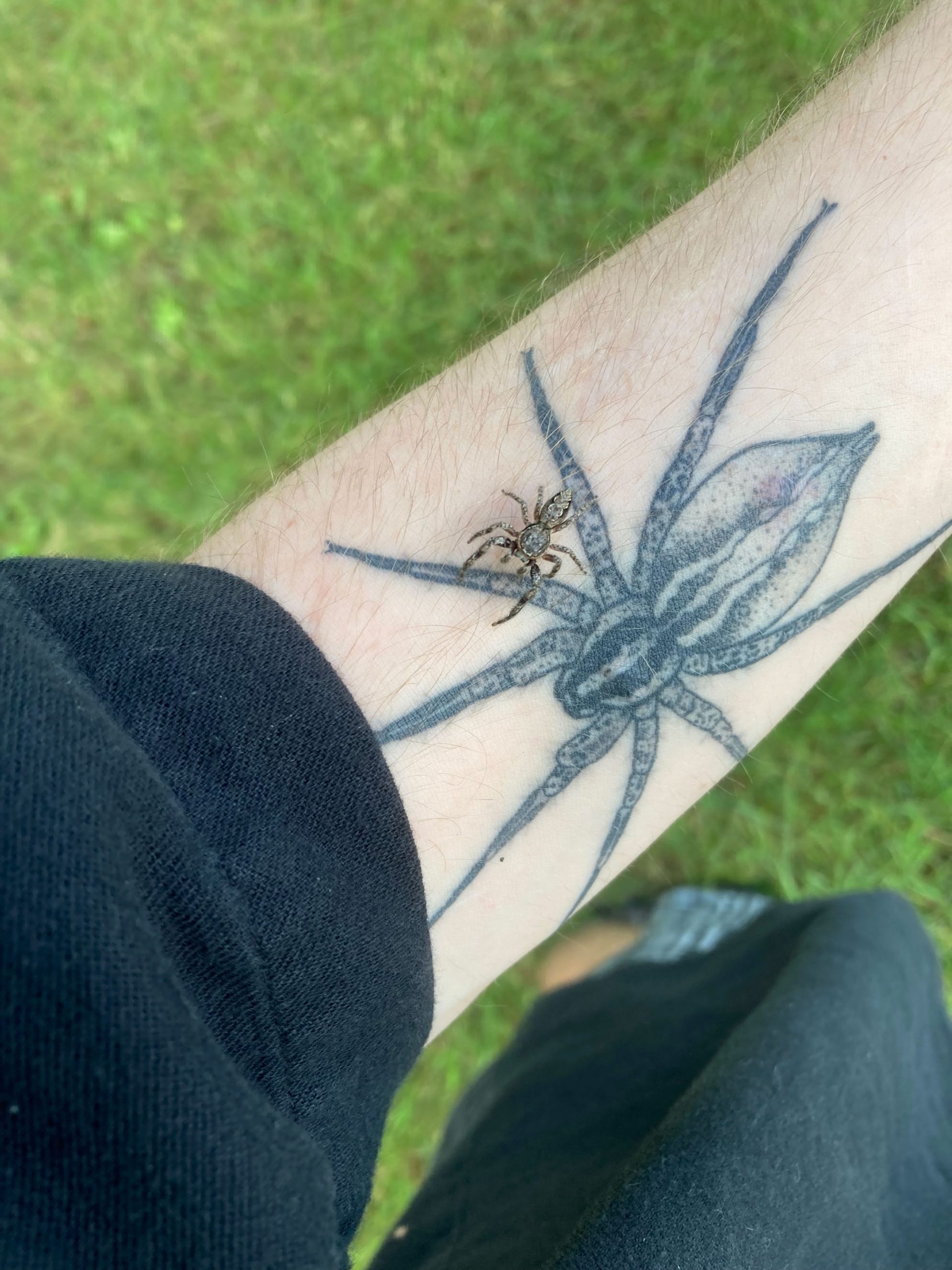
“Insects and arachnids are more than objects of fear,” says Walsh, who sports a beautiful spider tattoo on his arm. “We need to appreciate them for their ecological importance, and that begins with collecting more data and considering them worthy of conservation.”
Reference: “Data deficiency, taxonomic bias, and economic interests curtail insect and arachnid conservation in the United States” by Wes Walsh and Laura L. Figueroa, 2 March 2026, Proceedings of the National Academy of Sciences.
DOI: 10.1073/pnas.2522779123
Never miss a breakthrough: Join the SciTechDaily newsletter.
Follow us on Google and Google News.
6 Comments
Sure okay those fiendish creepy crawlers would suck you dry if given a chance. What’s next cockroaches and mosquitoes on the endangered list. I know spiders eat other insects that are a problem for humans. They just don’t know their place. If they leave me alone I’ll leave them alone. Actually if I see them in my home I kill them I don’t trust them.
I am more liberal. I only remove them from my bedroom because I’m defenseless while sleeping. However, bites from many spiders, such as the Black Widow and necrotizing Brown Recluse can be very serious. Not a problem in North America, but Camel Spiders can be quite problematic in Africa; they are capable of removing the tip of one’s nose while feeding overnight. Unless it can be shown that Camel Spiders possess a cure for cancer, I would be alright with exterminating them.
I think people have some kind of responsibility to keep the world in balance but it should include our own existence. I don’t know where to draw the line. Maybe some kind of (unbiased?) AI could calculate the loss/gain ratio between arthropods and vertebrates but what would it be based on? Environmental impact benefiting who? (whom?) From my standpoint I think the loss of 16 ft tall predatory dinosaurs is probably a good thing. But the loss of Lepidoptera because of imported Tachinid flies is bad, even though it benefits alfalfa growers. Are the horses that eat alfalfa more important than 20 species of butterflies? Should we compare by live volume or cash profit or stabilizing environmental change? We can develop AIs that hypothesize data gathering procedures, but they’ll still be biased in favor of the programmers design. I suspect it will eventually come down to “profit”, which is an anthropomorphic term for “survival”.
I’m afraid “unbiased AI” is an oxymoron.
Want to learn more about mites,..
Old rhyme from my childhood, “If you want to live and thrive let a spider run alive”.