
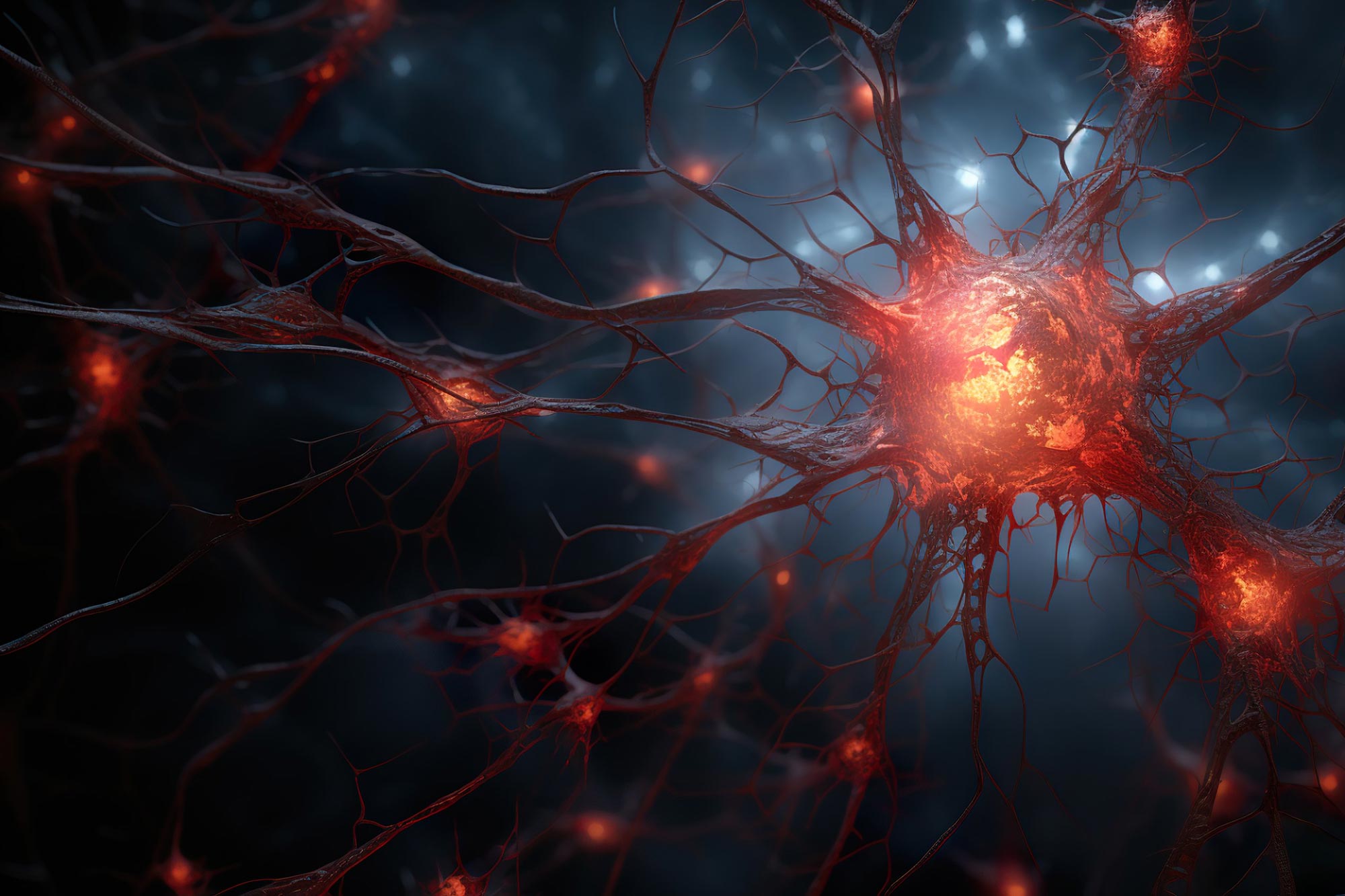
Scientists have identified a brain protein that may help Alzheimer’s spread, revealing a potential new target for slowing the disease’s progression.
Alzheimer’s disease is closely linked to the accumulation of a toxic form of the protein Tau inside the brain. As Tau damage reaches additional brain regions, more neurons are harmed, symptoms intensify, and the disease can eventually become fatal.
Researchers have now identified a brain protein that may help this harmful process spread. In experiments involving mice, they found that a protein called Arc can carry toxic Tau from diseased brain cells into healthy ones.
The finding raises the possibility of developing treatments that interrupt this movement between cells. Rather than repairing damage that has already occurred, such therapies might help prevent Alzheimer’s disease from advancing.
“I’m excited by the fact that we’ve identified a new way of potentially stopping the progression of Alzheimer’s disease,” says Jason Shepherd, PhD, professor of neurobiology at University of Utah Health and senior author on the study.
The results are published in Cell.
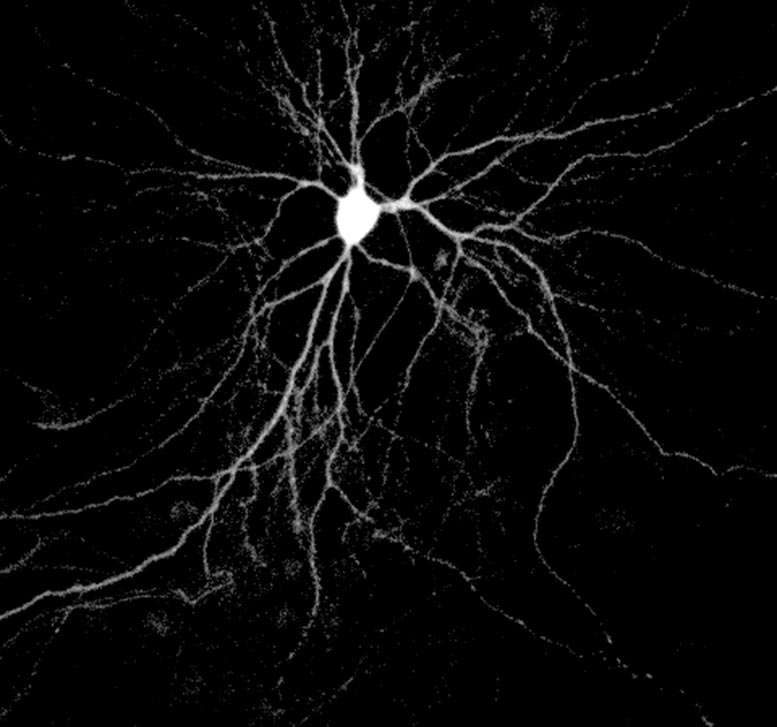
How Toxic Tau Moves Between Brain Cells
The research team studied a mouse model of Alzheimer’s disease in animals that either had Arc or lacked the protein. Their experiments showed that Arc plays an important role in allowing toxic Tau to travel through the brain.
Under normal conditions, Arc acts as a messenger between neurons. The protein packages itself inside a microscopic bubble known as an extracellular vesicle or EV. This bubble can move from one neuron to another while carrying information between cells.
Toxic Tau, however, appears able to attach itself to Arc and use the same delivery system. In this way, Tau can leave a diseased neuron and reach a healthy one.
Tau is naturally present in both healthy and unhealthy brain cells. In Alzheimer’s disease, however, it begins sticking together and forming large tangles inside neurons. These accumulations disrupt normal cell activity and eventually kill the affected neurons.
Mitali Tyagi, PhD, postdoctoral research associate at Washington University in St. Louis and first author on the paper, who did the research while a neuroscience graduate student in the Shepherd Lab at U of U Health, compares Tau tangles to “glue monsters.”
“They glue together and block transportation within the neuron,” Tyagi explains. “But they can break down into smaller glue monsters, called Tau seeds, which can then get transferred to a new neuron. And once this Tau seed comes into contact with healthy Tau, it is able to corrupt it. So, the pathology starts all over again in a healthy neuron.”

Arc Acts as a Carrier for Tau
In the Alzheimer’s mouse model, the researchers found EVs in the brain that contained both Arc and “sticky” Tau. These tiny bubbles were able to enter healthy cells and trigger the formation of new Tau tangles.
The situation changed dramatically in mice that did not have Arc. Their brain EVs contained almost no Tau and were largely unable to carry the disease process into new cells.
“When we removed Arc, we saw that the transfer of Tau was severely, severely reduced,” Tyagi says. “It was almost gone.”
A Protein With Both Harmful and Helpful Effects
At first, blocking Arc might seem like an obvious way to slow Alzheimer’s disease. The findings, however, suggest that Arc has a more complicated role.
During the early stages of disease, Arc may actually help damaged neurons survive by allowing them to release excess toxic Tau. Without this escape route, Tau remains trapped inside the cell and builds up more quickly.
The researchers found that diseased neurons died faster in mice without Arc because they could not remove the toxic protein.
“When Arc is absent, Tau becomes trapped inside neurons and accumulates to toxic levels. When Arc is present, Tau can be released in extracellular vesicles. While this helps reduce Tau buildup within the original neuron, the released Tau can be taken up by neighboring healthy neurons, promoting the spread of pathology,” Tyagi says.
These results suggest that completely stopping Tau from leaving sick neurons may do more harm than good. A more promising strategy could be to prevent Tau-containing EVs from entering healthy brain cells.

A Possible New Alzheimer’s Treatment Target
The team also detected EVs containing both Arc and Tau in human brain tissue. This provides evidence that a similar process may occur in people, although the researchers emphasize that the strongest findings so far come from mice.
“Most of the work we’ve been doing is in mice, not in humans,” Shepherd says. “We have some clues that whatever is happening in these mice could also be happening in humans, but we don’t know that yet. And we’re far away from saying that we’re developing a treatment for anything. But it could open new avenues to get to that point.”
One possibility is that future treatments could intercept Tau-carrying EVs “mid-flight.” Such a therapy would target the vesicles after they leave a sick neuron but before they reach and damage a healthy one.
This approach would not reverse brain damage that had already occurred. It could, however, slow or halt the spread of toxic Tau and help preserve cognitive function for longer.
“If we could target these particular EVs, that would be a really useful therapy strategy,” Shepherd says. “For someone with early-onset Alzheimer’s or dementia, if we could stop the spread, then we could prevent further damage and cognitive decline.”
Reference: “Arc mediates intercellular tau transmission via extracellular vesicles” by Mitali Tyagi, Eric de Hoog, Matthew Grega, Kaelan R. Sullivan, Alicia C. Walker, Radhika Chadha, Ava Northrop, Balázs Fábián, Gerhard Hummer, Monika Fuxreiter, Bradley T. Hyman and Jason D. Shepherd, 29 June 2026, Cell.
DOI: 10.1016/j.cell.2026.06.008
This work was supported by the National Institutes of Health, including the Director’s Office Transformative Research Award (R01 NS115716), the National Institute of Neurological Disorders and Stroke (DSPAN F99), and the National Institute on Aging (AG073236), the Chan-Zuckerberg Initiative Ben Barres Early Acceleration Award, the Alzheimer’s Association, the McKnight Brain Disorders Award, the Jon M. Huntsman Presidential Endowed Chair fund, the Max Planck Society, AIRC IG 26229, PRIN 2022EMZJL4, the Rainwater Foundation, the JPB Foundation, and the Cure Alzheimer Fund. The Massachusetts Alzheimer’s Disease Research Center, supported by the National Institute on Aging (P30AG062421) provided human samples.
Shepherd is a co-founder of VNV, LLC and holds stock in and is a consultant for Aera Therapeutics, Inc., which licenses intellectual property and patents that include Arc capsids.
Never miss a breakthrough: Join the SciTechDaily newsletter.
Follow us on Google and Google News.