
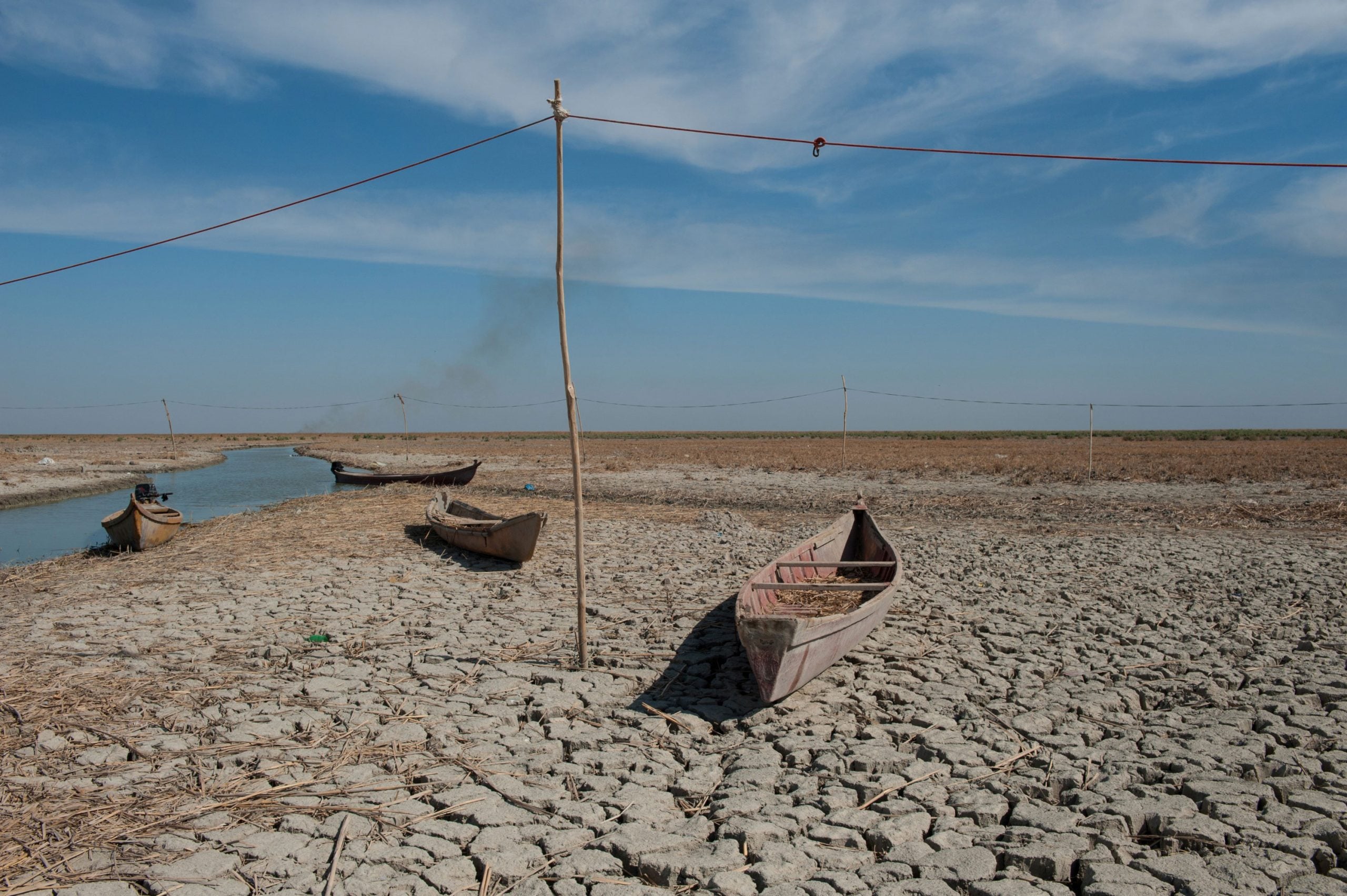
Overlapping climate cycles may have intensified the droughts surrounding the Late Bronze Age collapse.
Around 3,200 years ago, societies across the Eastern Mediterranean faced drought severe enough to strain water supplies, agriculture, and food security.
Research from Stockholm University, published in Science Advances, suggests these extreme conditions developed not from one isolated event, but when several natural climate cycles aligned and intensified an already drying environment. The findings provide new context for the Late Bronze Age collapse and may help scientists assess drought threats in a warming world.
“Rather than being caused by a single climatic event, we found that the most extreme droughts emerged when natural climate cycles operating over different timescales coincided. This helps explain why the drought associated with the Late Bronze Age collapse was so severe,” says Katherine Power, PhD student, Department of Physical Geography, Stockholm University, and first author of the study.
Climate modeling reveals a long decline
About 3,200 years ago, widespread societal collapse affected several major Eastern Mediterranean civilizations, including the Mycenaeans, Minoans and Hittite Empire. Severe drought has long been associated with this upheaval, but the climate mechanisms that produced it have remained uncertain.
Katherine Power and study co-author Qiong Zhang, professor in paleoclimate modeling in Stockholm University’s Department of Physical Geography, investigated the question with a state-of-the-art climate model that reconstructed changes across the Mediterranean during the past 8,000 years.
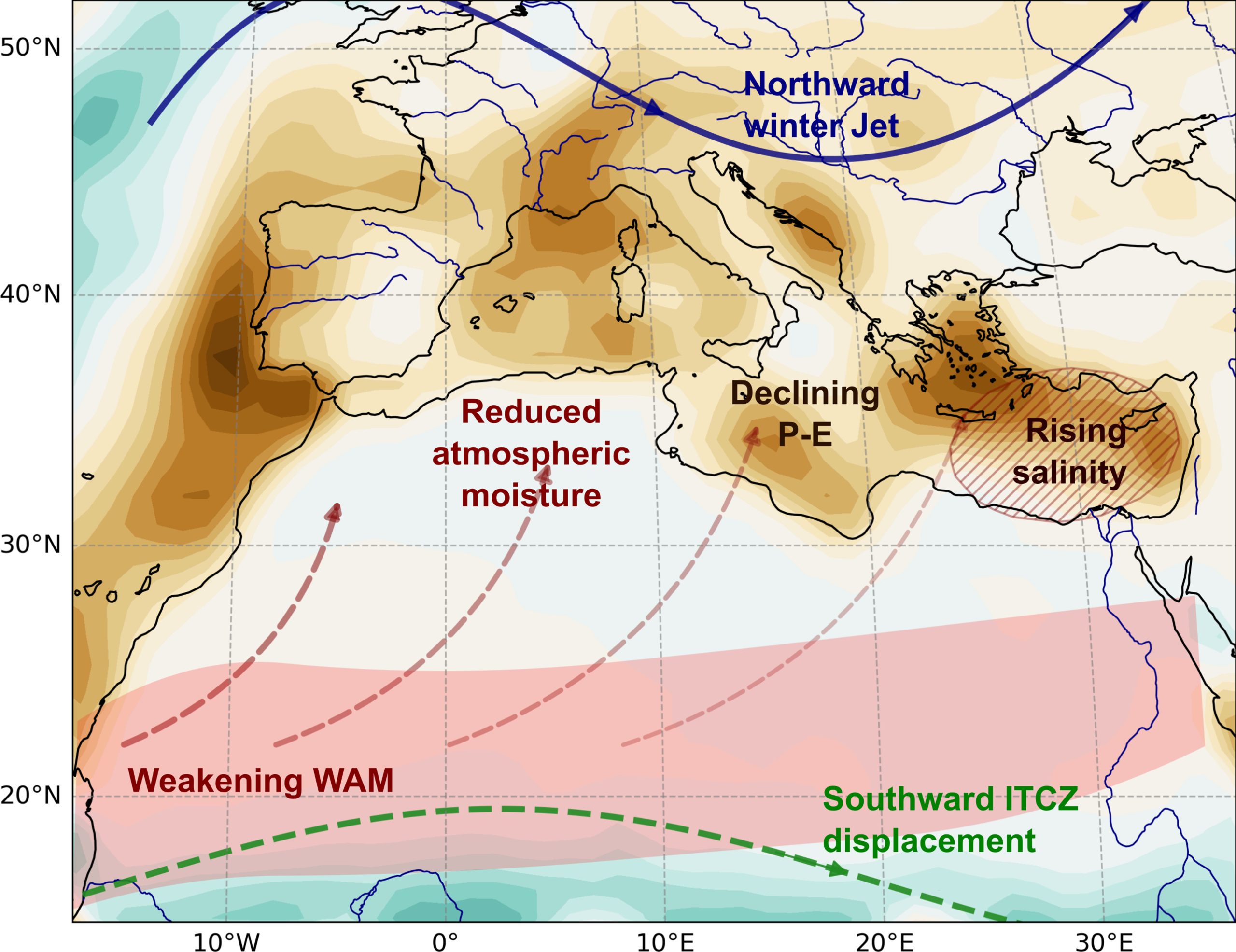
“Our results show that the region underwent a gradual drying trend over thousands of years, driven by slow changes in Earth’s orbit. Superimposed on this long-term trend, we also found shorter-term fluctuations in the Atlantic Ocean and atmosphere,” says Katherine Power.
Overlapping cycles intensified extreme drought
The reconstruction indicated that the harshest droughts developed when several natural climate cycles temporarily came into alignment. Their combined effects reinforced one another, creating dry periods much more severe than the gradual long-term decline alone would have produced.
“The convergence of these processes pushed the Eastern Mediterranean beyond a critical hydroclimatic threshold, reducing water availability and increasing pressure on agriculture and food security within already vulnerable societies,” Katherine Power says.
Natural variability could amplify future risk
The results offer a different way to understand major droughts of the past, while also carrying implications for present climate risks.
“The Mediterranean is one of the world’s climate change hotspots and the area is projected to become warmer and drier during the coming century. Our findings suggest that future drought risk may depend not only on long-term human-driven warming, but also on how natural variability in the Atlantic Ocean interacts with that background trend,” Katherine Power explains.
By showing how several climate processes can combine and magnify drought, the research may help clarify the risk of future hydroclimatic extremes as the world continues to warm.
Reference: “Holocene ocean-atmosphere coupling and Mediterranean sensitivity to Atlantic circulation: Lessons from the Late Bronze Age collapse” by Katherine Power and Qiong Zhang, 24 July 2026, Science Advances.
DOI: 10.1126/sciadv.aed5439
This work was supported by the Swedish Research Council (Vetenskapsrådet, grant no. 2022-03129). The data analyses were performed using resources provided by the ECMWF’s computing and archive facilities and the National Academic Infrastructure for Supercomputing in Sweden (NAISS), partially funded by the Swedish Research Council through grant agreement no. 2022-06725.
Never miss a breakthrough: Join the SciTechDaily newsletter.
Follow us on Google and Google News.