
Close Menu
    Facebook X (Twitter) Instagram
    SciTechDaily
    • Biology
    • Chemistry
    • Earth
    • Health
    • Physics
    • Science
    • Space
    • Technology
    Facebook X (Twitter) Pinterest YouTube RSS
    SciTechDaily
    Home»Science»It Rivaled Ancient Egypt, Then Vanished: New Study Pinpoints Why the Indus Valley Fell
    Science

    It Rivaled Ancient Egypt, Then Vanished: New Study Pinpoints Why the Indus Valley Fell

    By Springer NatureNovember 30, 2025No Comments3 Mins Read
    Facebook Twitter Pinterest Telegram LinkedIn WhatsApp Email Reddit
    Share
    Facebook Twitter LinkedIn Pinterest Telegram Email Reddit
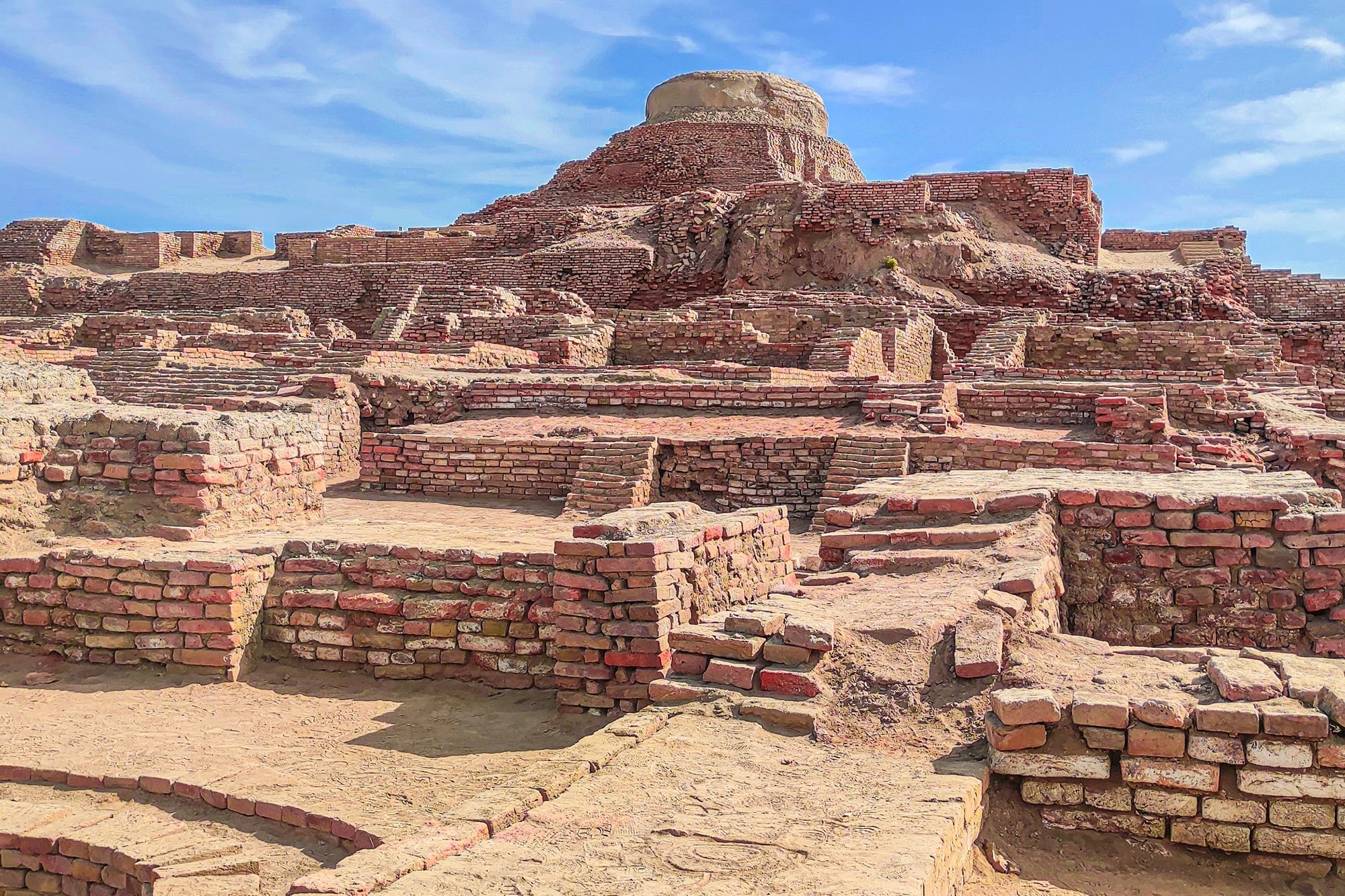
    Ancient City Mohenjo Daro Indus Valley Civilization
    New climate simulations suggest that a series of unusually long, region-wide droughts may have quietly reshaped the Indus Valley Civilization’s fate. Credit: Shutterstocknbs

    Long drought cycles reshaped settlement choices in the Indus region. These climate stresses likely contributed to its slow collapse.

    A series of severe droughts, each extending for more than 85 years, was likely a major contributor to the gradual decline of the Indus Valley Civilization, according to research published in Communications Earth & Environment.

    These results offer new insight into why this influential ancient society — a contemporary of ancient Egypt located near the present-day India-Pakistan border — weakened over time and demonstrate how environmental pressures can shape the course of early civilizations.

    Background on the Indus Valley Civilization

    The Indus Valley Civilization (IVC) was among the world’s earliest urban cultures, flourishing between 5,000 and 3,500 years ago along the Indus River system in what is now Pakistan and northwest India. At its height, between 4,500 and 3,900 years ago, the society featured well-planned cities and advanced water management. Despite this sophistication, the factors behind the civilization’s slow decline have remained uncertain.

    Vimal Mishra and his team reconstructed climate patterns across the IVC region from 5,000 to 3,000 years ago. Their analysis combined climate simulations with evidence from several indirect records of past environmental conditions, including the geochemical signatures of stalactites and stalagmites in two Indian caves and water level data from five lakes in northwest India.

    Their findings point to a regional temperature rise of about 0.5 degrees Celsius and a drop in annual rainfall of between 10% and 20%. They also identified four extended droughts occurring between 4,450 and 3,400 years ago, each lasting more than 85 years and affecting between 65% and 91% of the region occupied by the IVC.

    Settlement shifts linked to prolonged water shortages

    The authors suggest that these droughts influenced settlement location choice in the IVC. Between 5,000 and 4,500 years ago, they report that settlements were concentrated in areas with more rainfall. However, from 4,500 years ago onwards, settlements shifted closer to the Indus River, probably as the droughts started to affect water availability. The final 113-year-long drought that they identify, between 3,531 and 3,418 years ago, coincides with archaeological evidence of major deurbanization in the IVC. The authors conclude that the IVC likely did not collapse suddenly as a result of any one climate event, but instead declined slowly, with the prolonged droughts a major contributory factor.

    Reference: “River drought forcing of the Harappan metamorphosis” by Hiren Solanki, Vikrant Jain, Kaustubh Thirumalai, Balaji Rajagopalan and Vimal Mishra, 27 November 2025, Communications Earth & Environment.
    DOI: 10.1038/s43247-025-02901-1

    The work was primarily supported by the funding from the Department of Science and Technology, Government of India. K.T. acknowledges support from NSF P2C2 Award 2103077.

    Never miss a breakthrough: Join the SciTechDaily newsletter.
    Follow us on Google and Google News.

    Archaeology Climate Change Drought Human Settlement Paleoclimatology
    Share. Facebook Twitter Pinterest LinkedIn Email Reddit

    Related Articles

    Scientists Solve the Mystery of an Abandoned 1100-Year-Old Bison Hunting Site

    The Power of Climate Change – New Research Sheds Light on the End of Ancient Indus Megacities

    How Climate Change Led to the Fall of an Ancient Civilization

    Grape Seeds Reveal Collapse of Ancient Economy in the Grip of Plague and Climate Change

    It Was NOT Climate Change That Caused Neanderthal Extinction

    Detailed Insights on the Disappearance of the World’s Largest Mammals From Microscopic Evidence

    Middle Stone Age Innovation Linked to Rapid Climate Change

    Prolonged Drought Contributed to Maya Civilization’s Collapse

    Analysis of Ancient Hair Could Reveal How People Adjusted to Past Climate Change

    Leave A Reply Cancel Reply

    • Facebook
    • Twitter
    • Pinterest
    • YouTube

    Don't Miss a Discovery

    Subscribe for the Latest in Science & Tech!

    Trending News

    Artificial Sweeteners May Harm Future Generations, Study Suggests

    Splashdown! NASA Artemis II Returns From Record-Breaking Moon Mission

    What If Consciousness Exists Beyond Your Brain

    Scientists Finally Crack the 100-Million-Year Evolutionary Mystery of Squid and Cuttlefish

    Beyond “Safe Levels”: Study Challenges What We Know About Pesticides and Cancer

    Researchers Have Found a Dietary Compound That Increases Longevity

    Scientists Baffled by Bizarre “Living Fossil” From 275 Million Years Ago

    Your IQ at 23 Could Predict Your Wealth at 27, Study Finds

    Follow SciTechDaily
    • Facebook
    • Twitter
    • YouTube
    • Pinterest
    • Newsletter
    • RSS
    SciTech News
    • Biology News
    • Chemistry News
    • Earth News
    • Health News
    • Physics News
    • Science News
    • Space News
    • Technology News
    Recent Posts
    • What if Dark Matter Has Two Forms? Bold New Hypothesis Could Explain a Cosmic Mystery
    • Researchers Expose Hidden Chemistry of “Ore-Forming” Elements in Biology
    • Geologists Reveal the Americas Collided Earlier Than We Thought
    • 20x Difference: Study Reveals True Source of Airborne Microplastics
    • Scientists Uncover Hidden Force Powering Yellowstone’s Supervolcano
    Copyright © 1998 - 2026 SciTechDaily. All Rights Reserved.
    • Science News
    • About
    • Contact
    • Editorial Board
    • Privacy Policy
    • Terms of Use

    Type above and press Enter to search. Press Esc to cancel.