
Close Menu
    Facebook X (Twitter) Instagram
    SciTechDaily
    • Biology
    • Chemistry
    • Earth
    • Health
    • Physics
    • Science
    • Space
    • Technology
    Facebook X (Twitter) Pinterest YouTube RSS
    SciTechDaily
    Home»Science»Yale Study Links Climate Change to the Decline of Bumblebee Species
    Science

    Yale Study Links Climate Change to the Decline of Bumblebee Species

    By Jim Shelton, Yale UniversityJuly 10, 20154 Comments2 Mins Read
    Facebook Twitter Pinterest Telegram LinkedIn WhatsApp Email Reddit
    Share
    Facebook Twitter LinkedIn Pinterest Telegram Email Reddit
    New Yale Study Tracks the Impact of Climate Change on Bumblebees
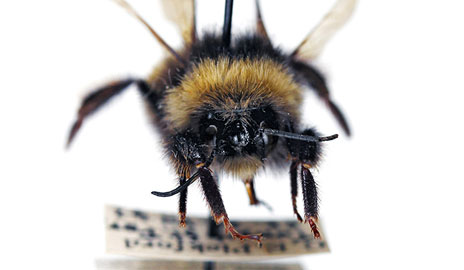
    Bumblebee range losses were unrelated to land use or pesticide applications but showed a clear association with climate change, according to the study from Yale.

    A newly published study from Yale University links climate change to the decline of bumblebee species in North America and Europe.

    The study, published in the journal Science, found that bumblebee ranges are shrinking in the south and the insects are not moving north. In addition, some species are moving to higher elevations on both continents.

    The study looked at data covering 67 bumblebee species over the course of 110 years, using specimens from institutional collections such as the Yale Peabody Museum of Natural History. “We’re one of the main contributors and provided large amounts of electronic data,” said co-author Lawrence Gall, a Peabody Museum entomologist.

    The study found that bumblebee range losses occurred independently of changing land uses or pesticide applications. The data suggested a clear connection to changing climate, the researchers said. “This also highlights the important role that specimens preserved in museums play in current scientific inquiry,” Gall noted.

    Lead author Jeremy Kerr of the University of Ottawa said range losses for bumblebees in southern Europe and North America total about 300 km. “The scale and pace of these losses are unprecedented,” Kerr said. “We need new strategies to help these species cope with the effects of human-caused climate change, perhaps assisting them to shift into northern areas.”

    Reference: “Climate change impacts on bumblebees converge across continents” by Jeremy T. Kerr, Alana Pindar, Paul Galpern, Laurence Packer, Simon G. Potts, Stuart M. Roberts, Pierre Rasmont, Oliver Schweiger, Sheila R. Colla, Leif L. Richardson, David L. Wagner, Lawrence F. Gall, Derek S. Sikes and Alberto Pantoja, 10 July 2015, Science.
    DOI: 10.1126/science.aaa7031

    Never miss a breakthrough: Join the SciTechDaily newsletter.
    Follow us on Google and Google News.

    Bees Climate Change Climate Science Environmental Science Yale University
    Share. Facebook Twitter Pinterest LinkedIn Email Reddit

    Related Articles

    Intrinsic Pink-Noise Provides Better View of Climate Change

    New Study Traces the Impact of Volcanic Activity on Climate Change

    New Research: Abrupt Climate Warming Killed Mammoths

    What the World Thinks of Climate Change: Predictors of Public Climate Change Awareness and Risk Perception

    Study Shows Greenland Ice Sheet More Sensitive to Climate Change Than Previously Thought

    Yale Study Reveals Parts of Ancient Antarctica Were as Warm as Today’s California Coast

    Smoke from Wildfires and Forest Emissions Explain Why the Pliocene Was So Hot

    Australia’s Role in Sea Level Drop in 2010 – 2011

    Cosmic Impact Sparked Devastating Climate Change, Caused Mass Extinctions

    4 Comments

    1. MIKE MILLER on July 10, 2015 6:35 pm

      .

      This is just the latest buzz to push panic buttons about the anthropogenic global warming hoax.

      .

      Reply
      • Philldapill on July 11, 2015 2:06 pm

        “We need new strategies to help these species cope with the effects of human-caused climate change, perhaps assisting them to shift into northern areas.”

        Yeah, way to put the emphasis on “human-caused”… Even though the reasons for the climate change are absolutely irrelevant to the study. This is just more “research” that is intentionally linked to doomsday in order to get more grant money. I’ve grown so g’damn sick of the modern research system.

        Reply
    2. Madanagopal.V.C. on July 12, 2015 12:03 am

      Climate is the major modifying catalyst of animal evolution. If bumble bee is extinct, another hundred modified varieties may emerge in nature. Extinction of animals and plants are a constant phenomena. Since we cannot control the nature, we have to live with it continuously. Can we truthfully record all the extinct living beings so far in this world? Thank You.

      Reply
    3. Steven on July 27, 2015 5:57 pm

      “Since we cannot control the nature, we have to live with it continuously.”
      What ????
      We haven’t polluted some of the air ,water or soils ?
      Ya might wanna get out more and “see” what Humans are doing to Nature …

      Reply
    Leave A Reply Cancel Reply

    • Facebook
    • Twitter
    • Pinterest
    • YouTube

    Don't Miss a Discovery

    Subscribe for the Latest in Science & Tech!

    Trending News

    Largest-Ever Study Finds Medicinal Cannabis Ineffective for Anxiety, Depression, PTSD

    250-Million-Year-Old Egg Solves One of Evolution’s Biggest Mysteries

    Living With Roommates Might Be Changing Your Gut Microbiome Without You Knowing

    Century-Old Cleaning Chemical Linked to 500% Increased Risk of Parkinson’s Disease

    What if Your Memories Never Happened? Physicists Take a New Look at the Boltzmann Brain Paradox

    One of the Universe’s Largest Stars May Be Getting Ready To Explode

    Scientists Discover Enzyme That Could Supercharge Ozempic-Like Weight Loss Drugs

    Popular Sweetener Linked to DNA Damage – “It’s Something You Should Not Be Eating”

    Follow SciTechDaily
    • Facebook
    • Twitter
    • YouTube
    • Pinterest
    • Newsletter
    • RSS
    SciTech News
    • Biology News
    • Chemistry News
    • Earth News
    • Health News
    • Physics News
    • Science News
    • Space News
    • Technology News
    Recent Posts
    • Scientists Prove There Are Just Six Degrees of Separation in a Social Network
    • Bee Bacteria Could Fix a Major Flaw in Plant-Based Milk
    • Scientists Discover a Surprising Way To Make Bread Healthier and More Nutritious
    • Natural Compounds Boost Bone Implant Success While Killing Bacteria and Cancer Cells
    • After 60 Years, Scientists Uncover Unexpected Brain Effects of Popular Diabetes Drug Metformin
    Copyright © 1998 - 2026 SciTechDaily. All Rights Reserved.
    • Science News
    • About
    • Contact
    • Editorial Board
    • Privacy Policy
    • Terms of Use

    Type above and press Enter to search. Press Esc to cancel.